Introduction: Finding a Trusted Air Duct Installer in Readington
Searching for “air duct installation near me” can feel overwhelming when you see pages of results with similar promises. For Readington, New Jersey homeowners, the right partner is one who pairs strong technical expertise with local knowledge—familiarity with township expectations, common house types, and seasonal realities. A trustworthy pro listens, designs with care, seals meticulously, and verifies performance with measurements. If you value a start-to-finish experience handled by specialists, consider connecting with a local provider that focuses on air duct installation so your project is predictable, efficient, and code-compliant.
This guide explains how to evaluate installers, what questions to ask, and how to compare quotes based on more than just promises.
What Makes an Installer “Trusted”?
Trust is earned through transparent communication, documented designs, quality materials, and proof of performance. Reputable installers demonstrate their approach: they perform load calculations, explain duct sizing, label dampers, and share balancing results. They also welcome inspections and provide clear post-install maintenance guidance.
Local experience matters. In Readington, installers deal with a range of homes—from older farmhouses and split-levels to newer builds and expanded colonials—each with unique duct routing challenges. A pro familiar with these layouts can foresee obstacles and propose practical solutions.
Evaluating Bids and Proposals
Focus on clarity. A strong proposal outlines the scope: trunk and branch layout, supply and return counts, duct materials, sealing methods, insulation plans, and testing procedures. It should detail how access will be maintained for filters and dampers and where registers will be placed.
Beware of vague proposals that skip design details, rely on guesswork for sizing, or gloss over sealing and testing. If it is not documented, you may not get it.
Key Questions to Ask
How will you determine room-by-room airflow needs? Look for references to load calculations and industry-standard methods. Ask for a summary of expected airflow per register.
What materials will you use and why? Expect an explanation of rigid trunks, appropriate use of insulated flex, mastic sealing, foil tape, and insulation needs for attics or basements.
How will you balance and test the system? Pros use instruments to verify airflow and static pressure. Ask for balancing data and damper labeling.
How do you handle access and serviceability? Good designs keep filters, dampers, and the air handler easy to reach. Clear access saves time and stress later.
Readington-Specific Considerations
Township inspections, seasonal weather, and common home layouts all influence installation choices. In humid summers, preventing condensation on ducts crossing unconditioned spaces is crucial. In cold spells, minimizing heat loss across attics and ensuring tight sealing makes a tangible difference. Trusted installers design with these realities in mind.
What to Expect During Installation
Preparation includes floor protection, material staging, and layout verification. The trunk is installed first, followed by branch runs sized for each room’s design airflow. Boots and registers are aligned with finished surfaces, and joints are sealed with mastic. Insulation is installed where required, and solid hangers prevent sagging and noise.
Before closing any walls, the team balances airflow and takes static pressure readings. You should see labeled dampers, accessible filter locations, and properly placed returns for smooth circulation.
Mid-Project Check-In
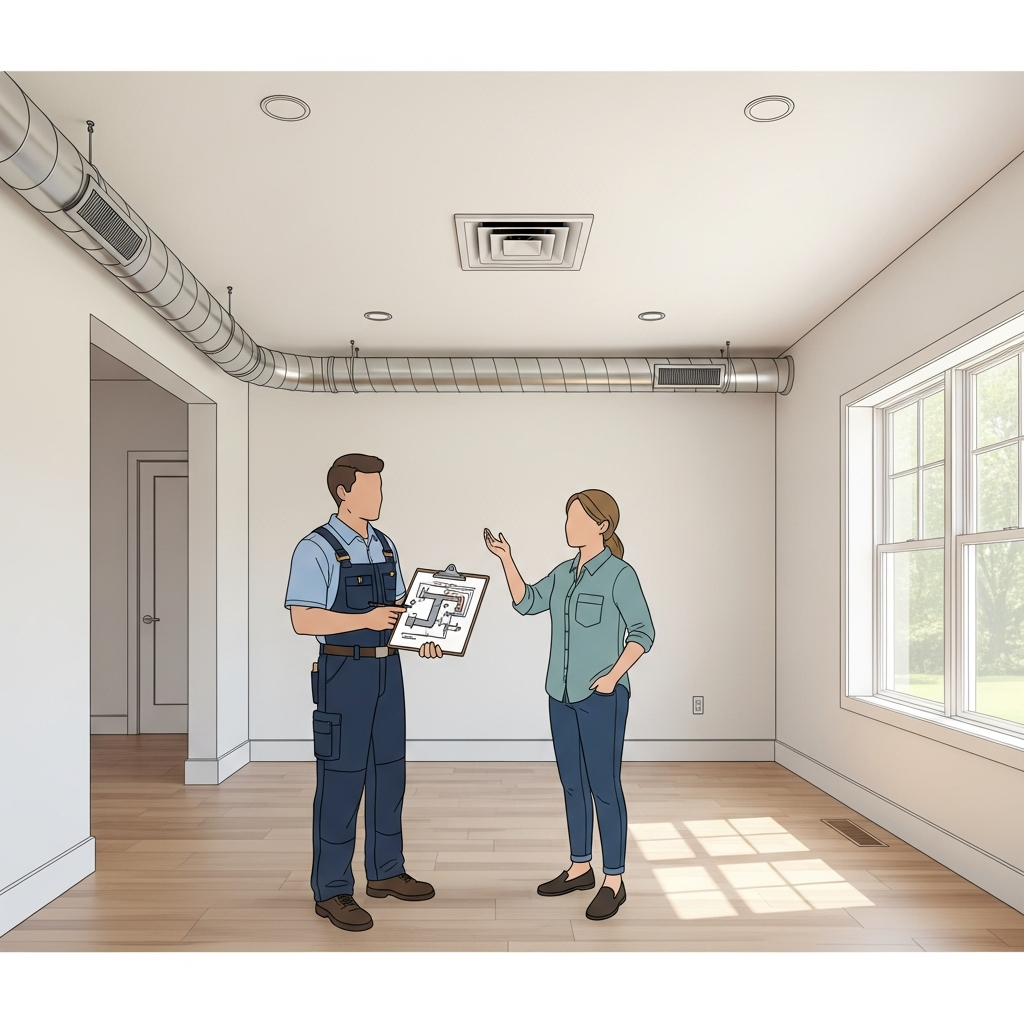
Schedule a midpoint review to confirm register locations, return strategies, and access points. If your needs change—perhaps a home office requires more airflow—discuss options for adjustments while the system is still open. For a simplified experience, many homeowners choose a Readington provider known for end-to-end ductwork installation service, keeping coordination and accountability under one roof.
Red Flags to Avoid
No calculations: If a contractor cannot explain sizing choices, expect comfort and efficiency problems later.
Overreliance on long flexible runs: Flex is fine for short, carefully supported branches. Long, kinked, or sagging runs starve rooms of airflow and add noise.
Poor sealing: Skipping mastic and relying on cloth tape leads to leaks, drafts, and higher energy use.
Ignoring returns: An undersized or poorly placed return restricts system breathing and can cause doors to slam or rooms to feel stuffy.
After the Job: Documentation and Maintenance
A trusted installer provides a simple packet: design overview, damper map, balancing results, and recommended maintenance schedule. They will also explain how to adjust registers seasonally and what to watch for—new noises, visible duct movement, or airflow shifts that could signal a needed tune-up.
Regular filter changes, clear registers, and seasonal checks help the system maintain performance over years of Readington weather.
Frequently Asked Questions
Q: How long does a typical installation take? A: It depends on home size, accessibility, and complexity. Simple retrofits can be completed relatively quickly, while larger or more intricate projects require additional time for routing and inspections.
Q: Can new ducts make the system quieter? A: Yes. Proper sizing, smooth routing, vibration isolation, and careful balancing often reduce noise compared to older systems.
Q: What if I have rooms with chronic hot or cold spots? A: A careful redesign with correct branching, returns, and damper adjustments usually resolves these issues. In some cases, zoning can provide even finer control.
Q: Is flexible duct acceptable? A: When used sparingly and installed correctly—taut, straight, and well supported—flex performs well for short branches.
Q: Do I need permits? A: Many townships require mechanical permits for ductwork modifications or new installations. A local pro will coordinate with Readington’s requirements and inspection schedules.
Take the Next Step with Confidence
If your goal is a smooth, verifiable outcome—one that is comfortable, quiet, and ready for Readington’s seasons—start with a consultation that includes load calculations, documented design, and a clear testing plan. Partner with a local specialist in Readington air duct installation to streamline planning, installation, and balancing, and to enjoy reliable performance for years to come.
