Introduction: Solve Common Dryer Vent Problems With Confidence
When your dryer starts taking longer to finish loads or the laundry room feels unusually warm and humid, the vent is often the culprit. In Readington, New Jersey, windblown debris, seasonal humidity, and long basement runs can turn a minor restriction into a day-to-day nuisance. Fortunately, most performance issues have straightforward solutions if you know what to look for and how to correct them safely. This guide compiles practical troubleshooting tips that help you diagnose symptoms, fix common causes, and decide when to bring in extra help.
Use these tips as a structured workflow. Start with simple checks, then progress to deeper inspections and repairs. And remember, professional assistance is always an option when access is limited, the vent route is complex, or results are inconsistent. Local experts provide targeted services such as dryer vent cleaning and can measure airflow, verify materials, and recommend long-term improvements so problems do not return.
Before you begin, disconnect power to the dryer and, for gas units, close the gas shutoff valve. Move the dryer carefully to prevent damage to flooring and to avoid kinking the transition duct or gas line. Keep a vacuum and brush kit handy so you can clean as you diagnose.
Symptom: Clothes Take Too Long to Dry
Long dry times are the most common signal of restricted airflow. A vent lined with lint forces the dryer to run longer, which sheds more fibers and compounds the problem. Begin with the basics and proceed methodically.
- Clean the lint screen and wash it with warm water to remove invisible residue
- Vacuum the lint screen housing and the dryer’s exhaust port
- Inspect and, if necessary, replace the transition duct with a rigid or semi-rigid metallic type
- Brush and vacuum the vent run from the termination and from the wall connection
- Confirm that the exterior flap opens fully during operation
If performance does not improve after these steps, suspect an excessively long or complex run, or a hidden obstruction at an elbow. At this point, testing airflow quantitatively or consulting a professional can save time and prevent repeated disassembly.
Symptom: Laundry Room Feels Hot or Humid
Heat and moisture should vent outdoors. If the laundry area grows hot or damp, a leak or blockage may be returning air to the room.
- Check for a loose clamp or separated joint at the wall connection
- Inspect the transition duct for holes or crushing that impede flow
- Look for damp lint or water stains on nearby walls, floors, or baseboards
- Verify that the termination flap is not stuck by paint, ice, or debris
Seal joints only with HVAC-rated foil tape. If humidity persists, reassess the vent route for long horizontal sections through unconditioned spaces where condensation can form and capture more lint.
Symptom: Burning Smell or Very Hot Dryer Top
Shut the dryer off immediately. A burning odor signals overheating, which demands quick attention.
- Clean the lint screen housing and exhaust port at once
- Brush and vacuum the vent run thoroughly from both ends
- Inspect for crushed transitions and obstructed elbows
- Confirm the termination flap opens fully and is not clogged
If odors return quickly or you see discoloration around the exhaust outlet, stop and seek help. Overheating can damage components and should not be ignored.
Symptom: Lint Around the Exterior Hood
Visible lint near the termination is a useful clue. It suggests that lint is escaping as airflow pushes through a partial blockage.
- Remove the hood cover or flap if serviceable and clean it thoroughly
- Brush the run starting at the exterior to pull compacted deposits toward you
- Replace a warped hood or one whose flap sticks even after cleaning
- Verify that there is no fine mesh screen in the airstream
After cleaning, re-test airflow. A strong, steady stream that opens the flap wide indicates the problem is resolved.
Symptom: Rattling, Whistling, or Flapping Noises
Unusual sounds often point to loose fittings, a damaged flap, or air being forced through a narrow opening created by a kinked transition duct.
- Tighten clamps at both ends of the transition duct
- Inspect elbows for loose joints and reseal as needed
- Replace a noisy, chattering termination flap with a properly sized hood
- Ensure the transition duct length is minimized and curves are gentle
If noises persist after cleaning and tightening, consider that interior lint may be fluttering at a joint with screws penetrating the airstream; replace those fittings with smooth-walled couplers secured externally.
Symptom: Dryer Shuts Off Early or Trips a Thermal Fuse
Thermal safety mechanisms trip when temperatures climb beyond safe thresholds. Restricted airflow is a very common cause.
- Perform a complete vent brushing and vacuuming
- Clean inside the lint screen housing and exhaust outlet
- Verify strong exterior airflow and a fully opening flap
- Inspect for crushed or excessively long vent runs that exceed manufacturer limits
If the issue repeats after cleaning and verification, a technician should evaluate sensors and heating elements and recheck the vent route for concealed obstructions.
Root Causes and How to Fix Them
Behind every symptom lies a cause that is usually straightforward to correct once identified.
- Crushed transition duct: Replace with rigid or semi-rigid metallic duct and leave enough space behind the dryer
- Excessive equivalent length: Reduce elbows, shorten the run, or relocate the termination
- Poor termination design: Install a low-resistance hood with a smooth gravity damper
- Moisture condensation: Insulate exterior runs or reroute through conditioned space
- Improper fasteners: Replace screws that penetrate the airstream with external clamps
Readington Considerations: Weather, Wildlife, and Building Layout
Local conditions can complicate an otherwise simple fix. Gusty storms can blow leaves and seeds into hoods. Winter ice can freeze a flap partially shut. In some neighborhoods, small birds or rodents may investigate warm vents as potential nesting sites. And many basements feature long horizontal runs to reach the nearest exterior wall.
Counter these factors with periodic exterior checks, timely flap replacements, and a design review if dry times remain stubbornly long. Consider the path your vent takes through the home and look for opportunities to shorten it or reduce elbows without violating code or manufacturer limits.
Mid-Process Decision Point: DIY or Professional Help?
After you have cleaned the lint screen housing, serviced the transition duct, brushed the run from both ends, and verified the hood, pause and test. If airflow at the termination remains weak or symptoms return within weeks, it is time to call in expertise. A professional can measure airflow, scope hidden sections, and recommend durable fixes that end the cycle of recurring issues. If you prefer a predictable result and want to ensure nothing is missed, schedule professional dryer vent cleaning with a full inspection and documentation.
Preventive Habits That Keep Problems Away
- Clean the lint screen before every load and wash it monthly
- Vacuum behind and under the dryer monthly to capture stray fibers
- Keep the transition duct short and avoid sharp bends
- Check the exterior hood after major storms, during pollen season, and in deep winter
- Plan a deep clean every six to twelve months based on household laundry volume
Frequently Asked Questions
Q: Can I use a leaf blower to clear the vent? A: It may blast lint into elbows where it compacts, and it can damage joints. A brush-and-vacuum method is safer and more thorough.
Q: Is flexible foil duct acceptable? A: It is not recommended. Choose rigid or semi-rigid metallic duct for safety and better airflow.
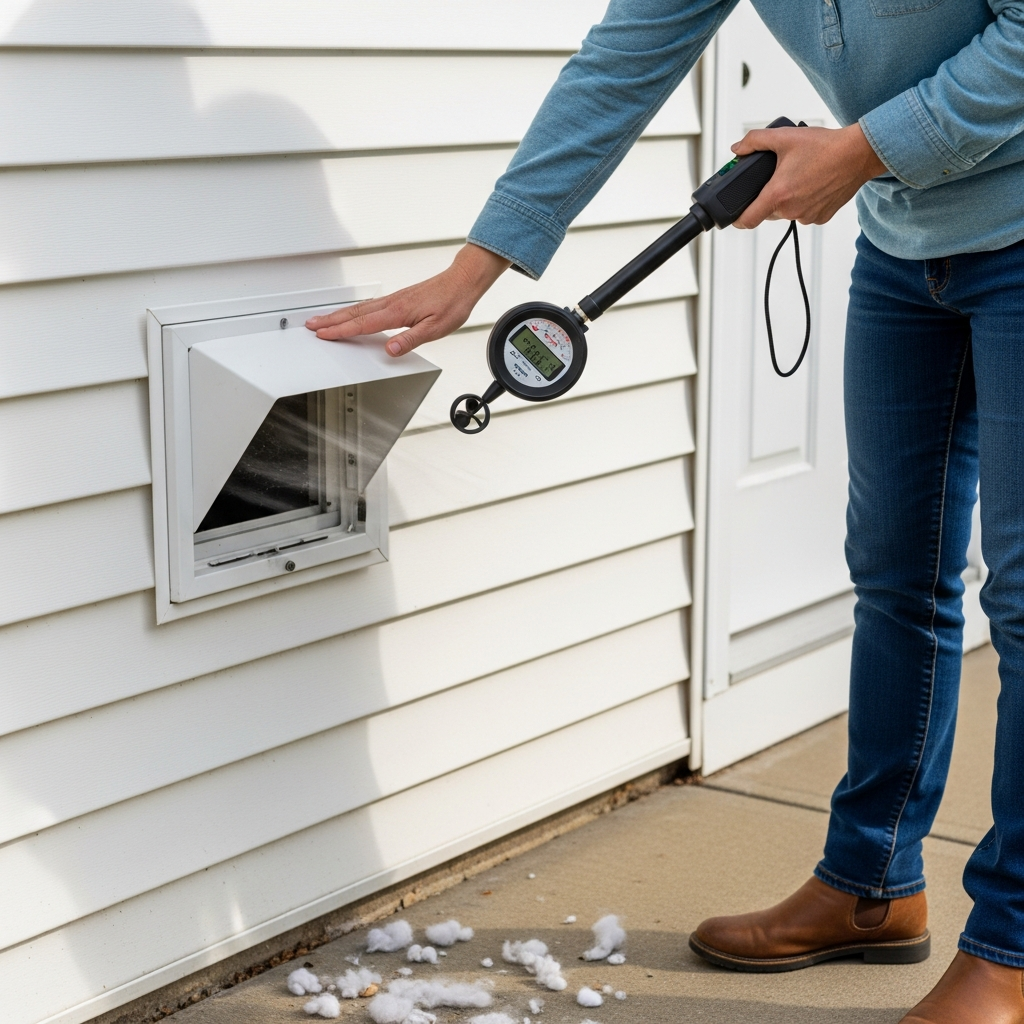
Q: How can I tell if airflow is strong enough? A: At the exterior hood, you should feel a vigorous, steady stream, and the flap should open widely during operation. For exact readings, use a meter or have a professional test.
Q: What if my vent exits on the roof? A: Roof work is hazardous, especially in icy or windy conditions. Consider professional service equipped for elevated terminations.
Q: Why do problems return after I clean? A: Long runs, too many elbows, or a poor termination design can cause rapid re-accumulation. A design adjustment may be necessary in addition to cleaning.
From Troubleshooting to Lasting Results
With a logical process and the right tools, most dryer vent issues can be identified and resolved quickly. Keep notes on what you find, how you fix it, and how performance changes afterward. Over time, this record will guide your maintenance schedule and help you anticipate needs rather than react to emergencies.
When you want lasting reliability, faster dry times, and peace of mind in your Readington home, book expert help today and reserve your next dryer vent cleaning so your dryer runs safely and efficiently all year long.
