Dryer vent performance does not end on installation day. To sustain safe, efficient operation in Readington, New Jersey, you need maintenance standards that match our climate, housing styles, and everyday laundry demands. This guide defines practical benchmarks for airflow, cleanliness, sealing, and component condition, then translates them into a maintenance schedule you can actually follow. By adopting these standards, you can keep drying times predictable, reduce fire risk, and protect surrounding building materials from moisture and heat. If you decide the best standard is to let specialists handle it on a predictable cadence, you can schedule recurring dryer vent installation evaluations that include cleaning, routing checks, and component upgrades as needed.
Core performance principles
Four principles define a healthy dryer vent system: unobstructed airflow, airtight sealing, smooth interior surfaces, and weather-ready termination. When these elements work together, your dryer moves warm, moist air outdoors quickly while holding lint to a minimum. Deviations—crushed transitions, leaky seams, or a sticky damper—raise temperatures, extend cycles, and accumulate lint in dangerous ways.
- Airflow velocity: Keep bends minimal and use long-radius elbows to preserve speed.
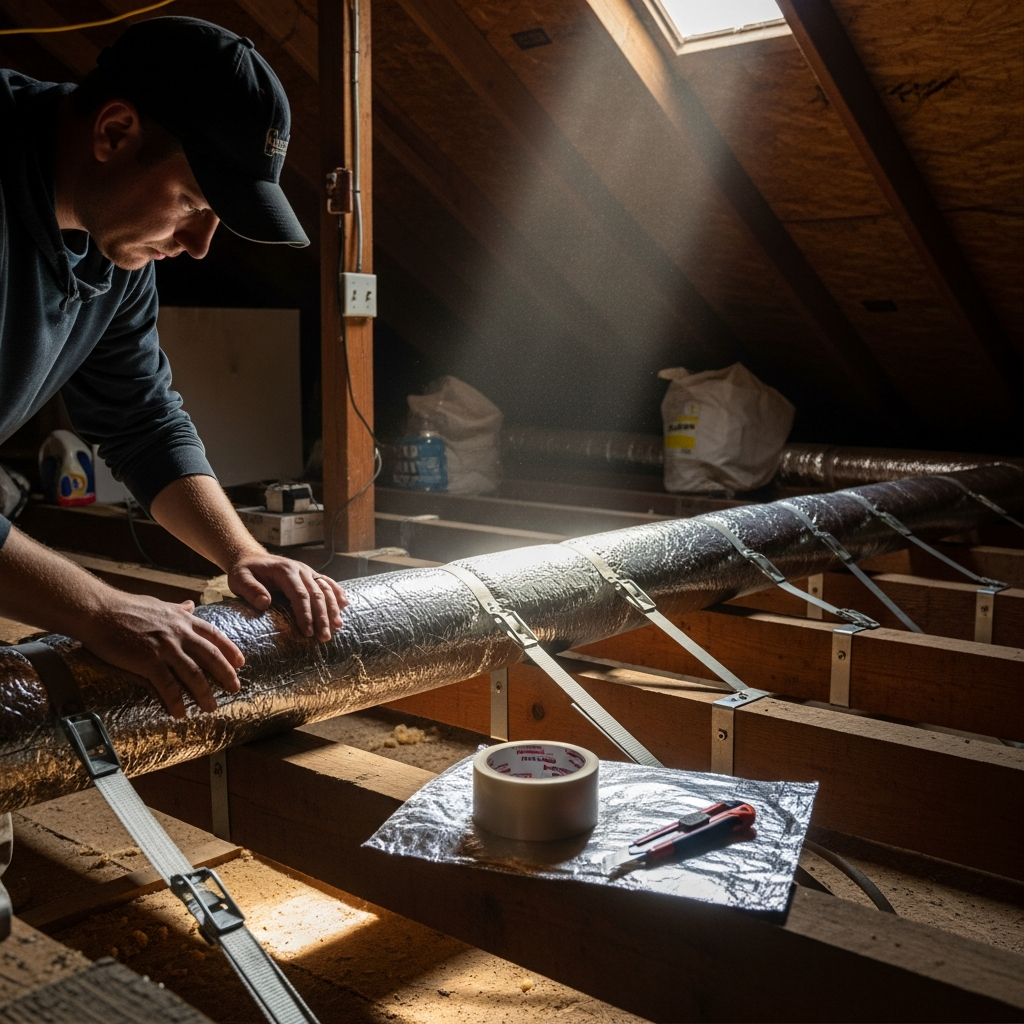
- Airtightness: Seal all joints with high-temperature foil tape; avoid screws that protrude into the airstream.
- Smooth path: Rigid metal duct offers the least resistance and is easiest to clean.
- Smart termination: A quality hood with a free-moving damper and no screen supports steady discharge year-round.
Standards for materials and components
Material choices set the baseline for durable, low-maintenance operation. Establish a standard to use components that resist crushing, withstand heat, and remain serviceable over time.
- Main run: Rigid aluminum or galvanized steel, smooth interior, 4-inch nominal diameter unless otherwise specified by the appliance.
- Transition: UL-listed semi-rigid aluminum, shortest possible length, protected by a recessed vent box in tight spaces.
- Elbows: Prefer long-radius elbows; limit total count to the minimum necessary for the route.
- Fasteners and seals: High-temperature foil tape and shallow rivets as required; no duct tape, which degrades with heat.
- Supports: Straps or hangers every 4 to 6 feet; more often on vertical runs.
Benchmarking equivalent length
Make equivalent length part of your maintenance standard. Document it at installation and verify after any change. Each elbow adds effective feet to the run, and exceeding your dryer’s limit is a red flag. If renovations extend the path, commit to rerouting within the limit or adding a listed booster fan with accessible service points. Keep this number on file near the appliance for quick reference during annual checks.
Seasonal considerations in Readington
Our winters can be cold and windy, while summers bring humidity that challenges slow-moving air. To maintain standards year-round, treat insulation and termination checks as seasonal musts. Insulate any duct segment that passes through unconditioned space. In winter, confirm the damper seals tightly without icing. In summer, ensure landscaping does not crowd the hood and that humidity does not mix with lint to create paste-like buildup inside bends.
Inspection cadence and tasks
Adopt a simple yet thorough cadence that integrates quick monthly checks with deeper annual service. The key is consistency—regular attention keeps small issues from multiplying.
- Every load: Clean the dryer lint screen. Wash it monthly with mild soap to clear detergent film.
- Monthly: Visual check of the transition duct for kinks or crushing when the dryer is moved.
- Seasonally: Inspect the exterior hood. Confirm the damper swings freely and is not blocked by snow, mulch, or nesting attempts.
- Biannually: Vacuum lint around the dryer cabinet, behind the appliance, and at accessible elbows.
- Annually: Full duct cleaning and inspection; verify equivalent length, seals, supports, and termination quality.
Cleaning standards and methods
Cleaning is not just about removing visible lint—it is about restoring interior smoothness and maintaining airflow. Set a cleaning standard that includes the transition, elbows, and the entire run to the termination.
- Tools: Rotary brush kits sized for 4-inch ducts, a vacuum with a long hose, and a flashlight to inspect shine and debris.
- Sequence: Disconnect the transition, brush from the dryer end toward the exterior, and finish by brushing in from the termination to catch remaining debris.
- Verification: After cleaning, run the dryer on air-fluff and observe the damper fully opening with strong, steady flow.
In homes with pets, large families, or heavy towel and blanket loads, set a stricter cleaning interval—every six months is a reliable benchmark. Document each cleaning date and any issues found to predict future needs.
Sealing and leak control
Establish a zero-tolerance standard for air leaks. Even small leaks reduce velocity, encouraging lint to drop out of the airstream. During annual service, inspect every seam for dust trails that indicate leakage, reseal with high-temperature foil tape, and confirm mechanical fasteners do not protrude into the duct. If a joint is difficult to access and repeatedly leaks, consider replacing that section with a single, correctly sized length to remove the joint altogether.
Termination standards
The exterior hood should be selected and maintained to minimize resistance and protect against weather. Set standards for operation and access.
- No screens: They clog with lint and reduce airflow.
- Free-moving damper: Opens easily and seals closed when off, preventing backdrafts.
- Accessible location: Mounted where you can inspect and clean without ladders if possible, and above average snow height.
- Orientation: Installed plumb and square so the damper does not rub or stick.
Documentation and labeling
A robust maintenance program relies on clear documentation. Keep a laminated card or sticker near the dryer noting the equivalent length, number of elbows, termination type, and last cleaning date. If any part of the run is concealed, label soffits or access panels to indicate the duct’s path and any cleanout locations. This information speeds troubleshooting and prevents accidental damage during other home projects.
Quality assurance after service
After each maintenance session, run a commissioning check. On air-fluff, verify damper motion and steady airflow. On a heated cycle with a small load, confirm that the laundry room remains comfortable and that the outlet air is warm but not scorching. Time the cycle and compare it to your baseline; deviations of more than 15 to 20 percent suggest residual restrictions or appliance-side issues.
Readington home styles and special cases
Older farmhouses and colonials may have thick masonry walls or fieldstone foundations that complicate sidewall exits. Where possible, reroute to shorten the path and reduce elbows. Newer townhomes may feature interior laundry closets that require vertical roof runs; these benefit from strict adherence to long-radius elbows and insulated sections to combat winter condensation. In both cases, maintaining the standards outlined here will help ensure fast drying and lower fire risk.
Upgrade triggers
Define clear triggers that prompt component upgrades rather than repeated repairs. Replacing marginal parts before they fail fully is part of a strong standard.
- Repeatedly kinked transition: Install a recessed vent box and shorten the connection.
- Chronic damper sticking: Replace the hood with a high-quality, low-resistance model.
- Persistent leaks at a seam: Replace the affected section with a continuous length.
- Excessive equivalent length: Reroute to a closer exterior wall or install a listed booster fan with accessible service points.
Frequently asked questions
Q: How do I know my maintenance interval is correct? A: Track cycle times and lint accumulation. If dry times creep up between annual cleanings, increase frequency to twice a year.
Q: Is dryer sheet residue a real issue? A: Yes. Film can build up on the lint screen and reduce airflow. Wash the screen monthly with mild soap and warm water.
Q: Should I lubricate the damper? A: Most quality hoods do not need lubrication. Keep the area clean and ensure the damper swings freely; replace if warped or binding.
Q: Can I add a filter to the vent line? A: No. Filters and screens trap lint and restrict airflow, increasing fire risk. Rely on the dryer’s lint screen and proper cleaning instead.
Q: What if I have to exceed the length limit? A: First try to reroute. If impossible, consult about a listed booster fan installed per instructions and maintained on a defined schedule.
Keep your vent at peak performance
Standards only work when they are followed consistently. By setting clear benchmarks for materials, sealing, cleaning, and termination quality—and by documenting your equivalent length and service dates—you create a system that is easy to manage and reliable in every season. If you want a maintenance partner who can apply these standards, verify airflow, and recommend timely upgrades, schedule dependable dryer vent installation evaluations and enjoy confident, efficient drying throughout your Readington home.
