Understanding the air duct cleaning process gives Readington, New Jersey homeowners clarity, confidence, and better results. While every home is different, reputable technicians follow a consistent set of steps to protect your system, prevent mess, and remove built-up dust and debris from both supply and return sides. This guide walks you through each stage—from the initial inspection to post-clean verification—so you know what to expect and how to prepare. If you are exploring your options, remember that a methodical approach to air duct cleaning is the difference between surface-level work and a thorough, whole-system result.
Step 1: Pre-visit conversation and preparation
A smooth service starts before anyone parks in the driveway. The team will ask about your home’s layout, number of vents and returns, recent renovations, and any comfort or allergy concerns. You will receive simple preparation tips—clear a path to vents, secure pets, and make sure the air handler or furnace is accessible. Having a fresh filter available is helpful so the system runs clean immediately after the service.
Step 2: Arrival, protection, and inspection
On arrival, technicians protect floors and corners along equipment pathways, then perform a visual inspection. They check the return plenum, main trunk lines, and easily viewed sections of duct for indicators like visible dust mats, pet hair, or construction debris. The blower cabinet is opened to assess the condition of the blower wheel and surrounding components. The goal is to confirm scope and identify any special considerations such as fragile flex runs, tight attic spaces, or rooms with heavy dust accumulation.
Step 3: Establishing negative pressure
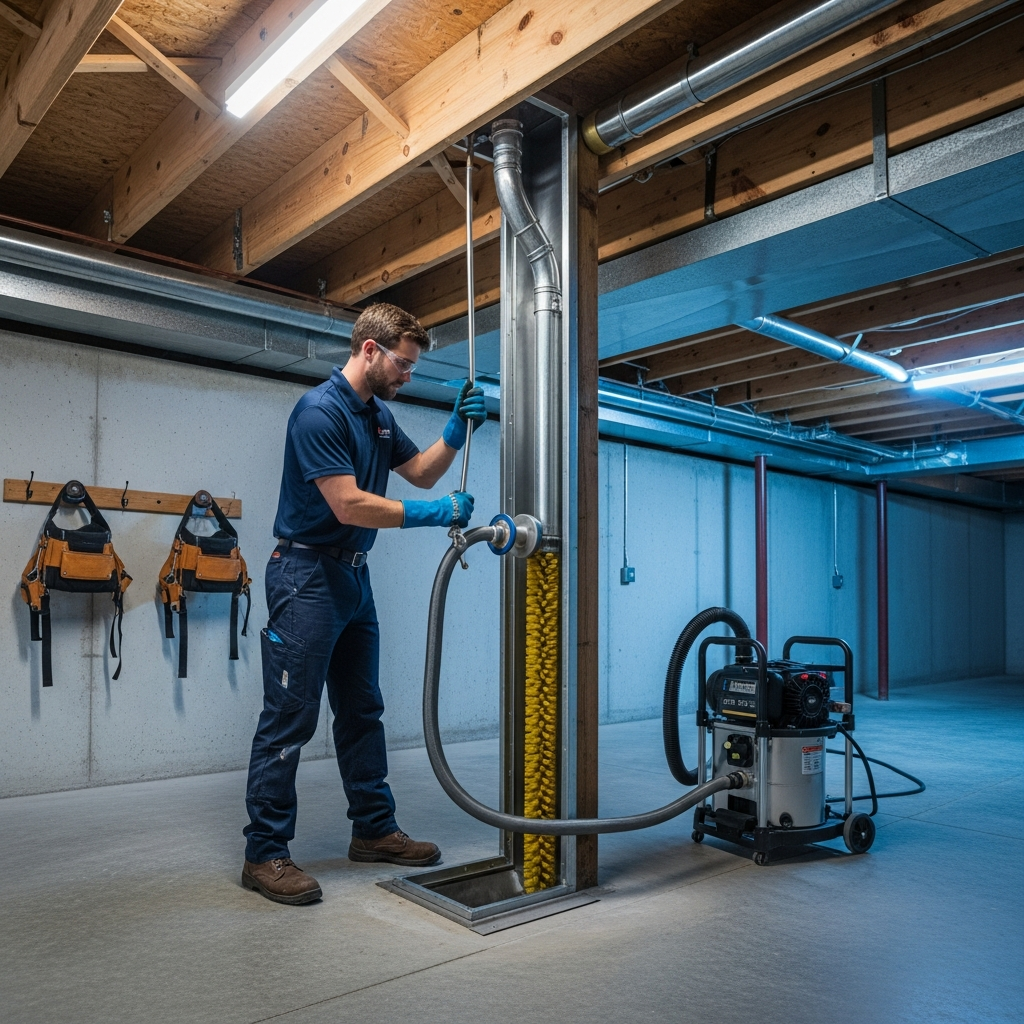
Professional cleaning relies on strong, continuous negative pressure to capture contaminants safely. The crew connects a high-powered collection unit to the main trunks, seals off vents or sections as needed, and verifies airflow direction. This ensures that loosened debris travels into the collection system instead of being released into living spaces. In Readington homes with long duct runs, maintaining pressure balance is critical to keep the entire system moving in the right direction.
Step 4: Agitation and source removal
With negative pressure established, technicians work room by room, removing registers, protecting finishes, and inserting agitation tools—rotary brushes, air whips, or compressed air lances—into each branch. The agitation breaks up accumulated dust, pet dander, and fine particles from drywall or sawdust. On return lines, which often carry the most buildup, the same care is taken to dislodge and extract debris. Throughout the process, the crew monitors airflow, reseals access points as they move, and keeps the system closed except for controlled entry.
Step 5: Addressing the blower compartment
Because the blower moves air through the entire system, attention to this area is essential. The cabinet is opened, surfaces are cleaned, and the blower wheel is addressed according to the manufacturer’s allowances. The objective is to remove the dust that can otherwise be recirculated and to ensure the blower can operate at its intended efficiency.
Step 6: Coil and cabinet check
Technicians visually assess the evaporator coil and surrounding cabinet for cleanliness and drainage. While coil cleaning may be a separate task depending on access and system type, identifying and reporting coil condition is part of a thorough service. A clean coil supports better heat transfer, steady airflow, and consistent comfort across rooms in your Readington home.
Step 7: Reassembly and sealing
After source removal is complete, all access ports are sealed, registers are reinstalled, and the system is returned to its normal configuration. The crew ensures that insulation and vapor barriers remain intact on flex or lined ducts. Careful reassembly prevents air leaks and keeps dust from entering the system after the service.
Step 8: Final verification and homeowner review
Before leaving, reputable teams share what they found and what they removed. You may see photos from inside ducts, notes about areas with heavier accumulation, and recommendations for filter type and change intervals. This is also the time to point out any comfort issues, so the technician can confirm airflow or discuss further steps like balancing or sealing if needed.
Why process matters for Readington homes
In communities with four distinct seasons, ducts experience temperature swings and humidity changes that can influence what accumulates inside. Homes near open fields may draw in fine dust during the drier months, while spring pollen can contribute to buildup on returns. A disciplined process ensures that contaminants are removed instead of redistributed. For families with allergies, pets, or recent remodeling, that difference can be felt right away in cleaner surfaces and steadier airflow.
What homeowners can do between cleanings
- Use quality filters suited to your system and change them on schedule.
- Keep returns unobstructed and vacuum vent covers when you dust.
- Address moisture issues quickly to prevent microbial growth.
- Seal obvious duct leaks to reduce infiltration of dusty air from basements or attics.
- Schedule periodic inspections to determine if and when cleaning is needed.
Common questions about methods and results
Q: How long does the process take? A: Most single-family homes in Readington are completed within several hours, depending on size, number of vents, and the level of buildup discovered during inspection.
Q: Will the service be noisy or messy? A: You can expect the sound of vacuum equipment and air tools, but floors and furnishings are protected and negative pressure keeps debris contained. The goal is to leave the space as clean as it was found.
Q: Do all vents get cleaned? A: Yes—each supply and return branch is addressed, along with registers, returns, and the blower cabinet. Skipping returns or focusing only on visible vents is not a comprehensive approach.
Q: What about chemicals or deodorizers? A: The cornerstone of professional cleaning is physical removal of contaminants. Deodorizers or sanitizers are used selectively and only when appropriate for the system and situation.
Q: How will I know it worked? A: Photo documentation, cleaner registers, reduced dust accumulation on surfaces, and improved airflow in previously weak rooms are common indicators. Your technician will discuss findings and results before packing up.
How Readington layouts and materials affect the job
Older colonials may have long, rectangular trunk lines with multiple branch takeoffs; newer builds often include flex runs to individual rooms. Each material—galvanized metal, lined duct board, or flex—requires the right agitation tool and technique to avoid damage. Professional crews adjust their methods based on your system’s construction, access points, and space constraints in basements, closets, or attics.
If your home has recently undergone renovation, fine drywall dust or sawdust can accumulate rapidly. A timely, professional air duct cleaning can remove those materials before they resettle throughout the house, helping you enjoy that “new project” feeling without the lingering dust.
Seasonal timing tips
- Early spring: Address winter dust and prepare for pollen season.
- Late summer: Clear out summer dust and humidity-related buildup before heating season.
- After projects: Schedule cleaning soon after construction or refinishing work.
- Anytime symptoms appear: If allergies spike indoors or dust persists, do not wait for a particular season.
Frequently asked questions
Q: Will cleaning improve energy efficiency? A: While results vary, restoring intended airflow and removing obstructions can help your system run more smoothly, which supports efficient operation.
Q: Can I stay home during the service? A: Yes. Many homeowners remain on-site. Technicians will let you know when doors may need to remain open or when noise levels may rise.
Q: How often is cleaning necessary? A: It depends on pets, filter type, proximity to dust sources, and personal preferences. Some homes benefit from inspection every two to three years, with cleaning performed as needed.
Q: Do you clean the dryer vent too? A: Dryer vent cleaning is a separate but related service. Ask your provider if they can perform both on the same visit for convenience.
Q: Will you move heavy furniture? A: Clear access is important. Most teams ask homeowners to move large items away from vents before the appointment.
Ready for a cleaner system and fresher air?
If you value a step-by-step process, clear communication, and visible results, choose a team that treats your home with care from the first phone call to the final walkthrough. Schedule professional air duct cleaning and experience the difference that thorough source removal can make in your Readington home.
