Introduction: A Clear, Step-by-Step Air Duct Cleaning Process for Readington Homes
When you know exactly how air duct cleaning is supposed to work, you can evaluate providers confidently and understand what is happening in your home on service day. Readington’s weather patterns—pollen in spring, summer humidity, fall yard work, and winter furnace cycles—mean dust and debris can build quietly inside your system. A defined, step-by-step process ensures your ducts are cleaned thoroughly and safely, and that your home is protected from start to finish. If you are beginning to explore local options, it helps to review a proven workflow and compare it with what nearby teams describe. For an overview of professional air duct cleaning, the following guide outlines each phase and the details that matter most.
Step 1: Pre-Inspection and Planning
Every effective project begins with a system assessment. Technicians identify the air handler, locate supply and return trunks, and map branch runs. They determine the materials in use—sheet metal, internally lined ductboard, or flexible duct—because each type benefits from specific tools and techniques. The team also notes previous modifications, tight chases, and areas with known comfort or odor issues. A good plan limits unnecessary openings and ensures safe, code-compliant restoration afterward. Homeowners should expect a clear explanation of what will be accessed, how, and why.
Step 2: Home Protection and Containment
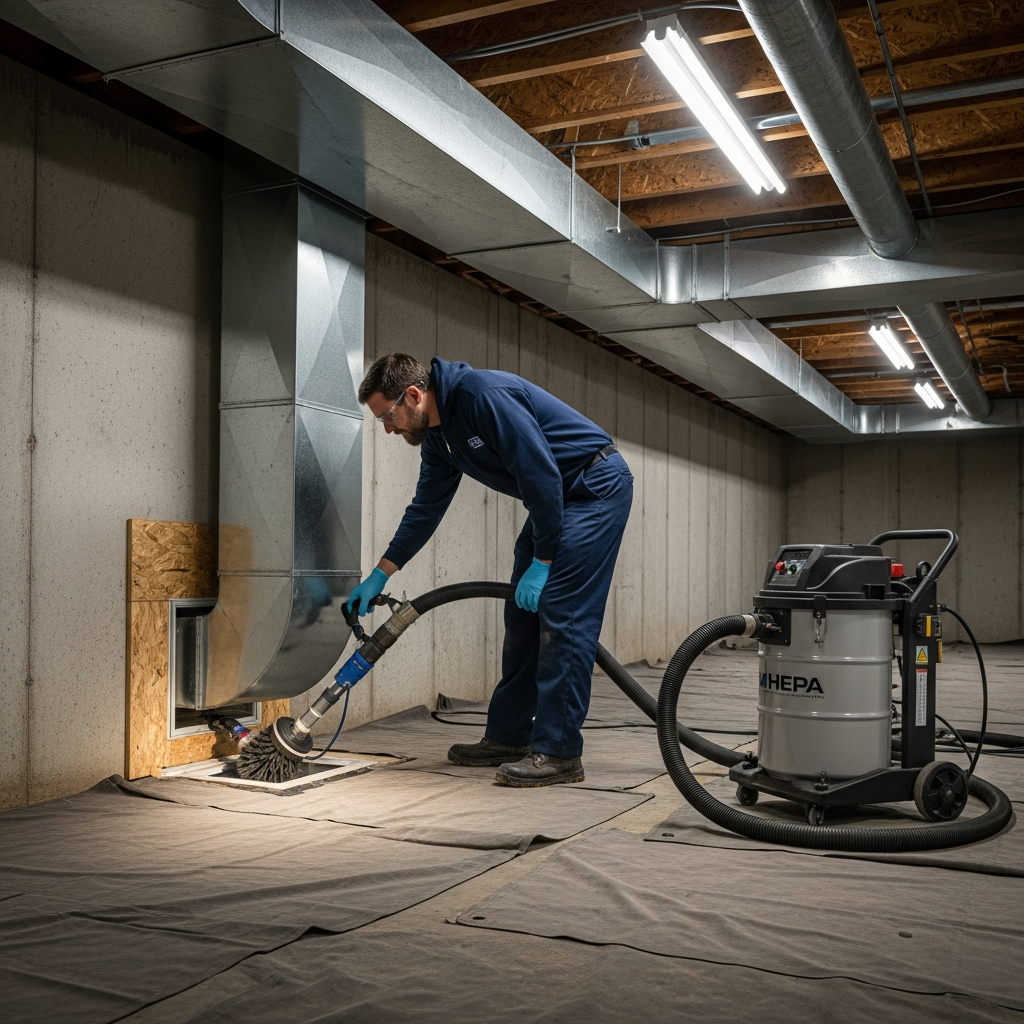
Next, crews protect the space. Floor coverings are placed along equipment paths, and registers are sealed or managed strategically to maintain control during different phases. Doors may be opened as equipment is moved, so pets should be secured. The goal is to safeguard finishes while setting up an environment where debris is contained throughout the process. Clear communication at this stage sets expectations for noise, movement, and the general flow of the visit.
Step 3: Establish Negative Pressure
A high-powered vacuum unit, equipped with HEPA filtration, is connected to the duct system to create negative pressure. This places the interior of your ductwork under suction so that as debris is dislodged, it is pulled toward the collection unit rather than drifting into living spaces. Negative pressure is the backbone of a clean, professional job; without it, agitation alone can scatter dust throughout the home. Technicians verify the seal and suction strength before proceeding.
Step 4: Mechanical Agitation
With negative pressure active, technicians work through the system using tools matched to the duct material and condition. Flexible whips, rotary brushes, and compressed-air nozzles dislodge accumulation from interior surfaces. The path is systematic: branch lines, then trunks, then key transitions. The objective is to break the bond between dust and duct so debris can be transported and captured. Care is taken around turns, dampers, and delicate linings to avoid damage while still freeing stuck material.
Step 5: Source Removal and Capture
As agitation proceeds, debris is drawn into the collection unit for secure containment. HEPA filtration prevents re-release back into your home. Professionals avoid “blow-and-go” shortcuts by ensuring that the majority of dislodged materials are transported to the vacuum connection point and removed, not left to settle again somewhere else in the system. Proper capture is what separates a genuine cleaning from a cosmetic pass.
Step 6: Component Attention (Coils, Blower, and More)
While cleaning ducts, technicians also assess accessible components for cleanliness and function. Evaporator coils, blower wheels, housings, drain pans, and cabinet interiors influence airflow, odors, and system efficiency. Addressing these areas as part of the service scope promotes a complete solution. If any components require specialized cleaning beyond the standard scope, reputable providers explain options, timing, and what to expect.
Step 7: Verification and Documentation
Quality control ends with proof. Before-and-after photos from the main return, main supply trunk, and representative branches confirm that surfaces are free of visible buildup. Any persistent issues, such as crushed flex ducts, disconnected runs, or poor sealing, are documented in a written summary with recommendations. This record helps homeowners understand what was accomplished and plan future maintenance.
Readington Considerations: Why Process Matters Locally
Homes in Readington see seasonal pollen peaks and humidity swings that influence indoor dust and odor. Many homes have basements or utility rooms where returns may draw dust if joints are not sealed well. Older properties might present tight mechanical chases or mixed duct materials, requiring tool selection and access planning that respect the structure. A clear, step-by-step approach ensures the work is thorough without unnecessary disruption, regardless of your home’s age or layout.
Homeowner Preparation Tips
- Clear access to the air handler and major returns and supplies.
- Note areas with comfort problems or recurring odors to prioritize during service.
- Have your current filter type available for review; upgrades may be suggested.
- Secure pets and plan for normal levels of equipment noise.
- Ask for a walk-through at the beginning and end so you understand the plan and the results.
After-Care: Keeping Your System Cleaner Longer
- Use high-quality filters appropriate for your system and change them on schedule.
- Dust and vacuum registers regularly to prevent buildup at the grille.
- Consider sealing accessible duct joints and insulating where practical to reduce dust infiltration.
- Manage humidity to minimize musty odors and residue.
- Schedule periodic inspections to determine if and when another cleaning is needed based on evidence.
Comparing Providers by Process
When choosing a team, ask them to walk you through each step—and listen for specifics. A provider who clearly explains access methods, negative pressure, tool selection, and documentation is more likely to deliver the thorough, verifiable results you want. In the middle of your decision, compare what you have learned with established best practices for Readington air duct cleaning services. The closer a provider aligns with a structured process, the more confident you can be in the outcome.
Frequently Asked Questions
Q: How long does the full process usually take? A: It depends on the size of the home, number of registers, and complexity of the system. Providers can give an estimate after an initial assessment.
Q: Will the cleaning be messy? A: Professional containment and negative pressure minimize mess. Reputable crews also protect floors and finishes and clean up after themselves.
Q: Do you have to cut into the ducts? A: Often, controlled access points are created for effective cleaning and then sealed airtight after service. Providers should explain where and why.
Q: Will this improve airflow and odors? A: Removing debris can help restore more consistent airflow and can reduce dusty or stale smells that originate from buildup inside ducts.
Q: What about my coil and blower? A: These components are assessed and, when part of the scope, cleaned appropriately to support overall system performance.
Q: How often should I schedule cleaning? A: Timing depends on household factors—pets, renovations, pollen exposure, and filter practices. Inspections help determine need.
Q: Is it safe for lined or flex ducts? A: With proper tool selection and technique, yes. Experienced technicians tailor agitation methods to protect duct materials.
Q: Do I need to leave the house? A: Most homeowners stay. Expect some equipment noise and door openings as the crew moves tools and hoses.
Ready for a Cleaner System
If you want a proven, step-by-step approach with documentation that shows exactly what was done, schedule a visit with a trusted Readington team. Book your appointment for professional air duct cleaning and feel the difference in comfort and cleanliness throughout your home.
