Introduction: A Complete Guide for Readington Homeowners
Installing or upgrading ductwork is one of the most impactful improvements you can make to indoor comfort. In Readington, New Jersey, where winter chills and summer humidity both challenge HVAC systems, a well-designed, carefully sealed, and properly balanced duct network makes all the difference. This guide breaks down the full process, from assessing your home to final commissioning, so you know what to expect and how to advocate for best practices. If you prefer expert help at each step, consider engaging local professionals who specialize in air duct installation so your project stays code-compliant, efficient, and quiet.
Whether you are building an addition, finishing a basement, or replacing aging ductwork, this homeowner-focused roadmap will help you communicate effectively with contractors and avoid common pitfalls.
Planning the Project
Set clear goals: comfort, energy performance, noise reduction, and future maintenance. Create a room-by-room list of requirements such as home office needs, guest space usage, or areas that feel drafty. Decide early if you want zoning, which can deliver room or floor-specific control using separate dampers and thermostats.
Access and pathways matter. Identify attics, crawlspaces, basements, and vertical chases suitable for trunks and branches. Consider future service access for filters, balancing dampers, and the air handler. Upfront planning eases installation and minimizes later disruptions.
Load Calculations and Duct Design
A proper design starts with accurate heating and cooling load calculations. These calculations determine how much air each room should receive and inform duct sizing and layout. Poor sizing leads to noise and uneven temperatures. Good design also plans for sufficient return air so the system can breathe easily.
In Readington’s climate, consider solar gain through windows, insulation levels, air sealing, and ceiling heights. Position supplies to wash exterior walls or windows with conditioned air and returns to capture room air efficiently. Plan for smooth transitions and limit sharp elbows that increase static pressure.
Choosing Materials
Rigid sheet metal trunks are the standard for durability and minimal friction. Insulated flexible duct can be used for short, accessible branches if kept straight, taut, and well supported. Use mastic for sealing, UL-listed foil tape where appropriate, and insulation on ducts in unconditioned spaces. Quality registers with adjustable dampers allow for post-install fine-tuning.
Vibration isolation near the air handler, lined plenums to reduce noise, and solid hangers or supports keep the system quiet and steady. Discuss materials with your installer to balance performance with accessibility and future servicing.
Installation Sequence
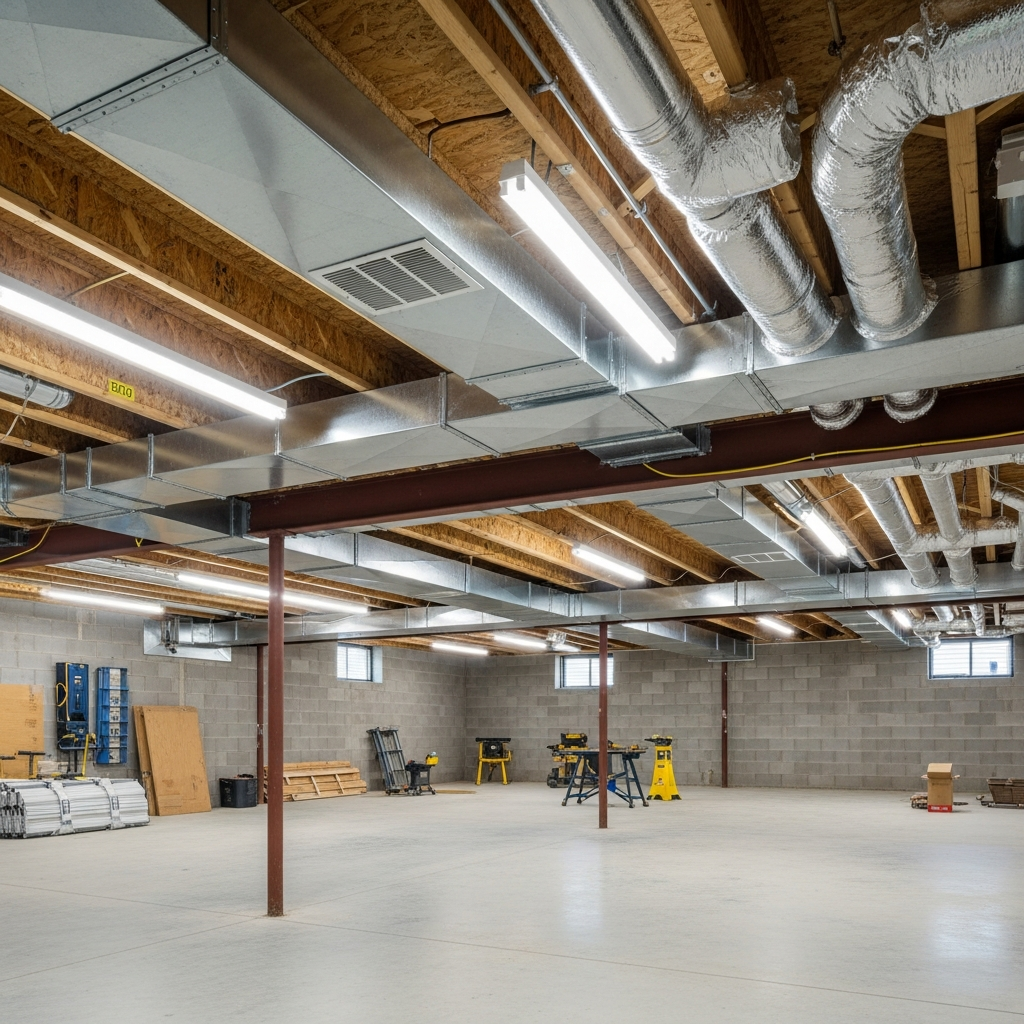
Site preparation includes protecting floors, clearing pathways, and staging materials. The air handler location is verified for proper clearances and service access. The main trunk line is installed first, keeping runs as direct as possible. Branch takeoffs are added next, sized for the design airflow to each room, and routed with minimal bends.
Each boot is secured and aligned with finished flooring or drywall. Seams and joints are sealed with mastic. Ducts in attics or basements are insulated as required. Supports are spaced per best practice to prevent sagging or vibration, and balancing dampers are positioned for easy access.
Balancing, Testing, and Commissioning
After installation, your contractor measures airflow to each room and adjusts dampers to achieve the target CFM. Static pressure readings verify the system is within manufacturer limits. Any noisy or underperforming runs are corrected by straightening flexible duct, adjusting supports, or modifying takeoffs. Leak checks confirm the sealing job is sound.
Before walls are closed, a final walk-through confirms register placement, damper labeling, and access to filters and service panels. Clear documentation helps homeowners maintain performance over the long term.
Readington-Specific Considerations
Local codes, inspection timelines, and seasonal weather patterns shape installation logistics. In colder months, attic work may require temporary weather protection and attention to condensation control. In humid summers, insulation and vapor barriers become critical to prevent sweating and moisture issues. A Readington-based contractor experienced with township procedures streamlines approvals and ensures smooth inspections.
Mid-Project Checkpoint
Halfway through, schedule a status review. Confirm that all supply and return locations match the design and that access remains available for future maintenance. Discuss any surprises—such as hidden framing, plumbing reroutes, or electrical obstacles—and agree on the most efficient solutions. If you prefer turnkey management, a Readington provider focused on ductwork installation can coordinate design revisions, inspections, and final balancing without derailing your timeline.
Common Mistakes and How to Avoid Them
Skipping load calculations: Estimating by square footage alone often mis-sizes ducts and equipment. Insist on proper calculations to avoid comfort issues.
Too many sharp turns: Each elbow adds resistance. Favor gentle sweeps and straight runs to maintain airflow and reduce noise.
Poor sealing: Air leaks reduce efficiency and comfort. Use mastic at all joints, especially in unconditioned spaces.
Inadequate returns: Without sufficient return air, rooms feel stuffy and systems strain. Balance supply and return strategies.
Neglecting access: Ducts and dampers need space for servicing. Plan for filter changes and adjustments to be quick and clean.
Maintenance Tips After Installation
Replace or clean filters on schedule, keep registers unobstructed, and perform seasonal checkups. Look and listen for new noises, drafts, or temperature imbalances. Early intervention protects efficiency and extends equipment life. Documented damper positions and a simple room-by-room airflow log make future adjustments faster and more accurate.
Frequently Asked Questions
Q: How do I know my ducts are properly sized? A: Ask your contractor to share the load calculation summary and duct sizing rationale. Final balancing tests should confirm design airflow to each room.
Q: Are flexible ducts acceptable? A: Yes, when used correctly for short runs. They must be pulled tight, supported well, and kept free of sharp bends to maintain airflow and reduce noise.
Q: What if a room still feels hot or cold? A: Verify damper positions, register orientation, and furniture placement. If needed, the installer can adjust takeoffs, add turning vanes, or modify run lengths.
Q: Can ducts help improve indoor air quality? A: Proper sealing, filtration, and return placement reduce dust movement and improve circulation. Pairing ducts with quality filtration further enhances IAQ.
Q: When should I schedule inspections? A: Coordinate inspections before closing walls or ceilings, and follow township requirements. A contractor familiar with local procedures helps avoid delays.
Ready to Improve Comfort in Your Readington Home?
When you want a quiet, efficient system that delivers balanced airflow year-round, partner with a local installer who documents design, seals meticulously, and verifies performance with real measurements. Book a home assessment to review your layout and goals, and set a clear path from planning through commissioning. To streamline the entire process, work with a trusted team for Readington air duct installation and enjoy consistent comfort in every room.
