What Readington Homeowners Can Expect from Air Duct Repair
When your home’s airflow feels uneven or your HVAC seems to work harder than it should, it may be time to look closely at the ductwork. Air ducts are the pathways that deliver conditioned air to each room, and when they leak, sag, or become obstructed, comfort and indoor air quality can suffer. In Readington, a great first step is to connect with a local professional who can evaluate your system and walk you through an organized plan. Many homeowners begin by reviewing trusted air duct repair services so they understand the process, timeline, and expected outcomes before scheduling.
Air duct repair is not a one-size-fits-all task. The scope depends on duct type, accessibility, home layout, and the specific symptoms you have noticed. A well-planned service prioritizes safety, cleanliness, documentation, and homeowner communication from start to finish.
The Initial Conversation and Scheduling
Your experience typically begins with a phone or online consultation where you describe issues such as uneven temperatures, noises, odors, or visible gaps. You may be asked to share photos of accessible areas to speed up the onsite assessment. During scheduling, professionals outline preparation steps, such as clearing access to mechanical rooms and major duct runs, and discuss any special considerations for pets, sensitive rooms, or home office schedules.
It is normal to receive a general overview of the diagnostic methods used during the visit. This might include airflow measurements, pressure testing, and a visual inspection of branches, trunks, boots, and returns. The goal is to leave the assessment with a clear, documented plan for solving the issues you described.
Arrival and Site Protection
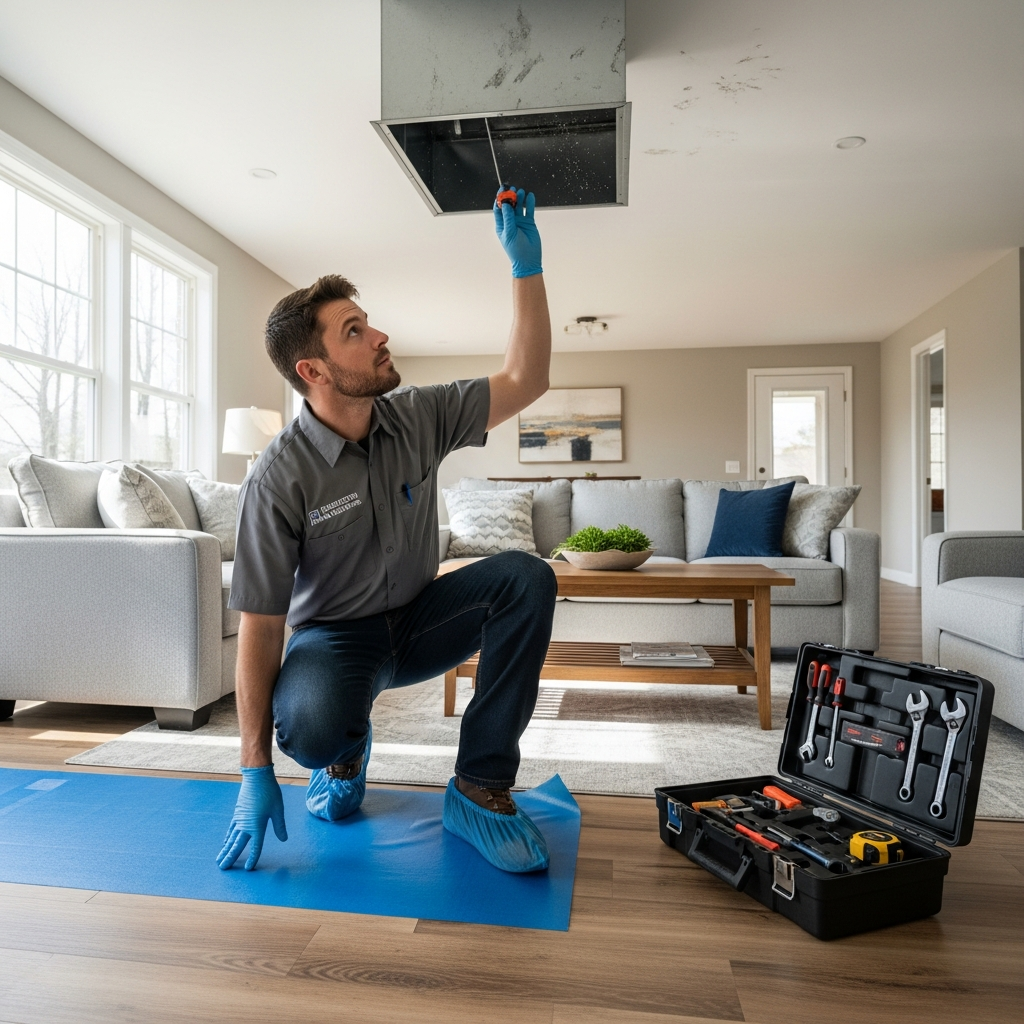
On the day of service, technicians arrive with protective materials for floors and furnishings, along with the equipment needed for inspection and repairs. Expect a brief walkthrough to confirm areas of concern and to identify access points. Good teams address dust control, set expectations for noise, and explain how they will safeguard your home’s finishes.
Clear communication is a hallmark of a professional repair. You should feel informed about what rooms will be accessed, where technicians will work, and approximately how long each phase will take. If cutting access openings is required, you will be told where and why, and how those openings will be closed and finished after the repairs.
Diagnostic Methods and Documentation
Accurate diagnosis is the foundation of successful repairs. Technicians use a combination of visual inspection, airflow readings, and pressure diagnostics to find gaps, loose joints, crushed sections, or imbalances. Photos and notes support a precise scope of work. This evidence-based approach makes it easier to understand the plan and align it with your goals—for example, reducing noise, stabilizing temperatures, or improving indoor air quality.
In many Readington homes, the most common findings include poorly sealed takeoffs, disconnected flexible runs in attics or crawlspaces, inadequate return pathways, and insufficient support for long duct spans. Addressing these points pays dividends in comfort and system efficiency.
Typical Repair Actions
The repair phase often starts with sealing joints and transitions using mastic or approved tapes, adding mechanical fasteners where needed, and correcting the routing of flexible ducts to remove kinks or excessive bends. Supports may be adjusted to maintain proper slope and diameter, especially on longer runs. Where damage is severe, short sections can be replaced or redesigned for better balance and access.
Balancing adjustments are a common part of the visit. Technicians may fine-tune dampers, verify room-by-room supply, and confirm that returns are sized appropriately for the equipment and the home’s layout. In some cases, insulation is added or replaced to address thermal losses or condensation risk in unconditioned spaces.
Cleanliness and Containment
Professional teams employ protection measures to keep dust to a minimum and to protect belongings. Drop cloths, floor coverings, and careful access planning help maintain order. If any surface must be opened for access, a plan is set to contain debris and restore the area after work is complete. The goal is to leave the home clean and to ensure that ducts are not contaminated during the repair process.
At the end of each work segment, crews often perform a quick cleanup and provide a status update. If multi-day work is required, you will understand what to expect in the next session and how the home will be left between visits.
Quality Checks and Post-Repair Verification
Once repairs are completed, technicians verify that joints are sealed, supports are secure, and airflow is balanced appropriately. They may re-test pressure and airflow to document measurable improvements. Photos of corrected issues and final readings become part of your project record, giving you a baseline for future maintenance.
Homeowners can expect guidance on filter selection, replacement intervals, and seasonal best practices. If your household includes individuals with allergies or respiratory sensitivities, ask about additional measures like improved return strategies or better filtration that complement the duct repairs.
Communication Throughout the Process
Strong communication ensures your repair aligns with your expectations. Technicians should explain changes to the plan if unexpected conditions are discovered and outline any new access points or materials needed. If you have a specific comfort concern—a room that is always too warm or too cool—ensure that it is tested again at the end of the visit.
In the middle of your project planning, you might revisit your goals and timeline to confirm that the work addresses the most important comfort and air quality priorities. When you want to validate options or compare approaches, refer to professional air duct repair resources to keep decisions focused and well-informed.
Safety and Home Considerations
Technicians are trained to protect both your home and its occupants. They manage equipment power safely, avoid obstructing combustion air where applicable, and ensure detectors and alarms remain functional. Ladders, tools, and materials are staged to minimize trip hazards, and clear walkways are maintained throughout the job.
For families with children or pets, request a quick overview of where doors should remain closed and how work zones will be identified. Planning for quiet periods can help where home offices are concerned.
Aftercare and Maintenance Tips
Once the repair is finished, keep your documentation handy, including photos and test results. Track filter changes on a calendar and pay attention to rooms where comfort has improved or where more tuning might be helpful. If you plan renovations in the future, let your technician know so the duct system can be adapted for the new layout.
Proactive checks—like inspecting visible connections annually and noting any new noises—help you address small issues before they become larger challenges. The better your baseline, the easier it is to spot changes that deserve attention.
Frequently Asked Questions
Will my home be very dusty during the repair? With proper containment and cleanup practices, dust is kept to a minimum. Technicians protect surfaces and vacuum debris as needed.
How do I know if the repairs worked? Look for steadier temperatures, stronger or more even airflow, and quieter operation. Final readings and photos help confirm improvements.
Is flexible ductwork okay to keep? Yes, if it is in good condition and properly supported. Technicians will correct kinks, compression, or poor terminations that limit performance.
Do I need to be home? It is helpful to be available at the beginning and end of the visit for a walkthrough and questions. Many homeowners arrange access with the team for multi-day projects.
What about insulation? In unconditioned spaces, proper duct insulation is crucial to control condensation and thermal losses. Your technician will advise where it is most beneficial.
Move Forward with Confidence
If your Readington home shows signs of duct leakage, noise, or inconsistent temperatures, a professional visit can restore comfort and performance. Choose a team that documents findings, explains the plan clearly, and verifies results when the work is done. When you are ready, schedule a visit with a local expert and prepare your home for a smooth experience. For dependable help and organized results, consider booking professional air duct repair services so your system delivers cleaner, quieter, and more consistent airflow every season.
