Fast Help for Emergency Air Duct Repair in Readington, NJ
When an air duct separates, collapses, or begins drawing in unconditioned air unexpectedly, you feel the impact fast—rooms go out of balance, the system grows noisy, and indoor air can degrade quickly. In these moments, a calm, organized response protects your home and restores comfort. Readington homeowners benefit from knowing who to call, what to do first, and how the emergency visit will unfold. If you want a head start before an urgent need arises, review trusted local options for air duct repair services so you know exactly whom to contact when time matters most.
Emergencies vary. A disconnected trunk in a crawlspace, a crushed flexible run in an attic, or a sudden return leak that pulls air from a garage each demands quick attention, clear safety steps, and precise repair techniques. The more prepared you are, the smoother the visit and the faster your system stabilizes.
Immediate Steps to Take
First, stay safe. If you suspect a combustion appliance may be affected, ensure detectors are working and consider pausing HVAC operation until a professional confirms safe conditions. Close doors to problem areas if odors or dust are spreading. If you can see a disconnected run and it is safe to access, do not attempt to reattach it without the proper materials and know-how, as temporary fixes can cause more harm than good.
Next, document what you notice. Take photos of visible issues and note the rooms affected, when symptoms started, and any unusual events that preceded the problem, such as moving storage in the attic or a contractor working near ducts. This information helps technicians pinpoint the failure quickly.
What to Expect from an Emergency Visit
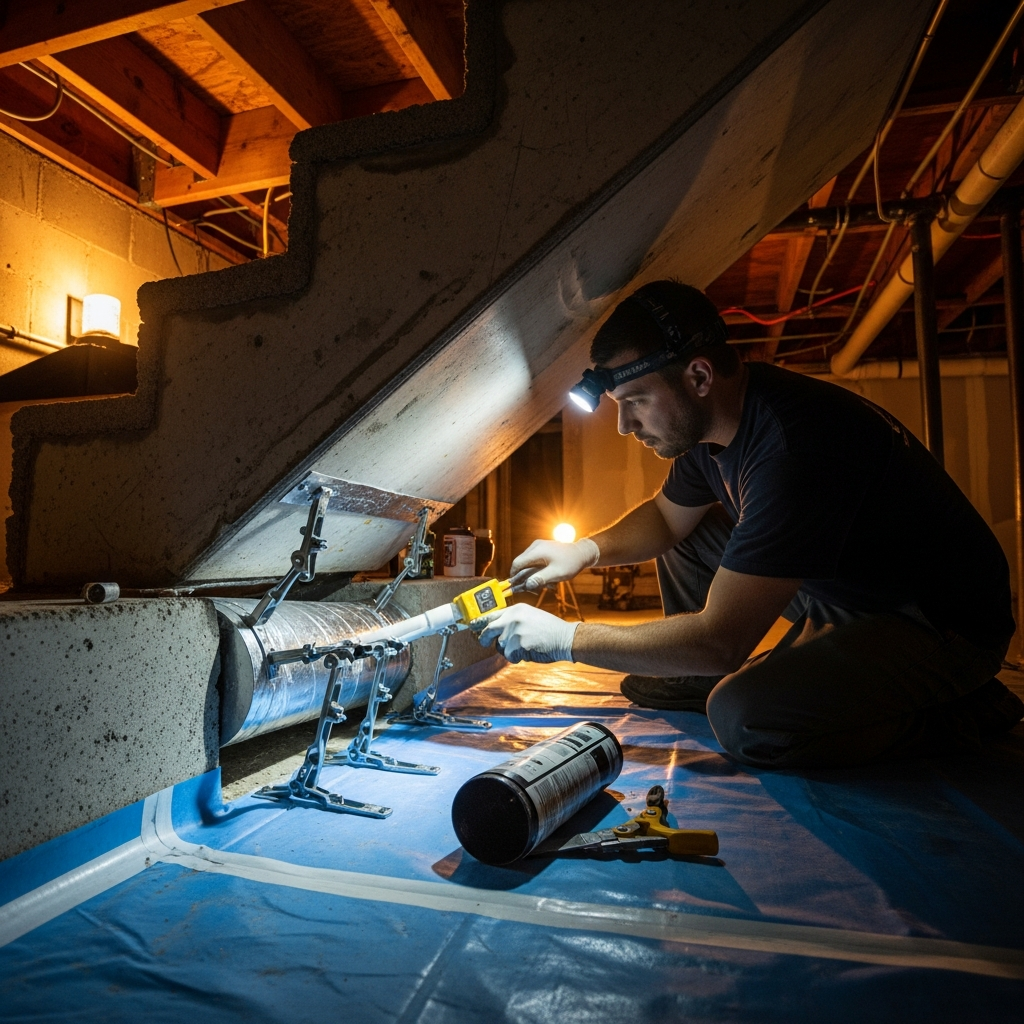
Emergency calls prioritize stabilization and safety. Technicians arrive with protective coverings, lighting, and fasteners to secure hazardous sections. After a quick assessment, they identify the failure point and verify that other sections remain intact. If the issue involves a return pulling contaminated air, containment steps reduce exposure until a permanent repair is made.
Once the immediate hazard is controlled, technicians perform targeted repairs—re-securing connections with mechanical fasteners, sealing joints with mastic or appropriate tapes, and resetting boots. If a flexible run has been crushed, they route a replacement section with smooth bends and appropriate support. The aim is to restore safe, reliable airflow as quickly as conditions allow.
Common Emergency Scenarios
Disconnections at the air handler or main trunk can cause sudden, dramatic loss of airflow and visible dust movement. Crushed or kinked flexible ducts commonly occur during attic storage shifts or after unrelated work in tight spaces. Return leaks in basements or garages may pull unwanted air and odors into living areas. Each scenario requires precise materials and techniques to ensure the repair lasts beyond the initial fix.
In homes with pets, filter loading may escalate rapidly after a failure. After the repair, check filters and replace them as recommended to protect equipment and maintain airflow while the system normalizes.
Speed, Cleanliness, and Communication
Even during emergencies, good companies protect your home. Floor coverings, dust containment, and organized tool staging keep disruption to a minimum. You should receive a quick briefing on what failed, how it was fixed, and whether follow-up is recommended to reinforce other vulnerable sections. Clear summaries and photos help you understand both the root cause and the solution.
If the repair requires a short-term stabilization followed by a scheduled return—for example, when concealed sections must be accessed—expect a plan that details timing, access points, and cleanup. The goal is to keep your home functional and safe while the permanent repair is arranged.
Preventing Future Emergencies
Many urgent failures reveal underlying vulnerabilities such as inadequate supports, aging tape on key joints, or flexible runs routed with sharp bends. After the immediate crisis is resolved, ask for a brief audit to identify these risks. Proactive corrections—better supports, re-terminating runs with proper collars, and adding insulation where needed—reduce the chance of repeat events.
Seasonal checkups help, too. Readington’s weather shifts can stress ducts that pass through attics and crawlspaces. A quick inspection before peak heating and cooling seasons can catch small problems before they escalate.
Understanding Materials and Methods Used in a Pinch
Reliable emergency fixes use the same professional materials as scheduled repairs—mastic sealants, heat-rated tapes, mechanical fasteners, and correct supports. The difference lies in sequencing: stabilize first, then refine. For example, a joint may be mechanically secured immediately and sealed thoroughly once conditions allow better access. This approach delivers safety and function quickly without sacrificing long-term quality.
Technicians also verify that airflow is balanced after an emergency repair. A collapsed run can mask other issues; once flow is restored, dampers and returns may need a quick check so rooms receive appropriate supply air again.
When a Redesign Is the Right Move
Some emergencies expose a design limitation—a branch that was too long without support, a return that was undersized, or a transition that overloaded a joint. In these cases, a modest redesign can provide a permanent solution. Rerouting for smoother transitions, resizing a return, or replacing a damaged section can improve reliability and reduce noise.
A good provider will explain the “why” behind any redesign. The goal is a system that holds up to daily use, seasonal shifts, and occasional disturbances without failing again.
Frequently Asked Questions
Should I shut off my HVAC if a duct fails? If you suspect the failure introduces contaminants or affects a combustion appliance, it is prudent to pause operation until a technician confirms safety and stabilizes the system.
Can I tape a duct back together temporarily? Household tapes are not appropriate and can worsen the problem. Proper materials and fasteners are required for a safe, durable repair.
What will the technician do first? They will stabilize the failure, protect your home, and verify safety. Then they will perform targeted repairs and outline any recommended follow-up.
How quickly can comfort return? Many homes feel better immediately after stabilization and repair. Fine-tuning may continue as technicians confirm balancing and verify that other sections are sound.
Will this happen again? With a brief post-repair audit and targeted improvements, the likelihood of repeat failures drops significantly.
Get Your Home Back to Comfortable, Safely
When air duct problems strike without warning, fast, organized action makes all the difference. Choose a Readington team that arrives prepared, stabilizes the system quickly, and clearly explains both the fix and any follow-up. Keep a simple plan handy—know who to call, how to document symptoms, and what to expect during the visit. When you are ready to safeguard your home and restore consistent airflow, reach out to a trusted local expert. For dependable assistance right away, consider scheduling professional air duct repair so your system returns to safe, balanced performance as quickly as possible.
