Introduction: Make Dryer Vent Maintenance a Habit in Readington
Routine dryer vent maintenance is essential for safety, efficiency, and appliance longevity. In Readington, New Jersey, our mix of humid summers and chilly winters means dryers often run more frequently and in tougher conditions than we realize. Over time, lint accumulates on interior duct walls, the transition connector behind the dryer gets compressed, and exterior hoods stick or fill with debris. A structured maintenance plan prevents these issues from becoming serious problems and keeps laundry day predictable.
This guide presents a complete framework you can follow throughout the year, including seasonal tasks, inspection points, and step-by-step deep-cleaning intervals. If at any time you want help with portions of the work or a full-system evaluation, consider scheduling professional dryer vent cleaning to verify airflow, correct unsafe materials, and optimize your vent route for your specific home layout.
Before performing any maintenance, always unplug the dryer. For gas models, close the shutoff valve carefully and leave the gas line undisturbed unless a qualified technician is present. Move the dryer slowly to avoid floor damage and to keep connections intact. With those basics handled, you can proceed with confidence.
Quarterly Maintenance Tasks
Breaking maintenance into quarters fits well with Readington’s seasons and local weather patterns. These checkpoints do not take long, but they help you catch small issues early.
- Test exterior airflow by running the dryer on air-fluff for a minute and confirming that the termination flap opens fully
- Visually inspect the exterior hood for nesting, leaves, snow, or ice and remove any obstructions
- Clean behind and under the dryer with a vacuum and long crevice tool to capture escaped lint
- Check the transition duct for kinks or crushing and adjust the dryer position if needed
- Wash the lint screen with warm water and a mild dish soap to remove fabric softener residue
Semiannual Deep Cleaning Routine
At least twice per year, perform a more detailed cleaning. Align these deep-clean sessions with spring and fall home maintenance to coincide with seasonal transitions in Readington.
-
Disconnect the dryer from power, and for gas models, close the gas valve. Pull the dryer forward to access the rear connections.
-
Remove the transition duct and inspect it closely. Replace any plastic or thin foil duct with a rigid or semi-rigid metallic option that resists crushing and is safer over time.
-
Vacuum the lint screen housing and the dryer’s exhaust port. Use a soft brush to dislodge lint adhered to surfaces and a crevice tool to reach corners.
-
From outside, service the termination hood. Remove the cover or flap if accessible, clean the housing, and verify that the damper moves smoothly without sticking.
-
Brush the vent run thoroughly from the outside in and from the inside out using a flexible brush kit. Rotate clockwise, withdraw periodically, and vacuum debris as you go to prevent clogs at elbows.
-
Inspect elbows and joints for gaps, screws penetrating the airstream, or crushed sections. Seal only with HVAC-rated foil tape and replace damaged parts.
-
Reinstall a safe, short, and gently curved metallic transition duct. Secure connections with worm-gear clamps and ensure no section is crushed when you reposition the dryer.
-
Run a test cycle on air-fluff. Check exterior airflow and confirm the flap opens fully. Listen for rattles that might suggest misalignment or loose sections.
Annual System Review and Upgrades
Once a year, step back and evaluate the entire system. Consider whether you can shorten the vent run, reduce the number of elbows, or relocate the termination for better protection from prevailing winds and snow. If you own an older home in Readington, a retrofit to replace long, winding ductwork with a more direct route can deliver significant performance gains and reduce maintenance demands.
- Replace worn or warped termination hoods with a low-resistance design that discourages lint accumulation
- Verify that ducting is smooth-walled and metallic throughout, with no plastic components
- Confirm the installation matches your manufacturer’s maximum equivalent length limits
- Label the wall connection and a nearby cabinet with the date of the last deep clean for easy reference
Recognizing Early Warning Signs
Stay alert to the most common hints that your vent needs attention. If a normal load begins to take longer than usual, if the laundry room grows noticeably warmer during cycles, or if you detect a musty or slightly scorched odor, investigate right away. These clues often appear weeks before major restrictions develop, giving you time to complete maintenance on your schedule rather than in a rush.
- Longer dry times even after cleaning the lint screen
- Visible lint at or around the exterior hood
- A flap that fails to open fully or sticks on closing
- Apparel emerging unusually hot or still damp
- Condensation on windows near the laundry area while the dryer runs
Readington Weather and Its Effect on Vent Systems
Local weather has a direct impact on maintenance needs. Spring pollen and tree seeds can lodge at the hood. Summer humidity mixes with lint to create sticky deposits that adhere to duct walls. In autumn, windblown leaves and nesting activity can partially block the termination. During winter, icing can keep dampers from opening freely, and cold exterior runs can condense moisture, capturing even more lint. Planning your maintenance around these seasonal patterns improves outcomes and reduces surprises.
If your termination is on a north-facing wall that does not receive much sun, consider inspecting it more frequently in the colder months. For rooftop terminations, avoid climbing during icy or windy conditions. Instead, schedule service or wait for safe weather and ensure proper fall protection is used.
Optimizing Dryer Use to Reduce Lint Production
Good habits will lighten your maintenance workload. Clean the lint screen before every load and periodically wash it to remove residue that can impede airflow through the mesh. Do not overload the drum, as this extends cycle times and sheds more fibers. Dry similar fabrics together and promptly remove clothes at the end of the cycle to prevent extended tumbling. Keep the laundry area clean by vacuuming behind and under the dryer monthly, and verify that the transition duct remains uncrushed after you push the unit back into position.
Understanding Vent Length and Equivalent Elbows
Every bend and foot of ductwork adds resistance. Manufacturers specify a maximum equivalent length that includes deductions for elbows. If you live in a townhouse or a home where the vent must snake around framing, the total effective length can creep beyond limits, even if the physical length seems modest. If airflow continues to be weak after cleaning, consider a design review to reduce elbows or shorten the route. In some cases, relocating the laundry area or re-routing the termination to a nearer exterior wall offers the most sustainable long-term solution.
When to Bring in a Professional
Some maintenance tasks are better handled with specialized tools and experience. If your vent runs through a roof, includes concealed elbows behind finished walls, or uses materials you are unsure about, it is reasonable to call for help. Professionals can measure airflow, document equivalent length, locate hidden separations, and recommend code-compliant upgrades. If you are preparing to replace a dryer, that is also an ideal time to evaluate the vent and correct any issues before installing the new appliance.
For homeowners who want a predictable, thorough result with documented findings, booking professional dryer vent cleaning provides peace of mind, ensures safe materials, and helps keep your system within manufacturer specifications for performance and warranty support.
Frequently Asked Questions
Q: How often should I perform a deep cleaning? A: For most Readington households, twice a year is a solid baseline. High-lint environments, multiple pets, or heavy towel and bedding loads may justify quarterly cleanings.
Q: Is flexible foil duct acceptable for the transition? A: It is not recommended. Choose rigid or semi-rigid metallic duct that resists crushing and offers a smoother interior for better airflow.
Q: What if the exterior hood is very high or on the roof? A: Avoid risky ladder or roof work in bad weather. Consider scheduling a professional equipped with proper safety gear and experience with elevated terminations.
Q: Can I use duct tape to seal joints? A: No. Standard duct tape fails over time. Use HVAC-rated foil tape designed to endure heat and airflow conditions typical of dryer vents.
Q: My dryer is new. Do I still need maintenance? A: Yes. Even new dryers rely on clear, properly installed vents. Lint begins to accumulate immediately, and installation issues can appear with the first push back against the wall.
Q: What are signs of a dangerous blockage? A: Burning smells, very hot surfaces, tripped thermal fuses, and visible scorching around the exhaust area require immediate shutdown and inspection.
Putting Your Maintenance Plan on Autopilot
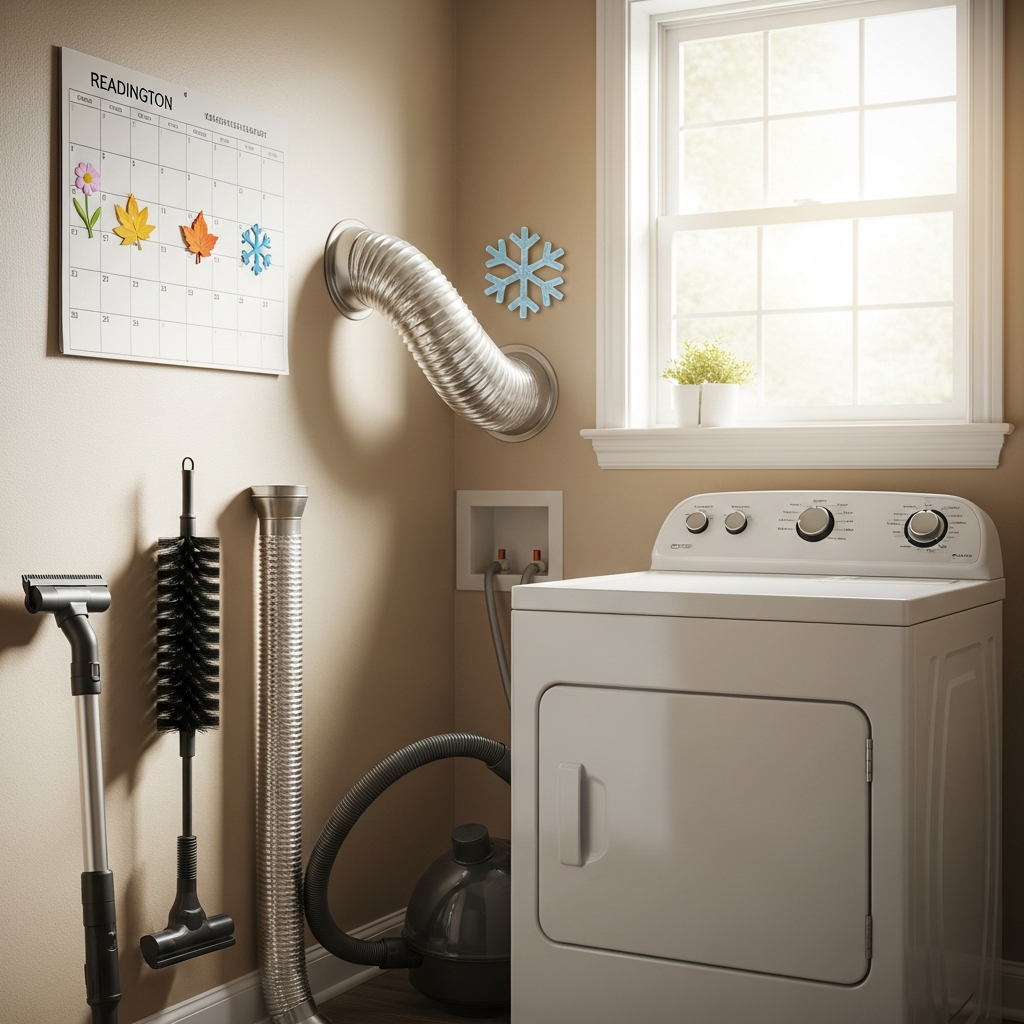
Success comes from consistency. Put reminders on your calendar for quarterly inspections and semiannual deep cleans. Store your brush kit and vacuum accessories together in a bin labeled for dryer maintenance. Keep a log with dates, findings, and any parts you replace. Over a year or two, you will notice that cycles stay shorter, the laundry room feels cooler, and exterior airflow remains robust even in the heart of winter.
If you want a reliable partner to verify performance and keep your system in top condition, schedule an appointment and arrange your next dryer vent cleaning so your Readington home stays safe, efficient, and comfortable through every season.
