Introduction: Why Dryer Vent Cleaning Matters in Readington, New Jersey
Dryers are among the most frequently used appliances in homes across Readington, New Jersey, especially during wet springs and snowy winters when line-drying is not practical. Over time, lint, dust, and debris accumulate inside the venting system that carries hot, humid air to the outdoors. This buildup quietly reduces airflow, forces your dryer to work harder, and creates conditions that can increase wear on components and raise the risk of overheating. A deliberate approach to dryer vent cleaning can restore efficient performance, support fire safety, and extend the life of your appliance.
If you have never cleaned your vent or are unsure about the process, do not worry. The steps below outline a thorough, homeowner-friendly method suitable for most houses in our area. For those who prefer to outsource or need complex routing inspected, professional dryer vent cleaning is also available locally and can be scheduled seasonally or after renovations, appliance replacements, or whenever you notice symptoms of restricted airflow.
Before you begin, always disconnect the dryer from power. If it is a gas dryer, close the gas shutoff valve and be careful not to stress or kink the gas line. Move the dryer gently to avoid damaging flooring and to provide safe access behind the unit. Never operate the dryer while any part of the venting system is disconnected. With those safety basics in place, you can proceed step by step and complete a comprehensive cleaning with confidence.
Tools and Materials You Will Need
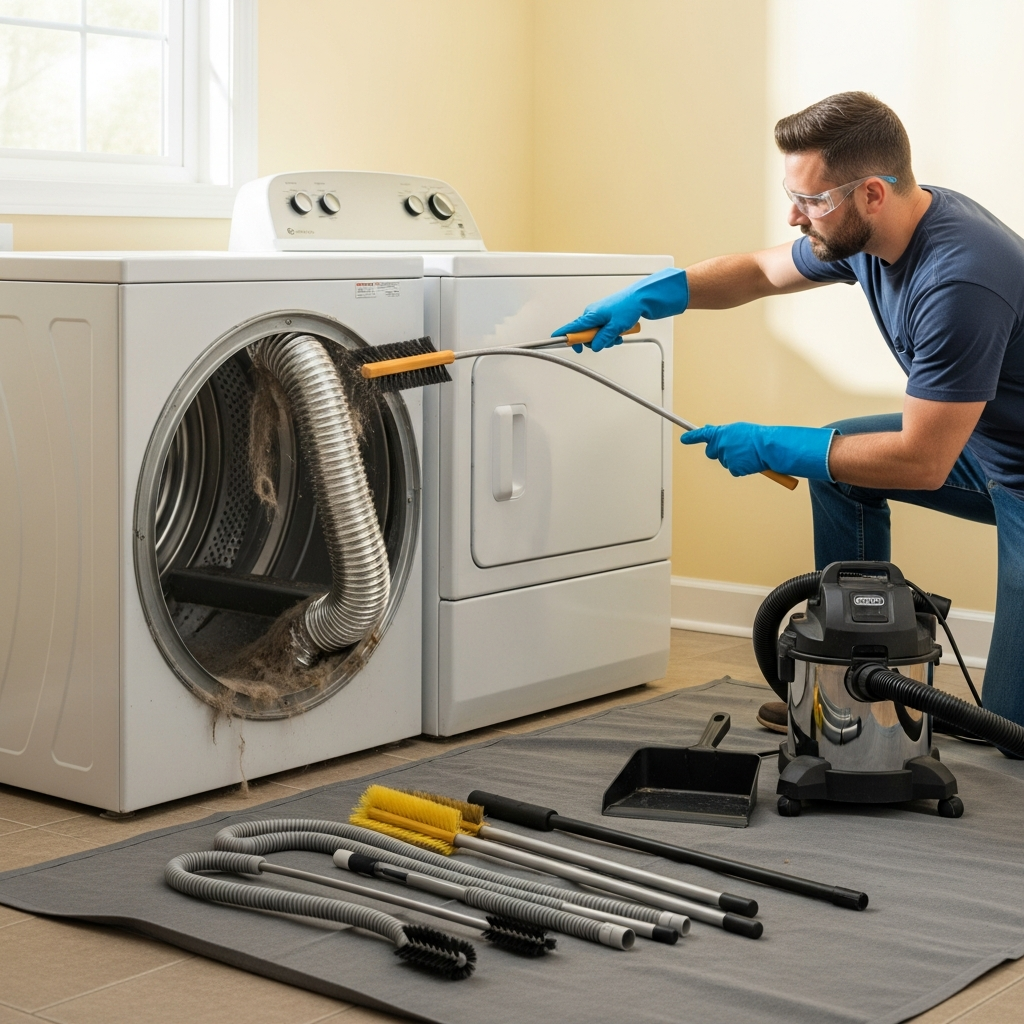
- Dryer vent brush kit with flexible rods long enough to reach the full length of the vent
- High-suction vacuum with crevice tools and, ideally, a HEPA-rated filter
- Screwdrivers and nut drivers to remove clamps and vent covers
- Duct tape or foil tape rated for HVAC applications to seal joints as needed
- Microfiber cloths, disposable towels, and a small bucket for lint collection
- Flashlight or headlamp for visibility behind and inside the vent run
- Protective gloves, safety glasses, and a dust mask for personal protection
- Non-crush, UL-listed metallic transition duct if you need to replace a damaged connector
- Exterior vent hood repair kit or replacement flap if your termination is broken
Preparing the Workspace and Protecting Your Home
Preparation prevents mess and keeps the process efficient. Clear the laundry area floor and remove items stored behind or beside the dryer. Lay down a drop cloth or old towels to protect flooring. Place your tools within reach so you do not need to step away while the dryer is pulled out. If your laundry room is compact, prop the door open for ventilation and better lighting.
Check the route your vent takes from the dryer to the outside. In Readington, many homes route vents through basements, crawlspaces, or straight out a first-floor wall. Some townhomes may vent through the roof. Understanding your layout helps you determine access points and how many brush rods you will need. If you suspect the vent is very long or has several elbows, plan for a slower, more methodical cleaning and expect extra lint release when brushing.
Step-by-Step Dryer Vent Cleaning Process
-
Unplug and disconnect. Unplug the dryer from the electrical outlet. For gas dryers, close the gas shutoff valve and carefully disconnect the flexible gas line only if the manufacturer recommends moving the appliance farther than the line safely allows. If you are not comfortable handling gas connections, leave the gas line in place and work with the space available after gently rolling the dryer forward.
-
Pull the dryer forward. Create enough space to access the transition duct at the back. Avoid tugging on the cord or gas line. Check under the dryer feet for furniture sliders to protect your floor while moving the unit.
-
Remove the transition duct. Loosen the clamp that secures the transition duct to the dryer exhaust port. Do the same on the wall or floor connection. Inspect the transition duct; if it is plastic or foil accordion-style, plan to replace it with a rigid or semi-rigid UL-listed metallic option, which resists crushing and catches less lint.
-
Vacuum the lint trap and internal chute. Take out the lint screen and vacuum inside the chute where lint accumulates. Use a crevice tool to reach as far as possible. If your model allows, remove the top panel to access deeper areas, but only follow procedures in the user manual to avoid damaging safety switches.
-
Clean the dryer’s exhaust port. Shine a light into the exhaust outlet at the back of the unit. Gently brush loose material and vacuum thoroughly. Wipe the rim of the port to remove oily lint films that can capture more dust.
-
Access the vent from the exterior. Go outside and locate the termination hood. Remove the protective screen or flap if it is designed to be serviced. If a screen has been installed that traps lint, consider replacing the hood; most codes discourage screens at dryer terminations because they clog rapidly.
-
Brush from the exterior toward the interior. Connect your flexible brush rods and feed the brush into the vent from the outside. Rotate clockwise while advancing to dislodge lint without unscrewing the rods. Move slowly, pausing every one to two feet to withdraw and vacuum lint from the brush and entry point.
-
Brush from the interior toward the exterior. Return inside and insert the brush through the wall connection to capture any remaining buildup. Alternate brushing and vacuuming to prevent pushing large clumps into elbows where they can lodge.
-
Vacuum the entire run thoroughly. With brushing complete, use a crevice tool to vacuum along the interior connection and just inside the wall or floor opening. Carefully vacuum the surrounding area to capture stray fibers.
-
Inspect elbows and joints. Using a flashlight, examine any accessible elbows and joints for screws that intrude into the airstream, crushed sections, or gaps. Replace or repair damaged segments. Seal only with foil tape rated for HVAC use; do not use duct tape that can dry out and fail.
-
Service the exterior hood. Clean the hood housing and flap. Confirm the flap swings freely and closes by gravity. If it sticks or is warped, replace the hood to prevent pest entry and backdrafting.
-
Reinstall a safe transition duct. Fit a rigid or semi-rigid metallic transition duct between the dryer and wall connection, cutting it to the shortest length that allows gentle curves without kinks. Secure with worm-gear clamps. Do not use screws that penetrate the duct interior.
-
Level and reposition the dryer. Gently slide the dryer back, ensuring the transition duct is not crushed. Adjust leveling feet to reduce vibration. Reconnect power and reopen the gas valve if applicable, checking connections with a manufacturer-approved leak detection solution.
-
Test airflow and performance. Run the dryer on a no-heat or air-fluff setting for a few minutes. Go outside to feel for strong airflow at the termination and verify the flap opens fully. Weak airflow signals a blockage or an excessively long run that may need rerouting.
-
Final cleanup and notes. Wipe surfaces, dispose of lint responsibly, and note the cleaning date. Keep a maintenance log near the appliance so you can track performance, filter changes, and future service intervals.
Readington-Specific Considerations
Homes in Readington span a wide range of ages and layouts. Older homes may have add-on laundry spaces or long vent runs that snake through basements before exiting. Newer construction often keeps vents shorter, but tight building envelopes can make airflow more sensitive to partial blockages. Seasonal swings—damp springs, humid summers, leaf-littered autumns, and icy winters—affect exterior hoods and can introduce unique challenges such as stuck flaps, rodent nesting at terminations, and condensation in poorly insulated sections.
If your vent terminates on a shaded side of the home, watch for moss or debris that may collect around the hood. For rooftop terminations, winds can drive rain into the hood, mixing with lint to form stubborn paste-like deposits that demand thorough brushing. Detached garages with laundry hookups may require extra attention to long, exposed ducts that lose heat quickly and encourage condensation. Planning for these local conditions improves cleaning results and overall system reliability.
When to Stop and Call a Professional
While many homeowners can perform the basics, certain conditions call for expert help. These include complex vent routing with multiple elbows, rooftop terminations you cannot reach safely, concealed sections that may have separated, or evidence of overheating such as discoloration, a burning odor, or scorched lint. If you discover a plastic vent or extensive foil transition ducting, a professional can replace unsafe materials and verify code compliance. You should also seek assistance if performance does not improve after thorough brushing and vacuuming, as hidden obstructions or crushed sections may still be present.
Mid-project is often the best time to reassess your comfort level. If you prefer a guaranteed result or want a safety inspection with specialized tools like airflow meters and video scopes, consider scheduling professional dryer vent cleaning. Experienced technicians can also advise on rerouting long runs, upgrading terminations, and improving laundry room ventilation to reduce humidity and lint migration.
Optimizing Airflow and Reducing Lint Accumulation
After cleaning, think about long-term improvements. Replace any flexible foil or plastic sections with rigid or semi-rigid metallic duct. Minimize elbows and keep the overall run as short and straight as possible. In laundry closets, allow adequate clearance behind the dryer so the transition duct is not crushed when the door is closed. Ensure the exterior hood is a low-resistance design with a single gravity damper rather than a screen or tight mesh that captures fibers.
Finally, emphasize good habits. Clean the lint screen before every load, avoid overloading the drum, and dry similar fabrics together so cycles are not longer than they need to be. Inspect the area behind the dryer monthly and vacuum dust from floors, baseboards, and outlets. These small routines, combined with annual or semiannual vent cleaning, sustain performance throughout Readington’s changing seasons.
Maintenance Frequency and Seasonal Schedule
How often should you clean your dryer vent in Readington, New Jersey? For a typical family of four with average laundry volume, a deep cleaning every six to twelve months is a reasonable target. Households with pets, high cotton usage, or heavy towel and bedding loads may require more frequent service. Vacation homes or low-use properties can often extend the interval, but it remains wise to test exterior airflow quarterly and inspect the termination for stuck flaps, nesting, or icing after storms.
Plan your schedule around local weather. Early fall is an excellent time to clean, ensuring strong airflow before winter. Late spring cleanings help remove the lint and dust that accumulated during months of closed windows and increased indoor heating. When in doubt, let symptoms guide you: longer dry times, hotter laundry rooms, or a musty odor from the dryer signal that it is time for attention.
Common Warning Signs You Should Not Ignore
- Dry cycles are taking longer than normal even after cleaning the lint screen
- The top of the dryer or surrounding walls feel unusually hot after a typical cycle
- A burning or musty odor is present in the laundry room
- Lint is visible around the exterior hood or the flap does not open fully
- Clothes emerge overly hot or still damp after one cycle
- Condensation appears on nearby windows or walls while the dryer runs
- Noticeable lint accumulation behind or under the dryer despite regular housekeeping
Frequently Asked Questions
Q: Can I use a leaf blower to clean my dryer vent from the outside? A: While some people attempt this, it can force lint into elbows where it compacts and may damage joints. A brush-and-vacuum method is more controlled and thorough, and it reduces the risk of pushing debris deeper into the system.
Q: Is plastic or foil transition duct safe? A: No. Plastic duct is not recommended, and thin foil accordion-style duct can crush easily and trap lint. Use a rigid or semi-rigid metallic transition duct that is UL-listed and sized correctly for your dryer.
Q: How do I know if my vent is too long? A: Manufacturers list maximum equivalent lengths that account for elbows and fittings. If airflow remains weak after cleaning, or if there are multiple sharp bends, consult your manual or seek an inspection to measure equivalent length and identify rerouting options.
Q: What about rooftop terminations? A: Working on a roof can be hazardous, especially during icy or windy conditions common in New Jersey. If your vent terminates on the roof, consider scheduling a professional who has proper safety gear and experience with rooftop hoods and dampers.
Q: Will cleaning the vent reduce energy use? A: Yes. Restoring proper airflow lets the dryer remove moisture more quickly, shortening cycles and reducing wear on heating elements and bearings. Over time, this translates to less energy consumption and fewer service calls.
Q: My laundry room has a persistent humid smell. Could the vent be leaking? A: Yes. Gaps at joints or a separated duct can dump moist air indoors. Inspect visible sections and seal with foil tape rated for HVAC use. If you cannot access concealed runs, schedule an inspection and repair.
Q: Can I add a screen to keep pests out of the exterior vent? A: Avoid screens that obstruct lint. Instead, use a proper dryer vent hood with a gravity flap that closes when the dryer is off and opens fully under airflow.
Q: Do I need to clean inside the dryer cabinet? A: Some models allow safe access, but opening the cabinet can disturb wiring and sensors. If you suspect internal lint buildup, consult a professional who can clean the cabinet without damaging sensitive components.
Wrap-Up and Next Steps
Completing a careful dryer vent cleaning improves safety, performance, and peace of mind. Whether you handled the steps yourself or decided that certain tasks are better left to specialists, the key is to adopt a regular schedule and respond quickly to warning signs. Keep your tools handy, note the cleaning date, and evaluate airflow every few months so problems never have a chance to grow.
If you are ready to restore strong airflow, reduce dry times, and support a safer home in Readington, schedule expert help now. Reach out for professional support and book your next dryer vent cleaning so your laundry routine stays smooth and dependable all year long.
