A well-built dryer vent should deliver steady airflow, short drying times, and long-term safety. Whether you have just moved into a home in Readington, New Jersey, or you are auditing your current setup after a remodel, use this detailed inspection checklist to evaluate every part of your dryer vent installation. By methodically confirming materials, routing, sealing, and termination quality, you can catch small issues before they become hazards. If you discover significant concerns, consider scheduling an expert review or a turnkey dryer vent installation to bring your system up to modern best practices.
Preparation and safety
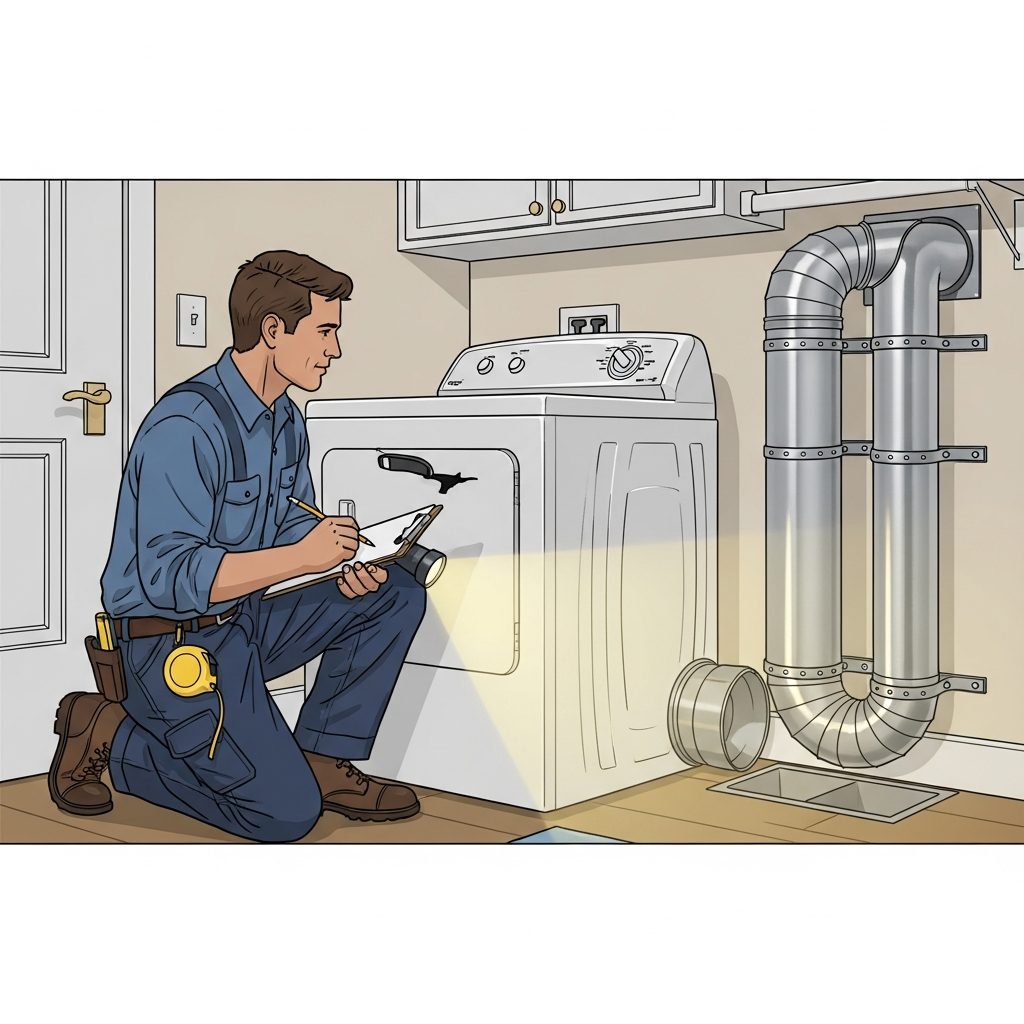
Before inspecting, unplug the dryer or shut off gas supply if applicable. Clear the surrounding area so you can move the appliance without crushing the transition duct. Keep gloves, a flashlight, a small mirror, a tape measure, and a notepad handy. If your vent passes through an attic or crawlspace, arrange safe access and lighting so you can see supports and joints clearly.
- Power and gas off before moving the appliance.
- Clear at least three feet of working space around the dryer.
- Have protective eyewear and a dust mask if you expect lint accumulations.
Appliance connection and transition duct
The section between the dryer and the wall is the area most likely to be crushed or kinked. Inspect closely.
- Material: UL-listed semi-rigid aluminum for the transition. Avoid foil or plastic accordion duct.
- Length: Kept as short and straight as practical—typically under 8 feet with minimal bends.
- Condition: No tears, holes, or severe dents. Replace if damaged.
- Route: Smooth curve with no tight coils behind the dryer. Consider a recessed vent box in tight spaces.
- Clamps: Secure, airtight connections at both ends, preferably with worm-gear clamps and foil tape for sealing.
Main duct materials and assembly
The main run should be smooth-wall metal to maintain velocity and ease of cleaning. Check every joint for integrity and sealing.
- Material: Rigid aluminum or galvanized steel with smooth interior.
- Joints: Overlapped correctly in the direction of airflow, sealed with high-temperature foil tape.
- Fasteners: No sheet-metal screws penetrating into the airstream. Use shallow rivets only where needed.
- Supports: Strapped or hung every 4 to 6 feet to prevent sagging.
- Straightness: Long runs are straight with gentle, long-radius elbows where direction changes are necessary.
Routing and equivalent length
Measure and calculate the effective length of your system. Each elbow adds resistance; tighter bends add more than long-radius elbows.
- Total straight run measured in feet, from dryer outlet to termination.
- Count elbows and assign equivalent feet per the dryer manufacturer’s chart.
- Compare the sum to the maximum allowed equivalent length.
- If over the limit, plan a reroute or consult about a listed booster fan with accessible service location.
Penetrations through framing
Where the duct passes through studs, joists, or sheathing, make sure openings are clean and edges do not crush the duct. Use collars or protective sleeves as needed. Confirm that there is no contact with sharp fasteners, and that fire safety considerations are maintained per manufacturer guidance.
Exterior termination quality
The hood at the exterior is a common performance bottleneck. Inspect both function and location.
- Damper motion: Opens fully under dryer airflow and closes when off. No screens in the path.
- Mounting: Hood sits plumb and square, sealed to siding or masonry to prevent water intrusion.
- Clearance: Not obstructed by shrubs, mulch, lattice, or snow drift. Adequate clearance above grade.
- Orientation: Positioned to minimize wind-driven backdraft and easy to access for routine checks.
Attic, crawlspace, or basement sections
Where ductwork passes through unconditioned spaces, look for condensation risks and support problems. Insulate exposed sections appropriately and verify a slight slope toward the exterior to drain incidental moisture. Eliminate low spots that can trap lint and water.
- Insulation: Duct wrap or equivalent on cold sections to reduce condensation.
- Slope: Gentle outward pitch on horizontal runs where feasible.
- No sags: Use additional hangers to keep the run taut and straight.
System sealing and air leaks
Air leaks lower velocity and spread lint. Examine seams with a flashlight, looking for dust trails that indicate escaping air. Reseal with high-temperature foil tape as needed. If you suspect a hidden leak in a soffit or wall, a small inspection camera can confirm without major demolition.
Performance checks
Run the dryer on air-fluff and observe the damper at the termination. It should open widely and stay steady. Then, with a small load on a heat cycle, verify that the air is warm and moist but not scalding, and that the laundry room does not overheat. Note cycle duration and compare with your usual baseline; a sudden change suggests an emerging restriction.
Readington-specific considerations
Our local climate brings humid summers and cold winters. Insulation on attic or garage sections reduces condensation. In winter, check that ice does not freeze the damper and that snow cannot accumulate against a low-mounted hood. In wooded neighborhoods, birds may be attracted to warm vents—choose a damper design that seals well without a screen, which can clog with lint.
Red flags that call for immediate action
- Plastic or foil accordion duct used for long runs.
- Termination into an attic, crawlspace, or garage instead of outdoors.
- Multiple sharp 90-degree elbows in short succession.
- Visible scorch marks, melted tape, or a burnt odor near the dryer.
- Water stains around the duct path, indicating condensation or leaks.
Documentation and maintenance planning
Good records make future inspections faster. Sketch the route, noting elbows and lengths. Keep track of cleaning dates and any parts replaced. If sections are concealed, label access points or soffits to indicate the duct’s path and any junctions or cleanout tees you added.
Remedies and upgrades guide
- Replace crushed transition with short, UL-listed semi-rigid aluminum.
- Swap tight elbows for long-radius elbows to reduce equivalent length.
- Reroute to the nearest exterior wall if a roof run is excessively long or complex.
- Add insulation to attic or crawlspace sections to reduce condensation.
- Install a recessed vent box if space behind the dryer is limited.
Mid-inspection decision point
If your checklist uncovers multiple deficiencies—such as outdated materials, excessive length, and a poor termination—comprehensive replacement may be the safest and most cost-effective approach long-term. Upgrading materials, simplifying the route, and sealing all joints can transform performance and reduce fire risk markedly. When in doubt, consider a professional assessment and turnkey dryer vent installation that includes optimization for your specific floor plan and local climate.
Frequently asked questions
Q: How often should I perform a full inspection? A: Conduct a thorough review annually and after any renovation that might affect the vent path. Perform seasonal quick checks of the exterior hood.
Q: Do I need a booster fan? A: Only if your equivalent length exceeds the manufacturer’s limit and rerouting is impractical. The fan must be listed for dryer use and accessible for cleaning.
Q: Should I add a screen to keep pests out? A: No. Screens trap lint and block airflow. Choose a well-sealing damper designed for dryer exhaust.
Q: What is the best termination height? A: Mount the hood high enough to clear typical snow, yet low enough for easy access—often 12 to 24 inches above grade, adjusted for site conditions.
Q: Can elbows be inside the wall? A: Yes, but keep them accessible if possible. Where concealed, document their location and minimize the total number to preserve airflow.
Q: How do I know if joints are leaking? A: Dust streaks near seams are a giveaway. You can also feel for warm air during a heat cycle or use a smoke pencil to detect drafts.
Move forward with confidence
Completing this checklist empowers you to decide whether simple tune-ups, strategic rerouting, or a full replacement is right for your home. When you are ready for a system that dries faster and operates safely in every season, arrange reliable dryer vent installation and enjoy peace of mind throughout Readington.
