Even a carefully installed dryer vent can develop problems over time. In Readington, New Jersey, shifting seasons, remodels, and normal wear can change airflow, create blockages, or loosen fittings. If your dryer runs hot, takes too long, or leaves clothes damp, follow this practical troubleshooting guide to track down issues and correct them at the source. From airflow diagnostics to moisture and odor clues, these tips will help you restore performance, reduce fire risk, and extend the life of your appliance. If at any stage you prefer expert help, consider booking professional dryer vent installation or a targeted repair visit to ensure everything is sealed, aligned, and flowing correctly.
Know the symptoms and what they mean
Dryer vent problems announce themselves with a combination of signs. The trick is reading those signs and mapping them to likely causes so you resolve root issues, not just surface symptoms. Keep notes as you test—timing cycles, listening for noises, and checking temperatures—to build a clear picture.
- Longer dry times: Often due to lint restriction, crushed transition duct, excessive equivalent length, or a stuck exterior damper.
- Hot laundry room or hot dryer cabinet: Suggests restricted airflow, disconnected duct blowing hot air inside, or a failing blower fan.
- Musty or burning smell: Musty indicates moisture or partial blockage; a hot or scorched odor can signal lint buildup on the heater or in the duct.
- Tumbling but no heat at the outlet: Could indicate a broken heating element or tripped safety, but also check for an obstructed vent that forced a shutdown.
- Backdraft or cold air at the dryer when off: Damper stuck open or missing, inviting outside air and pests.
Start with a safe baseline
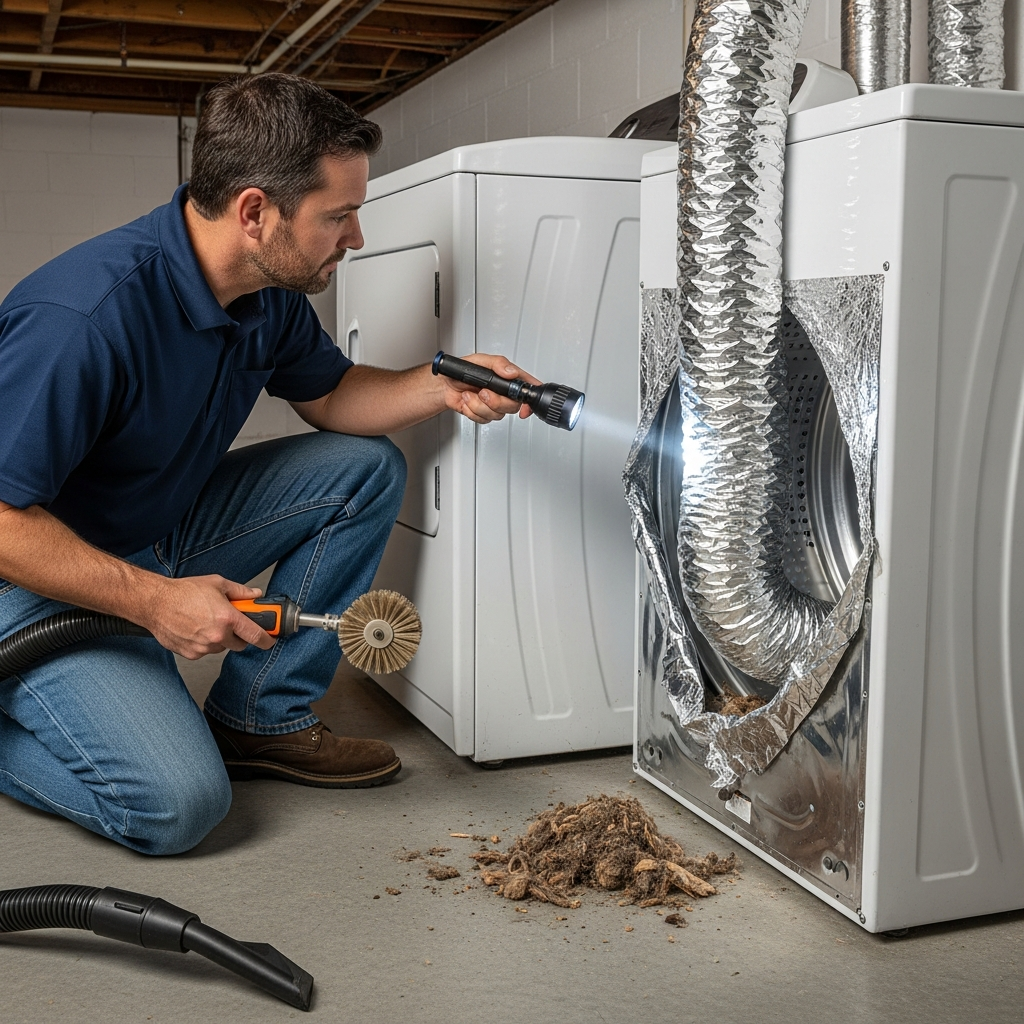
Before deeper diagnostics, perform simple safety steps. Unplug the dryer or shut off gas if applicable. Clean the lint screen thoroughly and wash it with mild soap if you use dryer sheets that can leave residue. Pull the dryer away from the wall carefully, ensuring you do not crush the transition duct. Visually inspect the transition for kinks, sagging, or tears. If it looks damaged or excessively long and coiled, plan to replace it with a short, UL-listed semi-rigid aluminum piece.
While the dryer is out, vacuum dust from behind and beneath the appliance. Dust can insulate heat and conceal small obstructions. Confirm that the dryer is level; a rocking dryer may stress the vent connection and cause leaks.
Airflow tests you can do right now
Simple tests reveal a lot about your system’s condition. Start the dryer on an air-fluff or low-heat cycle and head outside to the termination hood. Watch the damper. A healthy system opens the damper decisively and holds it open with steady airflow. If the damper barely moves or flutters, you likely have a restriction.
- Hand test: Place your hand a few inches from the outlet. You should feel strong, continuous airflow. Weak or pulsing flow suggests lint buildup or a crushed section.
- Paper test: Hold a thin strip of paper at the hood; it should stream outward firmly when the dryer runs.
- Sound check: Listen for rattles indicating loose joints or a hood vibrating due to misalignment.
If the outdoor airflow is poor, disconnect the transition duct at the back of the dryer and repeat the test directly at the dryer outlet (use caution—edge may be sharp). Strong flow at the dryer but weak at the exterior points to a problem in the in-wall or in-ceiling duct run. Weak flow at the dryer itself could indicate a failing blower, clogged internal lint trap, or a hard obstruction near the start of the line.
Target the most common restrictions
Restrictions often appear at predictable locations. Work from the dryer to the exterior, checking each section. At elbows, look for lint accumulating along the outer curve where velocities slow. At long horizontal runs, examine low spots or sags where lint and moisture can settle. At the hood, make sure there is no screen and that the damper swings freely without catching on paint, siding, or ice in winter.
- Crushed transition: Replace with a short, semi-rigid piece and reposition the dryer or add a recessed vent box to prevent kinking.
- Lint-laden elbows: Remove and clean elbows that accumulate lint, especially tight 90-degree bends. Consider long-radius elbows to preserve velocity.
- Blocked termination: Clear lint behind louvers and clean the damper seat. Ensure landscaping or snow does not obstruct discharge.
When remodels or moves change airflow
Kitchen or laundry renovations sometimes add cabinetry or shift appliances, inadvertently lengthening the vent route or tightening bends. Similarly, moving a dryer to an interior closet may require vertical venting that challenges airflow if not carefully executed. Recalculate the equivalent length after any move, counting elbows, and compare it to the dryer manufacturer’s limits. If you are over the limit, re-route for a shorter path or consult about a listed booster fan installed per instructions and accessible for cleaning.
In older Readington homes with thick masonry or fieldstone foundations, a sidewall exit might require a longer sleeve and careful sealing to prevent drafts. If your original exit was adapted around these obstacles with multiple small elbows, it may be time to retrofit with a more direct core-drilled route and smoothed transitions.
Seals and connections: tiny leaks, big effects
Every small air leak reduces overall velocity, which in turn allows lint to settle. Check each joint for signs of dust streaking, a telltale mark that air is escaping. Reseal with high-temperature foil tape and, where permitted, shallow rivets that do not penetrate the airstream. Pay special attention to concealed spaces such as soffits or behind finished walls—those are areas where an unsealed joint can dump lint into cavities, creating both a cleanliness and fire concern.
If you find evidence of air leaking into a wall—lint dust on baseboards, warm spots, or a musty odor—plan for a more thorough inspection. Small camera scopes can help locate disconnections without major demolition. In some cases, it is faster and safer to replace a compromised section than to attempt piecemeal repairs.
Moisture, odor, and seasonal troubleshooting
Moisture is the hidden half of vent performance. Excess condensation in cold weather can drip back toward the dryer or linger in horizontal runs, gluing lint to the duct wall. If you see water staining near the vent or smell a damp odor, inspect for overly long uninsulated sections in attics, crawlspaces, or garages. Add appropriate insulation to exposed ducting and, where feasible, slope horizontal runs slightly to the exterior so incidental moisture drains outward.
In summer, high humidity can make even small restrictions feel bigger. Airflow that was borderline in spring may cross the threshold into slow drying as humidity rises. Proactive cleaning before the humid season and confirming your damper swings freely can ward off seasonal slowdowns. In winter, check that ice has not locked the damper and that snow has not drifted against the outlet.
Electrical and appliance-side checks
Vent issues often masquerade as appliance problems and vice versa. If vent cleaning and repairs do not restore normal performance, verify that your dryer is receiving proper voltage and that heating elements, thermostats, and moisture sensors are functioning. A dryer that underheats can mimic a vent restriction by extending cycles, while a dryer that overheats due to a failed thermostat can bake lint and produce a hot odor even with decent airflow.
For gas dryers, ensure the burner lights cleanly and burns with a steady blue flame. A weak or sputtering flame can prolong cycles and blow more moisture into the vent, compounding marginal duct performance.
Midstream decision: repair, reroute, or replace
Once you identify the cause of poor performance, decide whether to repair in place, reroute part of the system, or replace components. Repair makes sense for localized problems like a damaged transition duct or a single clogged elbow. Rerouting is appropriate when the path violates best practices—too many bends, hidden sags, or a run through cold spaces. Full replacement may be smartest if materials are outdated or unsafe, such as plastic or foil accordion ducts spanning long distances.
If you are unsure which option is best, consult a specialist to evaluate equivalent length, pressure drop, and termination quality. A quick assessment often pays off with faster drying and fewer callbacks later. To simplify the process, you can arrange for dedicated help with dryer vent installation that includes diagnostic testing, materials upgrades, and safe routing tailored to your Readington home.
Preventive steps after fixing the issue
After repairs, take a few preventive measures to preserve the gains you made. Create a cleaning calendar—quarterly checks of the exterior hood, biannual or annual duct cleanings depending on use, and immediate lint screen service after each load. Label hidden duct segments if they pass through ceilings or soffits, noting the direction and any junctions to speed future inspections.
- Recessed vent box: Add one behind the dryer to prevent transition kinks in tight spaces.
- Long-radius elbows: Replace tight bends to improve velocity and reduce lint adhesion.
- Sturdy supports: Strap ducts every 4 to 6 feet to prevent sagging.
- Clear landscaping: Keep shrubs and mulch away from the hood to promote free airflow.
Frequently asked questions
Q: Why do my towels take longer now than last year? A: Seasonal humidity, gradual lint buildup, and minor shifts in the transition duct can add up. Start with a full duct cleaning and verify the damper at the hood swings freely without screens.
Q: Is a booster fan a cure-all for long vents? A: No, but a listed booster fan correctly installed and maintained can help when rerouting is impossible. It must be accessible for cleaning and matched to the vent length.
Q: Can I use a shop vacuum from the outside to clear the line? A: You may remove some lint near the termination, but deeper accumulations and elbows are better addressed with rotary brush tools or professional cleaning to avoid pushing clogs further in.
Q: My damper keeps sticking—why? A: Paint, warped plastic, or ice can bind the damper. Replace with a quality hood designed for low resistance and ensure it is mounted plumb and square to prevent rubbing.
Q: How often should I inspect after a reroute? A: Inspect at one month to confirm stability, then seasonally and at least annually for cleaning, adjusting based on household size and laundry volume.
Take the next step toward reliable drying
When your dryer performs the way it should, laundry days are shorter, safer, and less stressful. If your troubleshooting reveals deeper routing or material problems, or if you simply want the confidence of a pressure-optimized system, schedule trusted dryer vent installation and enjoy consistent results through every Readington season.
