Getting started with air duct repair in Readington, New Jersey can feel intimidating, but a little knowledge and the right preparation go a long way. This beginner-focused guide explains what you need to know before you begin, from safety and tools to basic repair standards and verification. You will learn how to identify common problems, choose appropriate materials, and approach each task with confidence. If you prefer expert help at any point, you can always schedule trusted local air duct repair to ensure professional results.
Understand Your Duct System
Residential systems in Readington typically combine sheet-metal trunks with flexible insulated branches (flex duct) and plenums attached to the air handler or furnace. Supply ducts deliver conditioned air to rooms through boots and registers, while return ducts bring room air back to the equipment. Each connection and seam is a potential leak path. Your repair priorities are to seal leaks, secure connections, maintain smooth airflow paths, and insulate appropriately in unconditioned spaces.
Safety Requirements
- Turn off power to the HVAC system at the thermostat and breaker before working.
- Wear gloves, safety glasses, and a dust mask or respirator.
- Use stable platforms in attics and adequate lighting in basements and crawlspaces.
- Avoid contact with sharp sheet metal edges; use proper tools and cut-resistant gloves.
- Do not disturb suspicious insulation that may contain hazardous materials; consult a professional if uncertain.
Essential Tools and Materials
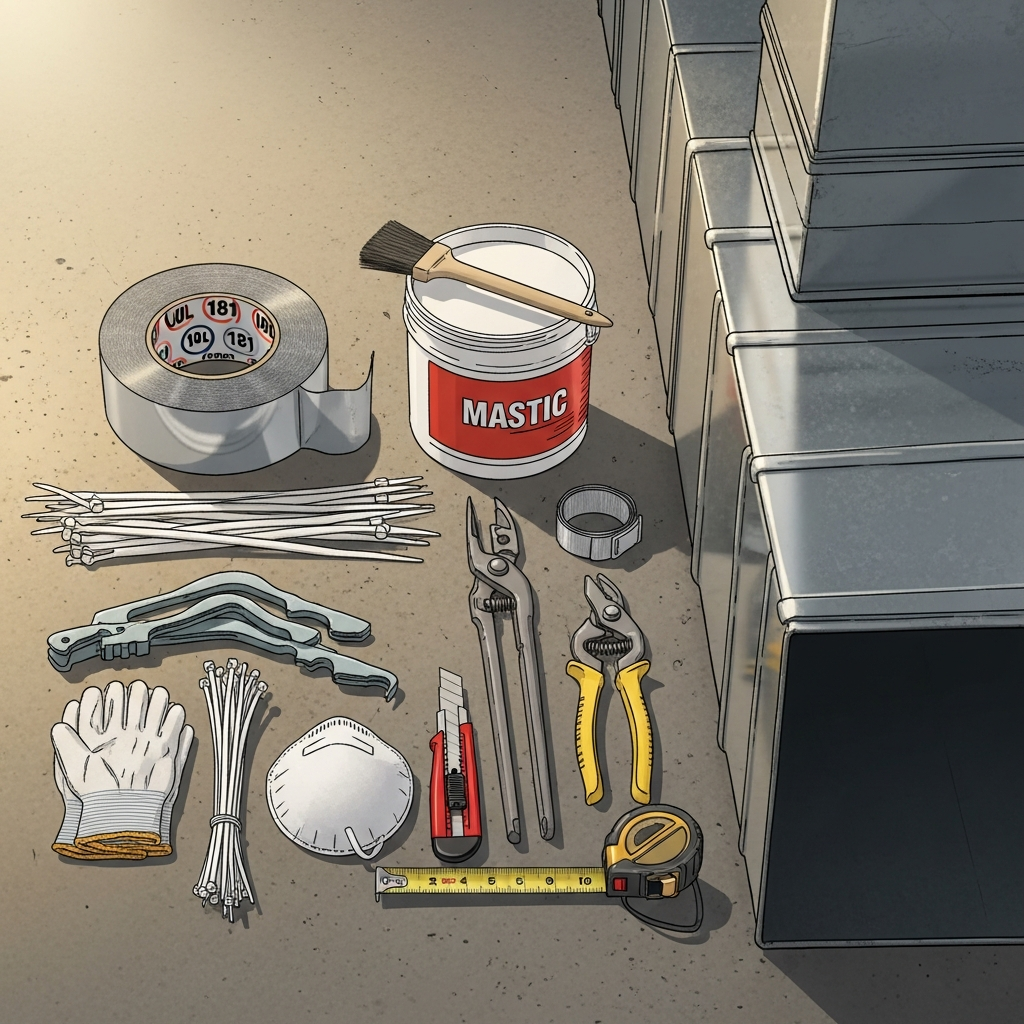
- UL 181-rated foil tape and water-based mastic for sealing.
- Brush for mastic application and fiberglass mesh for larger gaps.
- Sheet-metal screws, a drill/driver, and metal snips for securing fittings.
- Utility knife, tape measure, and zip ties for flex duct connections.
- Duct hangers or straps to support long runs and remove sags.
- Replacement flex duct and collars for sections beyond salvage.
Basic Standards for Quality Repairs
Seal air before adding or fixing insulation. Use UL-rated products designed for HVAC conditions. On flex duct, seat and seal the inner liner to the collar first, then pull the insulation and outer jacket over the connection and tape it closed. Support flex duct every 4 to 6 feet and keep bends smooth. On sheet metal, fasten with screws where needed before sealing with mastic. Never use cloth-backed household “duct tape,” which fails under temperature and humidity swings.
Step-by-Step Beginner Workflow
- Survey: With the system running, feel and listen for leaks and mark them. Turn the system off to work.
- Clean: Wipe dust from repair areas to help tape and mastic adhere.
- Secure: Tighten loose collars with screws and correct sagging supports.
- Seal: Apply mastic to rough seams and use UL 181 foil tape on smooth, clean joints. Embed mesh for large gaps.
- Reconnect: Reseat flex liners, zip tie, and seal, then restore insulation jackets.
- Insulate: Replace torn insulation and ensure vapor barriers are intact in humid spaces.
- Verify: Restart the system and recheck each marked point for leaks and airflow improvements.
Readington-Specific Considerations
Local humidity and seasonal swings stress seals and insulation. Focus on supply ducts in attics and crawlspaces where heat and moisture are high. After winter, reinspect seams that may have opened with temperature cycling. In spring, ensure return pathways are airtight to keep pollen-laden air from bypassing filters.
Common Beginner Mistakes to Avoid
- Skipping cleaning before sealing, which leads to tape failure.
- Using cloth-backed tape instead of UL 181 foil tape.
- Failing to seat and seal the inner liner on flex ducts before closing the jacket.
- Over-restricting airflow by closing dampers too far in the name of balancing.
- Ignoring return leaks that pull dust and odors into the system.
- Leaving long, unsupported spans of flex duct that sag and choke airflow.
Simple Tests for Beginners
- Tissue test at seams and boots to find supply leaks (blowing) and return leaks (sucking).
- Hand test at registers to compare relative airflow after each repair step.
- Visual check for condensation or rust that indicates temperature-driven leakage.
When DIY Turns into Pro Support
Most beginners can handle sealing visible seams, reconnecting flex, and correcting sags. However, hidden breaks behind finishes, suspected mold, or design limitations call for professional tools and experience. If your mid-project findings point to bigger issues—like undersized branches, chronic noise at certain diffusers, or temperature swings that persist despite tight ducts—schedule trusted professional air duct repair to complete the job safely and efficiently.
Frequently Asked Questions
Q: What sealant should I buy first? A: Get UL 181-rated foil tape and a tub of water-based mastic; together they handle most residential duct leaks.
Q: Can I repair ducts in winter? A: Yes. Just ensure safe, well-lit access and be aware that cold surfaces may reduce tape tack; clean and press firmly.
Q: How do I know if a flex duct is too long? A: Excess slack creates sags. If supports every 4 to 6 feet still leave droops, consider trimming and refitting to a smooth path.
Q: Do I need to seal around registers in the room? A: Yes. Seal gaps at the boot perimeter to reduce leakage into wall or floor cavities and to keep dust from being drawn in.
Q: Is insulation as important as sealing? A: Seal air first to stop losses, then insulate to control temperature gain or loss and prevent condensation.
Q: What if I smell mustiness in summer? A: Look for condensation on cold supply lines and repair vapor barriers. Persistent moisture may require dehumidification.
Q: Will closing registers fix hot/cold rooms? A: Not by itself. Fix leaks and restrictions first; then make gentle damper adjustments.
Q: When should I stop and call someone? A: If you encounter contamination, inaccessible sections, or suspected design flaws, bring in air duct repair specialists to diagnose and resolve the root cause.
Start Strong and Build Confidence
Air duct repair becomes manageable when you follow a clear process and use the right materials. By sealing priority leaks, correcting flex runs, restoring insulation, and verifying airflow, you can make a noticeable difference in comfort and air quality throughout your Readington home. If you are ready for expert guidance or want guaranteed, measurement-based results, schedule local air duct repair and enjoy dependable performance in every season.
