Efficient, reliable ductwork is essential for offices, retail buildings, schools, and light industrial spaces across Readington, New Jersey. When commercial ducts leak, sag, or fall out of balance, the consequences include uncomfortable tenants, reduced indoor air quality, and avoidable strain on rooftop units and air handlers. A proactive maintenance program prevents these issues and supports consistent operations. This guide outlines a practical, facility-focused approach to commercial air duct repair and upkeep, from inspection protocols to documentation and performance verification. If your team needs specialized help mid-project, engage local experts for targeted air duct repair that minimizes downtime and restores design-level airflow.
Set a Maintenance Framework
Commercial properties benefit from a written plan that defines responsibilities, schedules, and standards. Establish inspection intervals—quarterly for high-use buildings, semiannually for others—and align them with filter changes and rooftop unit checks. Create a duct map identifying main trunks, risers, branch lines, VAV or zone boxes, fire dampers, and key diffusers. Label access panels and draft a baseline performance log that includes static pressure readings, supply temperatures, and representative airflow measurements.
Safety and Compliance
Lockout/tagout procedures protect technicians when working near moving parts or energized equipment. Verify compliance with local codes and manufacturer guidelines for duct materials, fire damper testing, and plenum space requirements. Maintain clearances around mechanical rooms and ensure ladders, lifts, and rooftop protections are in good condition.
Inspection Priorities for Commercial Ducts
- High-pressure zones: Plenums, main trunks, and riser bases where leaks waste the most air.
- Connections: Takeoffs to branches, VAV boxes, and flexible connectors at equipment.
- Support and alignment: Long spans in open ceilings or above tiles require consistent hangers; correct sags and sharp bends.
- Fire and smoke dampers: Confirm free movement and test according to schedule.
- Diffusers and returns: Verify clean grilles, correct throw patterns, and sealed boot-to-ceiling connections.
Common Commercial Repair Actions
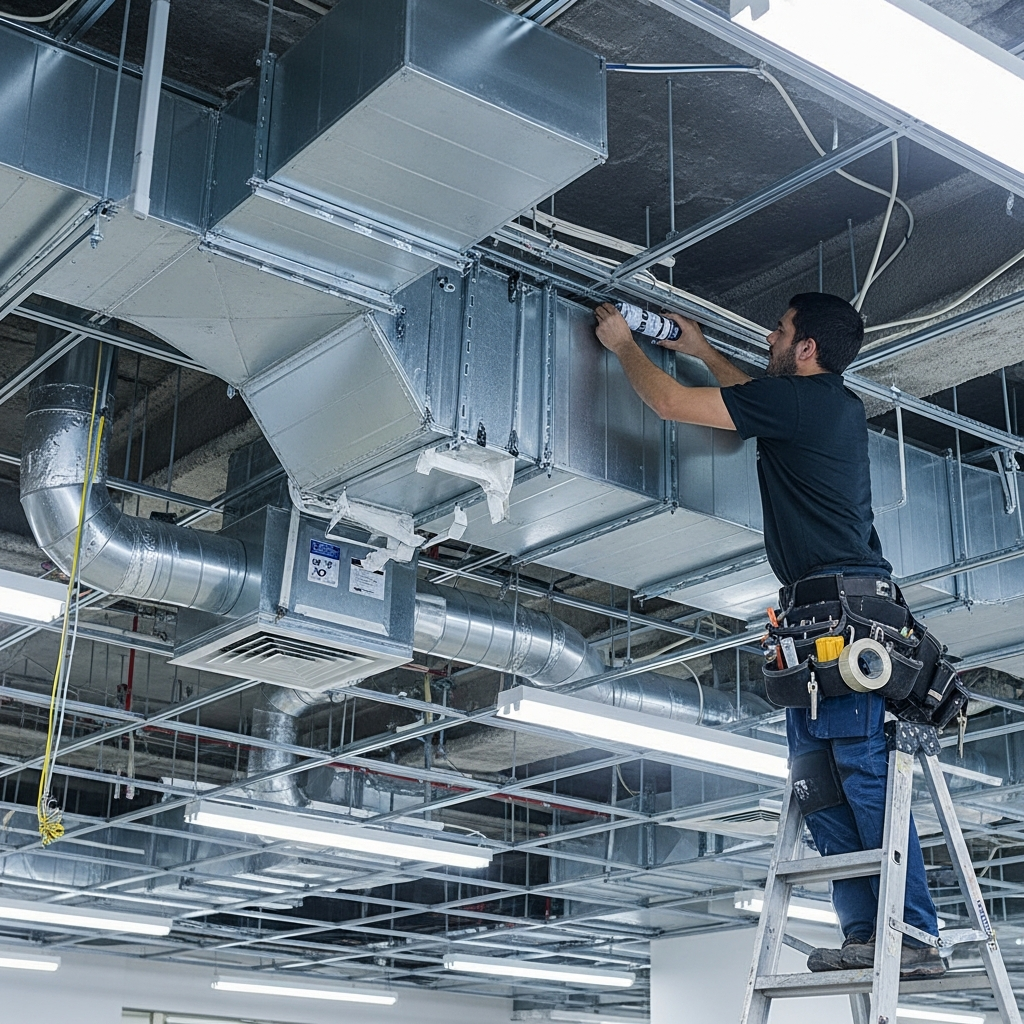
Sealing trunk seams with mastic and UL 181 foil tape where appropriate delivers quick wins. Replace deteriorated flexible connectors at equipment to reduce vibration and noise. Rehang or add supports to correct sags along long runs, especially where tenant build-outs have altered ceiling grids. At VAV boxes, ensure inlet and outlet connections are tight, actuator linkages move freely, and insulation is intact to prevent condensation in humid weather.
Addressing Zoning and Balance
Commercial spaces rely on balanced airflow across zones to maintain comfort and productivity. After sealing leaks and correcting restrictions, verify damper positions and VAV programming. Use manufacturer-recommended procedures to calibrate actuators and confirm setpoints. Monitor representative zones during occupied hours to validate temperature stability and responsiveness.
Moisture Management and Insulation
Summer humidity in Readington can cause condensation on cold ducts in warm plenum spaces. Inspect vapor barriers and repair tears. Where dew points are high, add insulation or repair jackets around cold supply lines and chilled-water coils adjacent to duct connections. Persistent moisture issues may warrant adjustments to ventilation rates or occupancy schedules to reduce load spikes.
Performance Verification
- Spot-check static pressure upstream and downstream of major components to identify restrictions.
- Measure supply air temperature differentials and compare to baseline.
- Use airflow hoods or anemometers at key diffusers to confirm distribution targets.
- Trend BMS data for fan speed, damper positions, and zone temperatures to catch regression.
- Document all readings with date, time, and weather conditions for context.
Tenant and Occupant Feedback Loop
Comfort complaints provide valuable clues. Track issues by location and time of day, then map them to your duct layout and VAV zones. Patterns—like afternoon hotspots on a western facade—may indicate balancing tweaks or insulation improvements are needed. Communicate completed repairs and expected outcomes to reduce repeat tickets and build confidence.
Coordination with Other Trades
Ceiling work, lighting changes, and cabling can disrupt ducts, supports, or diffusers. Establish a pre- and post-construction checklist with tenant improvement teams. Verify that new partitions do not isolate returns, that supplies are not aimed at obstructions, and that added heat loads are accounted for in zoning and diffuser selection.
Inventory and Materials Standards
- Stock UL 181-rated foil tape, water-based mastic, sheet-metal screws, hanging strap, and flexible connectors.
- Keep replacement diffusers, register frames, and gaskets to resolve rattles and air bypasses quickly.
- Standardize insulation types and jacket ratings to simplify repairs and performance expectations.
Documentation and Reporting
Maintain a living document of repairs with photos and pre/post measurements. Include part numbers, locations, and responsible technicians. Share summaries with property managers after each cycle, highlighting priority items and any zone performance changes. Well-kept records justify budgets and demonstrate due diligence for compliance and insurance.
Indicators You Need Outside Help
If recurring complaints persist despite repairs, or if baseline static pressure and airflow readings drift without obvious cause, it may be time for advanced diagnostics. Duct leakage testing, tracer smoke, and camera scoping uncover hidden failures above hard ceilings or inside shafts. Engage proven professionals for commercial duct repair that includes measurement-based balancing and documentation suitable for stakeholders.
Seasonal Strategy in Readington
Plan your heaviest inspections in shoulder seasons when loads are moderate and downtime is easier to schedule. Prior to summer, focus on insulation integrity and condensate management. Before winter, confirm tight seals and damper function to avoid cold drafts and stratification. After major weather events, walk rooftops and plenum spaces to catch damage early.
Frequently Asked Questions
Q: How often should commercial ducts be inspected? A: Quarterly for high-use or complaint-prone buildings and semiannually for stable, low-occupancy spaces is a practical starting point.
Q: What repairs yield the biggest ROI? A: Sealing high-pressure leaks at plenums and trunks, rehanging sags, and fixing VAV connections typically deliver noticeable comfort and control improvements.
Q: Do we need to clean ducts before sealing? A: Address major leaks first; cleaning is most effective and cleaner afterward. Avoid dislodging dust into open leaks.
Q: Can balancing fix hot/cold spots without major work? A: Often yes, but only after leaks and restrictions are resolved. Balancing on a leaky system masks issues temporarily.
Q: What if tiles or finishes limit access? A: Use selective tile removal, access doors, and camera scoping. For persistent problems, schedule after-hours work to minimize disruption.
Q: How do we prevent condensation drips? A: Restore vapor barriers, add insulation where dew points demand it, and verify air volumes and temperatures align with design.
Q: Are flexible connectors necessary? A: Yes, they isolate vibration, reduce noise, and protect equipment and duct joints from stress.
Q: When should we bring in a pro? A: When measurements point to hidden failures, or when repeated comfort tickets suggest design or control issues, outside expertise and air duct repair ensure a durable solution.
Keep Your Building Comfortable and Productive
A structured maintenance program—anchored in inspections, targeted repairs, reliable materials, and measured verification—keeps commercial duct systems performing through Readington’s changing seasons. If you want a faster path to documented improvements, partner with trusted local specialists for precision air duct repair and enjoy stable comfort, quieter operation, and confident tenants.
