If certain rooms in your Readington, New Jersey home are too hot, too cold, or constantly dusty, the problem may lie in your ductwork rather than your HVAC equipment. Effective troubleshooting helps you separate symptoms from root causes so your repairs deliver real, lasting comfort. This guide explains common issues, simple diagnostic checks, and practical fixes you can perform safely. If you confirm a problem but the remedy seems beyond your tools or time, a local specialist can provide reliable air duct repair to resolve hidden leaks, reconnections, and airflow imbalances.
Start with Symptoms: What You See, Hear, and Feel
Uneven temperatures: If one room is colder in winter or hotter in summer, suspect a leak, restriction, or poor balance in the branch serving that room. Low airflow may indicate a kinked flex duct or a partially disconnected liner at the takeoff collar.
Excessive dust: When returns leak, your system can pull dusty air from basements, attics, or wall cavities, bypassing filtration. Look for gaps around return grilles and filter racks, and for seams that pull air inward when the blower runs.
Whistling or rattling: Whistling suggests a high-velocity leak or a gap at a seam, while rattling can signal loose metal joints or an unsecured boot. Fluttering may point to a torn flex liner or a loose damper blade.
Odors: Musty smells can indicate moisture problems and possible microbial growth, while chemical or insulation odors might result from overheated components or deteriorated tape. Always rule out non-duct sources first.
Quick Diagnostic Tests Without Special Tools
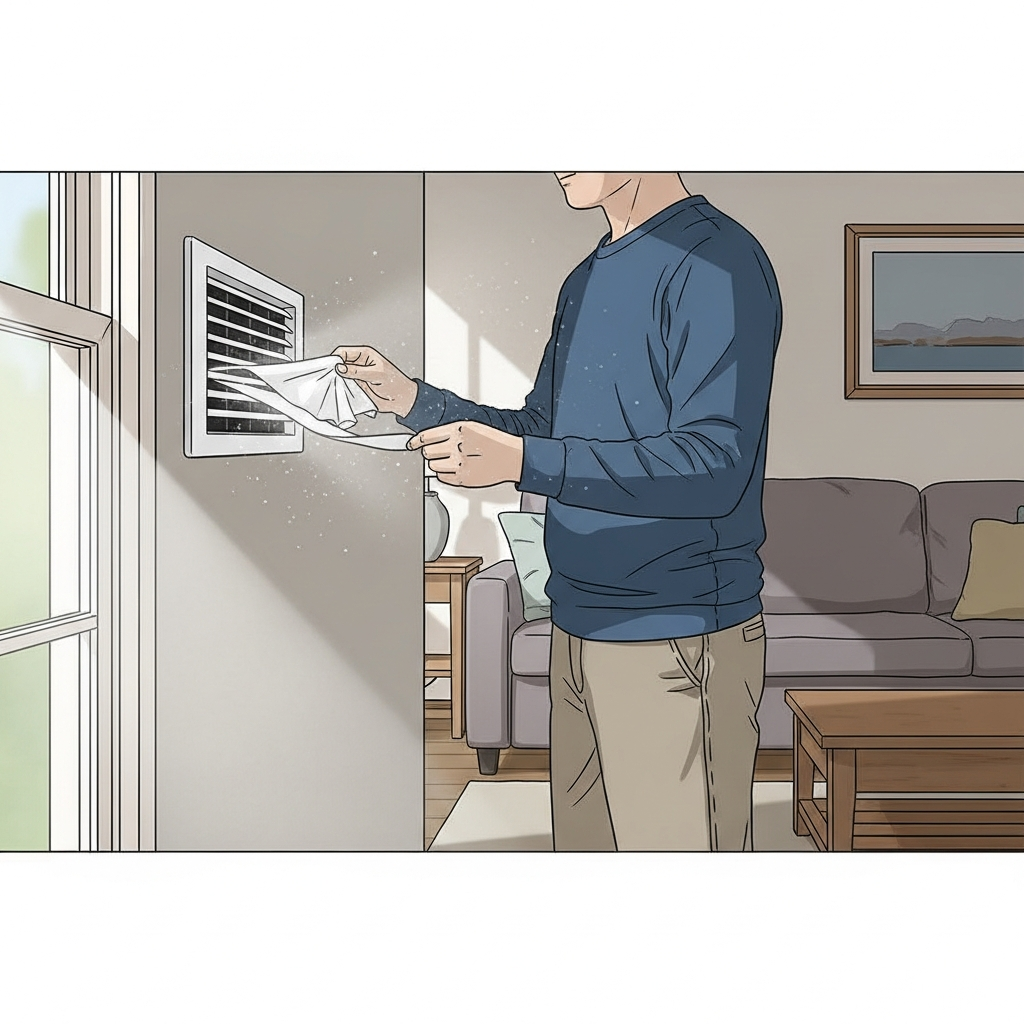
Tissue test: With the system running, hold a light strip of tissue near seams, boots, and filter racks. Movement shows leaks. A tissue drawn inward near a return seam confirms unfiltered intake; at a supply seam, air should blow outward.
Register airflow comparison: Put your hand at multiple registers set to fully open; note differences. Weak flow at a far room may reflect an obstruction, crushed duct, or closed damper.
Visual tracing: Follow the branch from trunk to boot. Look for sharp bends, sags, or furniture pressing on ducts hidden behind platforms or storage.
Thermostat sanity check: Validate the thermostat is set correctly and that the fan mode is appropriate (auto vs on). An always-on fan can mask problems by circulating air even when heating or cooling is off.
Common Root Causes and Fix Strategies
Leaky seams and joints: Seal with mastic on rough seams and UL 181 foil tape on clean, smooth surfaces. Focus first on the plenum and main trunk where pressure is highest.
Kinked or crushed flex duct: Straighten gently to maintain broad radiuses around corners, support every 4 to 6 feet, and replace sections that remain constricted.
Disconnected liners at collars: Pull back insulation and the outer jacket, confirm the inner liner is seated over the collar, tighten with a zip tie, seal, and then restore the jacket and tape closed.
Boot leaks: Seal the boot-to-drywall or boot-to-floor gap to prevent loss into cavities and to stop dust from being drawn into returns.
Return leakage: Seal gaps at filter racks and seams so all air passes through the filter before entering the blower.
Balancing Basics for Consistent Comfort
Once repairs are complete, check for balancing dampers—small levers on branches. Adjust in small increments and wait a full cycle to evaluate changes. Do not over-restrict any branch. If a room remains uncomfortable despite solid airflow, insulation and window performance may be the culprits; duct repair cannot overcome a leaky envelope.
Condensation, Humidity, and Insulation
Readington summers can be humid, which increases the chance of condensation on cold supply ducts in attics or crawlspaces. First, seal all leaks that allow humid air to contact cold metal. Then, ensure ducts are insulated with intact vapor barriers. Persistent moisture warrants a broader humidity strategy, including dehumidification or ventilation improvements.
When Troubleshooting Reveals Bigger Design Issues
Sometimes a branch is simply undersized or a trunk layout is inefficient. Signs include persistent noise from high air velocity, chronic comfort complaints despite tight ducts, and visible long, serpentine flex runs feeding distant rooms. In these cases, targeted layout changes, new takeoffs, or trunk resizing may be required. Mid-project, consider calling for professional air duct repair and design assessment to realign airflow with room loads.
Step-by-Step Example: Fixing a Cold Bedroom
- Map the run: Identify the branch from the trunk to the bedroom boot.
- Inspect with the system on: Listen and feel for leaks or restrictions.
- Turn power off: Secure safety before working.
- Check the collar: Tighten with sheet-metal screws if loose and seal with mastic.
- Verify liner connection: Reseat the flex liner, zip tie, and seal.
- Correct kinks: Re-route to create smooth bends and add hangers as needed.
- Seal the boot perimeter: Prevent losses into cavities.
- Restart and test: Compare bedroom airflow and temperature over the next cycle.
Noise Troubleshooting
Bangs at startup can indicate expanding metal at tight clearances or a closed damper. Rattle typically means a loose panel, register, or collar. High-pitched whistling points to a small, fast leak, often at a register frame or a partially closed blade. Fix the obvious first: tighten screws, add padding where panels meet frames if gaps exist, and seal seams.
Odors and Indoor Air Quality Checks
If odors emerge only when the blower runs, suspect return leaks or debris in boots. Clean boots, replace filters, and seal returns. If odors persist along with moisture signs, investigate for condensation and insulation failures. For stubborn issues, consider a professional inspection that includes camera scoping and airflow measurement.
Maintenance Habits That Prevent Repeat Problems
- Change filters on schedule to keep airflow strong and dust under control.
- Inspect accessible ducts twice annually, before heating and cooling seasons.
- Keep storage away from ducts and registers to prevent crushing and blockage.
- Recheck seals after major storms or renovation projects.
- Document damper positions and successful fixes for future reference.
Frequently Asked Questions
Q: How do I tell if a leak is on supply or return? A: With the blower on, supply leaks blow out and return leaks suck in. Tissue tests reveal the difference instantly.
Q: Is foil tape enough by itself? A: On smooth, clean surfaces, yes. For rough seams or larger gaps, mastic provides a more durable seal.
Q: Can I troubleshoot in winter? A: Absolutely. Cooler ducts can make drafts easier to feel. In summer, listen for whistling and look for condensation clues.
Q: What if one room is loud? A: High velocity through an undersized branch or a partially closed damper creates noise. Verify sizing and damper position, then check for kinks.
Q: Are return leaks worse than supply leaks? A: Both matter, but return leaks can pull pollutants into the system and bypass filtration, harming air quality.
Q: How long will mastic last? A: Properly applied over clean surfaces, it should hold for years without cracking.
Q: Should I insulate all ducts? A: Insulate supply ducts in unconditioned spaces and consider insulating long return runs exposed to temperature extremes.
Q: When should I call a pro? A: If you find hidden breaks, evidence of contamination, or design flaws, professional diagnostics and air duct repair can solve problems you cannot see or reach.
Restore Comfort Room by Room
With a structured approach—observe, test, seal, support, and balance—you can solve the most common duct problems in Readington homes. Start with the easy wins, keep notes, and verify improvements with each step. If you prefer expert confirmation and a faster path to consistent comfort, schedule trusted local air duct repair and enjoy cleaner air and stable temperatures in every season.
