For many Readington, New Jersey homeowners, the path from drafty rooms to balanced, quiet comfort begins with a clearly defined process. Understanding how a professional team evaluates, designs, installs, and verifies a new duct system helps you anticipate what will happen at each step, ask the right questions, and set your home up for success. If you are just starting your journey, reviewing a local overview of air duct installation can help you visualize the milestones and standards that guide a quality project.
Every home is unique, but strong process fundamentals never change. They begin with careful listening and data gathering, move through design and material selections, and culminate in disciplined fieldwork and commissioning. The following walk-through explains how those pieces fit together and what you should expect along the way.
Step 1: Discovery and Comfort Interview
The process begins with you. A technician or comfort specialist will ask about your experience of the home: rooms that run hot or cold, noisy vents, dust levels, humidity swings, and how you use each space throughout the day. This conversation turns your goals—quieter bedrooms, a more even family room, healthier air—into measurable targets that shape the rest of the work.
During the initial visit, expect a visual inspection of existing ductwork (if present), equipment location, access pathways, and structural features that affect routing. The objective is to identify constraints early so the design anticipates real-world conditions.
Step 2: Measurements and Load Calculations
Next comes data. Square footage, ceiling heights, window orientation, insulation levels, and room-by-room details are recorded. With this information, the team calculates heating and cooling loads to determine how much air each space needs for steady comfort. Accurate loads prevent undersized runs that starve rooms or oversized ducts that waste space and complicate balancing.
At this stage, professionals also assess existing supplies and returns, document any bottlenecks or leakage, and note noise-sensitive areas. The goal is to build a precise picture of your home’s airflow needs so the final layout supports them efficiently and quietly.
Step 3: Design and Layout
With loads in hand, designers translate targets into a layout. Main trunks, branches, and final connections are planned to minimize sharp turns and long runs. Return air is treated as a first-class priority—its sizing and placement affect equipment health, energy efficiency, and comfort in every room.
Material choices are selected for each segment: rigid metal for trunks and plenums, carefully supported and fully extended flex for short final connections, and insulated boots where needed. The design also considers acoustics, especially near bedrooms and living areas, with smooth fittings and potential lined sections to limit noise.
Step 4: Proposal and Scope Review
Before work begins, you will receive a scope that explains materials, sizes, insulation levels, sealing methods, and how performance will be verified at handoff. This is the time to ask questions about access, protective measures, and how unforeseen conditions will be handled. A clear scope gives you confidence that the team will deliver to plan and that results will be measured, not assumed.
Step 5: Site Preparation and Protection
On day one, the crew protects floors and surfaces, establishes containment for any cutting, and sets up safe staging areas. Access to attics, basements, or crawlspaces is verified. If existing ducts are being removed, debris handling and disposal are arranged to keep the site tidy. Communication protocols—daily updates, milestone checks, and contact points—are also confirmed.
Step 6: Fabrication and Rough-In
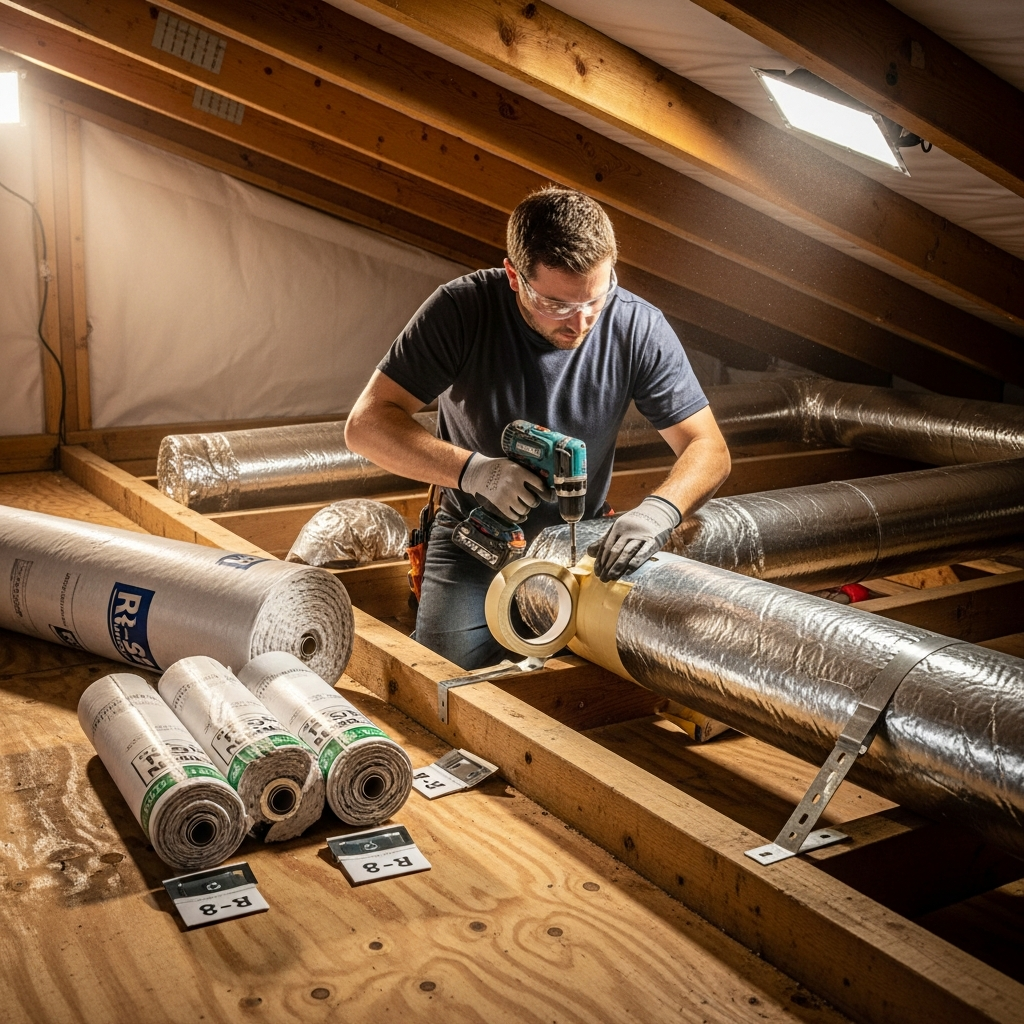
Fabrication of trunks, transitions, and fittings proceeds according to the layout. Installers prioritize straight, direct runs and smooth transitions. Flex connections are kept short, fully extended, and properly supported to preserve airflow and prevent noise. Penetrations through conditioned and unconditioned spaces are sealed and insulated to control temperature and humidity.
During rough-in, returns are sized and placed to match supply volume, preventing door-closing pressure imbalances and supporting equipment performance. Dampers may be installed to allow balancing later, especially in multi-branch layouts or potential future zones.
Step 7: Sealing, Insulation, and Detailing
Seams and joints are sealed with mastic and approved tapes, protecting indoor air quality and preventing leakage that would waste energy. Insulation is continuous where ducts pass through attics, crawlspaces, or other unconditioned areas, reducing condensation risk and maintaining designed air temperatures.
This detailing stage includes careful alignment of boots and registers, labeling of dampers, and placement of access points where periodic maintenance or adjustments are anticipated.
Step 8: Trim-Out and Register Placement
With rough-in complete, the team installs registers and grilles. Placement and orientation are verified to support even air distribution. In high-visibility areas, aesthetic considerations are balanced with performance: registers are aligned and finished cleanly, and any necessary soffits or chases are coordinated with other trades.
Step 9: Commissioning and Verification
Commissioning is where design meets reality. Technicians measure static pressure, verify airflow at key rooms, and adjust dampers to balance the system. They listen for turbulence or vibration, ensure quiet operation, and confirm thermostat or control sequences. Documented readings become your baseline and a reference for future maintenance.
Step 10: Orientation and Handoff
Before the final cleanup, you will receive an orientation that covers filter locations, damper positions, recommended maintenance intervals, and tips for adjusting registers seasonally. The team reviews the commissioning results and confirms that the system meets the performance targets set during design.
Quality Markers to Watch For
- Straight, well-supported runs with minimal sharp turns.
- Careful use of flex duct—short, fully extended, and supported.
- Sealed seams and transitions with mastic and appropriate tapes.
- Continuous insulation across unconditioned spaces.
- Balanced returns that match supply volume.
- Technicians using gauges and airflow tools throughout the job.
Coordination With Other Trades
Successful projects often include collaboration with electricians, framers, insulators, and sometimes low-voltage specialists if smart controls or zoning are included. Early coordination avoids conflicts around chases, soffits, and equipment placement. It also ensures that penetrations through air barriers are properly sealed and that insulation is continuous around duct pathways.
Readington Realities: Attics, Basements, and Seasons
Local homes present recurring patterns: older basements with stone foundations, newer construction with engineered joists, and attics that swing from hot and humid in summer to frigid in winter. Good installers anticipate these swings with vapor-aware insulation strategies, sealed penetrations, and routing choices that shield ducts from extreme conditions wherever practical.
Owner Preparation Tips
- Clear pathways and protect fragile items before the crew arrives.
- Plan for pet safety and room access during work hours.
- Identify staging areas for materials and tools.
- Discuss daily cleanup expectations and communication preferences.
- Confirm how debris will be handled if old ductwork is removed.
Common Pitfalls and How Pros Avoid Them
- Ignoring return air: Balanced returns are essential for comfort and equipment health.
- Overreliance on long flex runs: They restrict airflow and create noise; use flex sparingly and correctly.
- Skipping testing: Without commissioning data, you cannot verify design targets were met.
- Inadequate insulation: Uninsulated ducts in unconditioned spaces lose energy and may condense moisture.
- Poor access planning: Hidden dampers or filters complicate maintenance and adjustments.
Maintaining Performance After Installation
Once the system is commissioned, a light maintenance routine preserves performance. Change filters on schedule, keep registers unblocked, and verify that attic or crawlspace insulation remains intact where ducts pass. If you remodel or repurpose rooms, ask for a quick airflow check to maintain balance.
Midway through planning or installation, you may want a second set of eyes on a layout or materials list. Many Readington homeowners consult a local summary of air duct installation to confirm they understand each milestone and to align expectations with their installer.
Frequently Asked Questions
Q: How long does the full process typically take? A: Timeline depends on home size, complexity, and access. Clear planning, site protection, and disciplined commissioning keep schedules predictable.
Q: Do I need zoning? A: Zoning helps when different areas of the home have distinct use patterns or solar exposure. Your designer can advise based on load calculations and layout.
Q: Can new ducts quiet my system? A: Yes. Proper sizing, smooth fittings, and acoustic strategies significantly reduce turbulence and noise.
Q: What documents should I receive at handoff? A: A scope summary, as-built notes if changes occurred, commissioning readings, and maintenance guidance.
Q: Is flex duct acceptable? A: Used correctly for short final connections—fully extended and supported—flex performs well.
Q: How do I prepare my home? A: Clear access, plan for containment, secure pets, and confirm daily communication and cleanup routines.
Q: Will this improve indoor air quality? A: With proper sealing, filtration, and ventilation strategies, new ductwork supports cleaner, healthier air.
Confidence Through Process
A predictable, transparent process is the backbone of a successful project. By insisting on measured design, disciplined installation, and documented commissioning, you protect your comfort and your home. When you are ready to move forward with a team that values clarity and craftsmanship, take the next step by exploring professional air duct installation and begin your path to quiet, balanced comfort.
