Healthy airflow is the backbone of a comfortable, efficient home. When the network of ducts carrying conditioned air develops leaks, kinks, or loose connections, your equipment works harder, rooms become uneven in temperature, and indoor air quality suffers. This comprehensive guide is tailored to homeowners in Readington, New Jersey, where seasonal humidity and winter cold put special stress on duct systems. By understanding how your ducts are designed, learning to spot problems early, and following a careful repair process, you can reclaim comfort, reduce wasted energy, and protect your HVAC investment.
Before you begin any hands-on work, it helps to clarify the overall goal. You want every cubic foot of air produced by your system to reach the rooms it is meant to serve without picking up dust from basements or crawlspaces. That requires sealing leakage points, relieving restrictions, preserving insulation, and confirming the system remains balanced. With a thoughtful plan, good safety habits, and quality materials, many homeowners can address small to moderate issues on their own. For bigger challenges, recognize the value of professional help. If your first steps reveal hidden complexities, schedule expert air duct repair and use this guide to have an informed conversation with your technician.
Know your ductwork: the basics
Your HVAC system includes an air handler or furnace that moves air through two primary pathways: the supply side that delivers conditioned air to rooms, and the return side that draws room air back through filters to be conditioned again. The supply trunk, return trunk, and branches can be made of sheet metal, fiberglass-lined duct board, or flexible duct. Connections at takeoffs, elbows, boots, and transitions are common sites of leakage or loosening over time. Damper positions in some branches help balance airflow to distant rooms.
In Readington homes, ductwork often snakes through basements and attics. When ducts cross unconditioned spaces, they require both sealing and insulation to prevent condensation in summer and heat loss in winter. Understanding where your ducts run, what materials they are made from, and how they connect to registers will help you prioritize repairs that deliver the biggest impact first.
Symptoms that point to duct problems
Watch for these telltale signs: rooms that never feel comfortable, dust accumulating quickly on return grilles, a persistent musty odor when the blower starts, and whistling or rattles at certain points in the system. If your equipment runs longer yet struggles to hold temperature on extreme days, or if one floor is always warmer or cooler than the others, your ducts may be to blame. Visual clues like dark dust streaks at seams, matted insulation, or crushed flex runs also direct you to the likely trouble spots.
Another diagnostic tip is to note how the system behaves with interior doors open versus closed. If closing a bedroom door causes its register airflow to drop dramatically, the return path may be inadequate, suggesting that sealing supply leaks and improving return airflow will yield better overall performance. The more observations you gather, the more targeted your repairs can be.
Safety and preparation
Turn off power to the HVAC system before removing panels or reaching near moving parts. Wear gloves, eye protection, and a respirator if you will disturb dust or old insulation. Prepare the area with drop cloths and ensure you have strong, stable lighting. Plan the order of work: start at the air handler and main trunks, then work outward toward branches and boots. Label dampers and take photos before adjusting anything, so you can restore settings if needed.
Create a material kit: HVAC-rated mastic, UL-listed foil tape, sheet metal screws, clamps for flexible duct, a cordless driver, tin snips, and a caulking brush for mastic application. Avoid generic cloth duct tape. If you expect to touch up insulation, obtain duct wrap with the correct R-value and appropriate fasteners. Having everything at hand keeps the job safe and efficient.
Inspection and cleaning of accessible sections
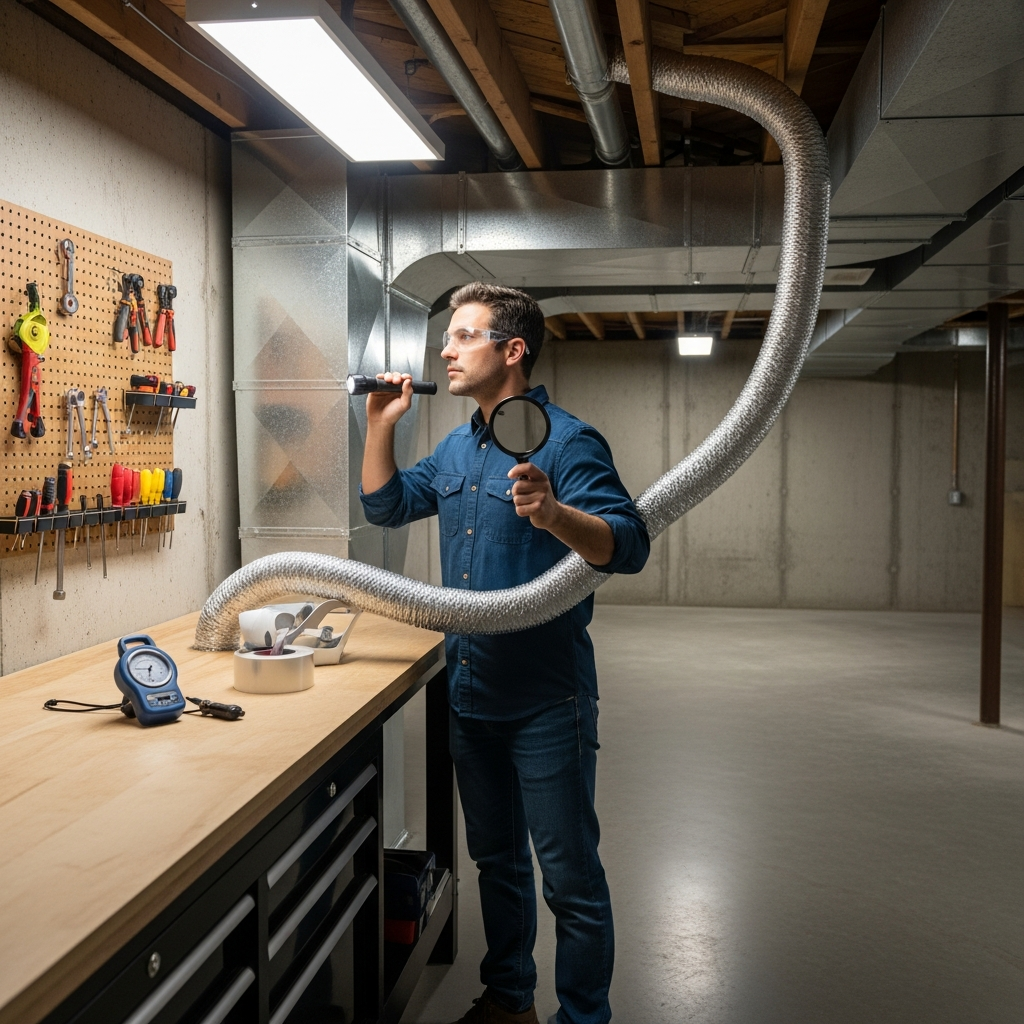
Begin with a visual sweep. On metal ducts, look for gaps at longitudinal seams and around takeoffs to branches. On flexible ducts, find kinks, crushed segments, or detached inner liners at collars. Check the return plenum at the air handler and look for openings that could draw dust or attic air into the system. Lightly clean surfaces you plan to seal; mastic bonds best to clean, dry metal or clean ductboard facings. Use a vacuum with a HEPA filter to prevent dust from recirculating into living spaces.
As you inspect, gently test mechanical stability. Light pressure should not cause a connection to shift more than a fraction of an inch. If a section moves freely, add appropriate support before sealing. For flex ducts, use wide straps and maintain smooth arcs at bends. Replace any torn outer jackets and confirm the inner liner seats over the collar before you tape the insulation seam.
Sealing leaks: methods that last
Apply a continuous layer of mastic over seams, takeoffs, and around the base of boots where they meet subfloor or drywall. Reinforce mastic with foil tape at points subject to vibration or movement. For flexible duct connections, fully tighten the mechanical clamp on the inner liner first, then seal the outer jacket’s seam with foil tape. Ensure the adhesive side is pressed firmly onto a clean surface and rub down the tape to eliminate bubbles. Properly sealed joints will remain airtight through many heating and cooling cycles.
If you encounter a damaged metal elbow or a crushed section of flex that cannot be restored, replace it. Cut flex back to sound material, use a new collar if needed, and reconnect with clamps before sealing the exterior jacket. For metal ducts, use a crimping tool to fit a new piece securely into the existing run, then screw and seal all joints. When in doubt about compatibility or fire ratings, consult product documentation or seek professional guidance.
Insulation and condensation control
Ducts passing through unconditioned spaces must be insulated. Bare metal in a damp basement or humid attic will sweat when cold air flows, risking rust or mold on nearby surfaces. After sealing, wrap ducts with appropriate insulation or slide on pre-formed sleeves. Seal all seams in the insulation with foil tape to maintain a continuous vapor barrier. Keep insulation clear of flue pipes and follow clearance requirements. Proper insulation improves comfort in upstairs bedrooms and prevents energy waste during Readington’s winters.
Pay special attention to boots at the room interface. Air leaks where the boot meets drywall can create dust tracks and reduce register performance. Seal the gap with mastic or a UL-listed sealant compatible with the materials involved. A neat, airtight boot-to-drywall connection improves appearance and airflow while limiting infiltration from wall cavities.
System balancing and performance checks
Once repairs are complete, power up the system and listen. Whistles indicate tiny gaps or misaligned dampers. Rattles suggest loose screws or insufficient support. Use a simple tissue test to gauge airflow improvement at registers, or an anemometer for numbers you can document. Make small adjustments to dampers, waiting several minutes between changes to judge the effect in distant rooms. Remember that balance is a global property; a large change near the air handler can ripple throughout the house.
If you discover issues beyond your scope—very high static pressure, rooms with no returns, or inaccessible runs behind finished walls—note them and call in expert help. In the middle of your project, it is perfectly sensible to blend DIY with professional air duct repair so you get safe, durable results without overreaching.
Readington-specific insights
Local homes often combine older metal trunks with newer flexible branches added during remodels. This mix works well if connections are tight and flexible sections are supported every few feet to prevent sagging. Because summers can be humid, consider a whole-home dehumidifier or ensure your existing system drains properly so the air handler does not add moisture to the return plenum. In winter, dry air can shrink some sealing compounds slightly; using quality mastic and properly burnished foil tape helps keep seams tight through freeze–thaw cycles.
Another regional tip: basements used as workshops or storage may introduce sawdust or chemical odors if returns are open to those spaces. Sealing returns and ensuring filters fit snugly at the air handler reduces these risks. Keep combustible materials away from the furnace area and leave ample clearance for service access.
Common mistakes to avoid
Do not rely on cloth duct tape. Do not compress insulation under straps so tightly that you create ridges that impede airflow. Avoid sharp bends in flexible runs; gentle sweeps maintain velocity and reduce noise. Do not close registers completely to force air to other rooms; this can raise system pressure and cause noise or equipment stress. Above all, do not ignore safety devices or bypass doors and panels on the air handler.
Frequently asked questions
How often should I check ducts? Twice a year is ideal—once before the heavy cooling season and once before heating season. Give extra attention after any renovation that created dust or altered wall cavities.
What products should I use to seal joints? HVAC mastic and UL-listed foil tape are the gold standard. Apply mastic generously to metal seams and use foil tape to reinforce areas prone to movement.
Why are some rooms still uneven after sealing? Sealing improves delivery, but layout and branch sizing also matter. Try minor damper adjustments. If issues persist, a professional may recommend resizing runs or adding returns.
Is it okay to run ducts through a garage? Penetrations between garage and living spaces have specific fire and air-sealing requirements. Consult code and a professional before modifying these areas.
Can I add insulation over existing duct wrap? Yes, provided you maintain a continuous vapor barrier and do not violate clearances. Seal seams on the outer layer to prevent moisture intrusion.
Take control of your home’s airflow
With careful inspection, proper sealing, and sensible balancing, you can restore comfort and indoor air quality while extending the life of your HVAC equipment. Document your work, take photos of key connections, and keep notes on damper settings so you can maintain improvements season after season. If a section feels unsafe or beyond reach, do not hesitate to enlist a qualified local team. For reliable results from experienced technicians who understand Readington homes and climate, schedule trusted air duct repair services and enjoy consistent, quiet airflow throughout your rooms.
