Yes, though for different reasons and on a different schedule than in a house with a furnace. When a boiler heats through baseboard or radiators, the ductwork exists only for the central air, usually served by an attic air handler. That unit runs hard for a few months, pulls household and attic dust through its return, then sits cold and idle with a coil that may never fully dry. Air duct cleaning for these systems centers on the return, the blower and the coil, and mold treatment and removal comes in where the coil or the drain pan has started to grow something. In Hunterdon County, most homes in Delaware Township, Lebanon Township and East Amwell burn fuel oil or propane, and a boiler is one of the usual ways those fuels deliver heat.
How a cooling-only duct system is laid out
Most often the air handler is up in the attic, sometimes in a closet or a corner of the basement. From it, supply runs fan out across the attic floor, often in flexible duct, and drop into ceiling diffusers in each room. The return side is simpler: one or two large grilles in an upstairs hallway ceiling, with the filter slot right behind the grille. Under the coil sits a drain pan, and a condensate line carries water out of the attic, with a second pan beneath the whole unit to catch overflow.
Because the system was added for comfort rather than heat, it was often fitted after the house was built. In an older farmhouse or village house, that means ducts threaded through a finished attic, around chimneys and over bedroom ceilings, with joints that were taped rather than sealed. In a newer house, the layout is cleaner, but the attic is as hot in July and as cold in January.
Why these ducts still get dirty
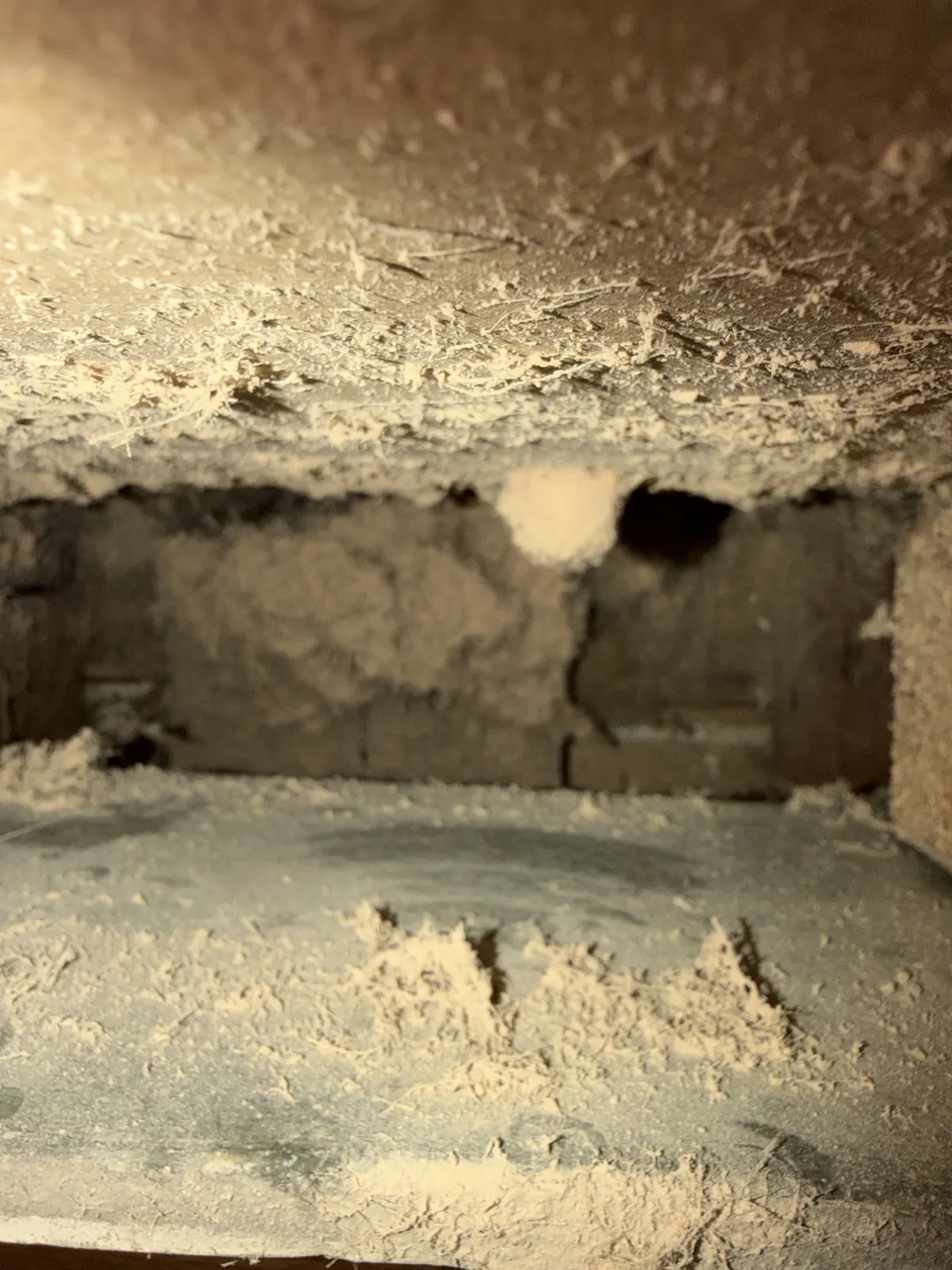
A cooling system moves a lot of air in a short season. Everything the return grille pulls in (dust, pet hair, lint and fibers) meets the filter first, and whatever slips past a loose or poorly fitted filter lands on the blower and the coil. Leaky return joints in the attic add attic dust and insulation fibers to the mix. A renovation during the cooling season can load the whole system with drywall dust in a week.
Attics also invite animals. Mice and insects that find their way into an attic can reach a return plenum through a gap, and the EPA names rodent or insect infestation of the ducts as one reason to consider a cleaning, along with substantial visible mold and ducts clogged with excessive dust and debris.
Filter fit matters more than filter rating in these systems. A return grille filter that is a size off, or one bowed out of its frame, lets air slip around its edges, and that bypass air carries dust straight to the coil. Measure the slot, buy the exact size, and check that the grille closes flat over the filter before the first hot week.
Moisture: the coil, the drain pan and the off season
The coil is supposed to get wet. As warm, humid air crosses it, water condenses, drips into the pan and leaves through the condensate line. When the line slows with sludge or algae, the pan holds water, dust sticks to the wet surfaces, and the air handler starts to smell. After the season ends, the coil and the pan can stay damp for weeks in a closed attic cabinet.
The EPA's guidance fits this system well: keep air conditioning drip pans clean and the drain lines unobstructed and flowing, and keep indoor humidity below 60 percent, ideally between 30 and 50. Where growth has already started on the coil, the pan or the duct next to them, those surfaces call for Mold Treatment and Removal. A lamp aimed at the coil, installed under HVAC UV Light Installation, keeps it cleaner between cleanings; it is a layer on top of a clear drain and a dry house, not a replacement for either.
Signs it is time for a cleaning
Watch the first day of cooling each year. A musty smell that fills the house for more than a few minutes points to the coil or the pan. Dark rings on the ceiling around supply diffusers show dust riding the airflow. A return grille furred with dust, a filter that clogs quickly, or bits of debris coming out of a diffuser all mean the system is carrying more than the filter can stop. A water stain on the ceiling under the attic unit means the drain or the pan calls for attention before anything else.
What a cleaning covers in a cooling-only system
The visit starts at the air handler: the filter slot, the blower compartment, the coil face and the drain pan. The supply runs are cleaned back toward the unit under negative air, the diffusers come down and get washed, and the return grille and its plenum are cleaned last. Attic flex that has been crushed or has pulled off its collar is refastened or replaced under Air Duct Repair, and return joints pulling attic air are sealed. If the drain line or the secondary pan looks clogged or rusted, we point it out so your heating and cooling contractor can deal with the unit itself.
Hunterdon houses where this comes up
Boiler heat with separate cooling turns up across the county's older and rural housing: the farmhouses around Sergeantsville and Rosemont in Delaware Township, the back roads of Lebanon Township, where oil heats more than half the homes, and of Tewksbury, where it heats about a third, and the older streets of High Bridge. In a big house there may be two air handlers, one for each floor or wing, each with its own return and its own drain pan to check.
The schedule is the main difference from a furnace house. A cooling-only system can often go longer between cleanings because it runs fewer months, but its coil and drain pan want a look every spring. Air Duct Cleaning handles the dust, and Mold Treatment and Removal handles any growth it finds at the coil, in the pan or on the nearby duct.