Dryer Vent Cleaning in Readington and Hunterdon County
Dryer vent cleaning clears the lint packed between the back of the dryer and the cap outside, the whole run, so the machine can push its hot, wet air out of the house again. In Hunterdon homes that often means a long climb to a roof cap or a vent low on a rural wall.
The lint screen catches most of what comes off a load, not all of it. Fine fibers ride the exhaust past the screen on every cycle and settle wherever the air slows, which means at each elbow, at every joint that was never sealed smooth, and at the cap. Over months the passage narrows until towels need a second cycle, the dryer cabinet runs hot to the touch and the laundry room turns warm and damp while the machine is on. Larger houses with the laundry upstairs add a climb through the attic to a roof cap, the longest and steepest route a dryer's small blower ever faces.
Rural lots bring their own complications. A cap set low on a wall can drift over with snow, a flap that sticks open lets birds and mice move into the hood, and a gas or propane dryer sends combustion gases out through the same run as the lint. AMG Duct Cleaning Readington NJ cleans the vent end to end and reports on each of those, and the sections below cover the method, the long runs, the rural caps, and how often a Hunterdon household should book.
Dryer to daylight: how the run is cleaned
The visit starts behind the machine. The crew slides the dryer out, disconnects the transition hose and looks at the wall collar, where lint tends to pack in a ring that nobody can see from the laundry room. The lint trap housing inside the dryer is brushed out too, since fibers that miss the screen build up in that channel first. Then the run itself is cleaned with a rotary brush driven through the duct and a vacuum pulling from the machine end, so the lint comes back out into a bag instead of being shoved toward the cap.
Every elbow gets extra passes, because that is where the fibers pack hardest. Outside, the crew clears the hood and its flap by hand and checks that the flap swings open under the dryer's airflow and falls shut when it stops. The transition goes back on with a clamp, and a crushable foil or vinyl hose is flagged for replacement with semi-rigid metal. The last step is the test that matters: the dryer runs on high while someone stands at the cap and confirms strong, steady airflow coming out.
Long runs, roof caps and upstairs laundries
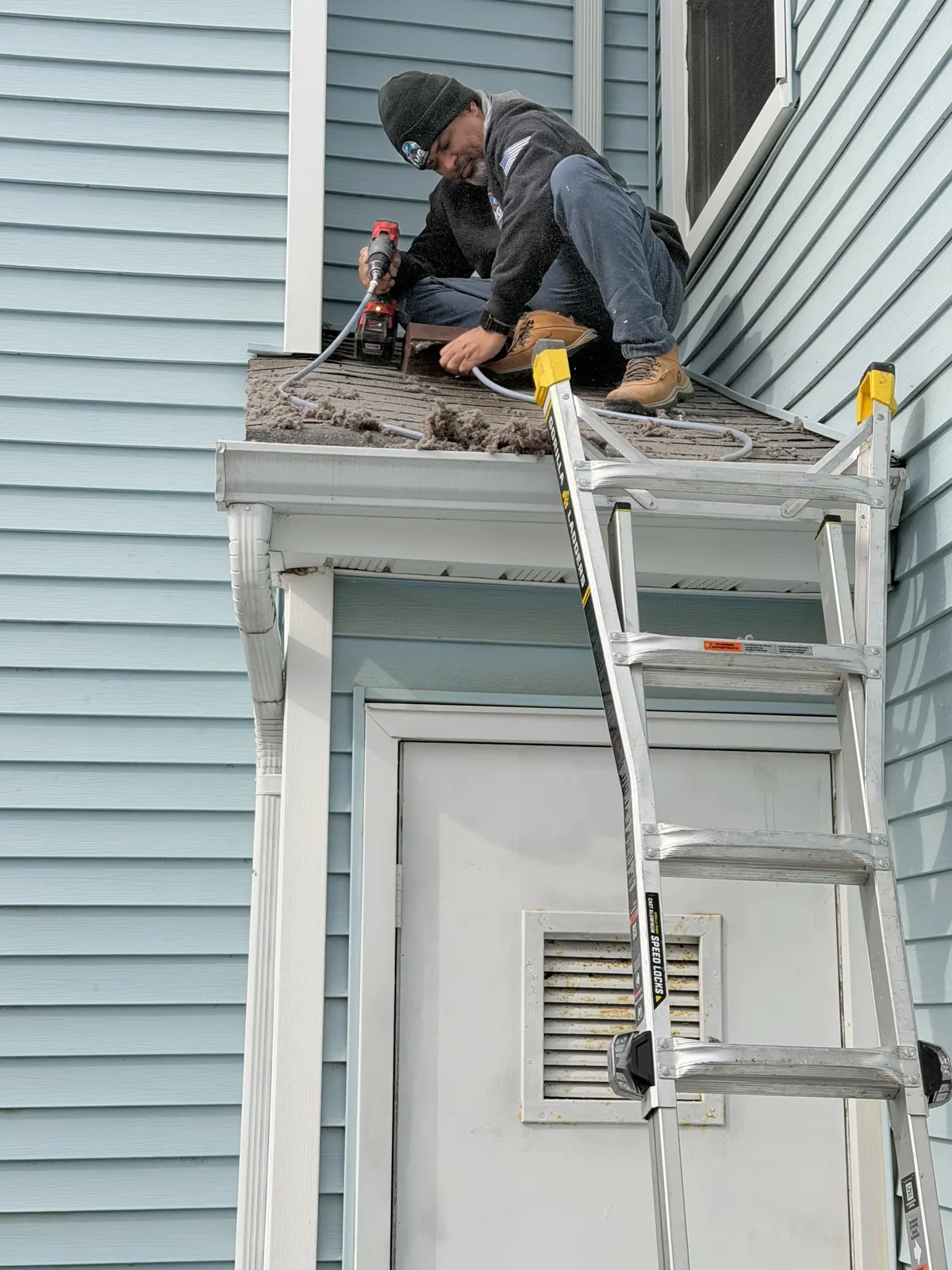
A laundry room on the second floor usually vents straight up through the attic to a cap on the roof. Lint loses speed on that climb and gathers where the duct turns and where it meets the cap, and a roof cap with a small louver or a screen catches the rest. A review on this location's Google profile describes exactly that: a large ball of lint lodged at the roof termination, pulled out during the cleaning, with the lint trap housing inside the machine brushed out on the same visit. The run is cleaned from the laundry end, and someone goes up to the cap itself when the pitch and the weather allow it. On a steep slate or metal roof that call is made on the day, and you hear which it was.
Some runs are too long for any cleaning to keep clear. Every dryer maker publishes a maximum vent length in the installation instructions, reduced for each elbow, and a run that exceeds it will clog again soon after a cleaning however thorough the work was. The crew measures what it can, counts the turns, and tells you when the route itself is the problem. The lasting fix then is dryer vent installation along a shorter, straighter path, and the cleaning buys time until that is scheduled.
Rural caps, snow and gas dryers
Out on the larger lots of Tewksbury, Lebanon Township and East Amwell, a vent cap may be the only opening in a long stretch of wall, and animals find it. A flap that no longer closes lets birds build in the hood each spring and gives mice a warm tunnel in the fall. Screens are not the answer, since a screen on a dryer cap packs with lint within weeks; a hood whose damper closes firmly keeps the animals out without catching the exhaust. The crew clears and bags any nest it finds and tells you whether the hood itself should be replaced.
Winter adds snow. The National Fire Protection Association's dryer safety sheet tells homeowners to check that the outdoor vent flap is not covered by snow, and a cap a foot above grade on a windward wall can disappear under a drift overnight. Gas and propane dryers raise the stakes, because the run carries combustion gases along with the lint. The same NFPA sheet advises having a gas dryer's line and connection inspected by a qualified professional, and the crew points out anything that looks wrong at the connection while the machine is pulled out.
How often to book, and what the visit takes
The NFPA suggests an annual vent cleaning, and an earlier one once loads begin to take longer than they used to. A large household, a family washing muddy work clothes, shedding pets or a long roof run all bring that date forward, and a vent that has never been cleaned since the house was built is due whatever the calendar says. Towels still damp at the end of a full cycle are the plainest sign that the run is restricted, and a dryer that quits heating partway through a load is another.
Most cleanings are a single visit, with the dryer pulled out, the run cleaned, the cap cleared and the airflow tested before the crew leaves. Pairing it with an air duct cleaning makes sense when the laundry sits beside the furnace in the basement, since the equipment and the drop cloths are already there. The Readington crew takes dryer vent calls 8 AM to 8 PM, 7 days a week and quotes the job free before touching anything; the company behind it, AMG, is veteran owned, licensed and insured, with state contractor registration 13VH13654300.
What is included
- Machine moved out and the transition hose inspected
- Lint trap housing inside the dryer brushed out
- Full run cleaned with rotary brush and vacuum
- Extra passes at every elbow where lint packs
- Exterior cap and damper flap cleared and tested
- Roof caps looked at up close when the roof allows
- Transition reconnected with a clamp, not tape
- Airflow confirmed at the cap with the dryer running
Questions and answers
Is once a year often enough for a dryer vent?
For most households, yes; the NFPA suggests a yearly cleaning, sooner if drying times creep up. A long roof run or shedding pets bring that closer, and a vent never cleaned is due now.
Can you clean a dryer vent that goes out through the roof?
Yes. The run is cleaned from the laundry end up through the attic, and the roof cap gets a close look when the pitch and weather allow. Lint collects where the duct climbs and at the cap itself; one reviewer described a large ball of it pulled from a roof termination.
Does snow affect my dryer vent?
It can. The NFPA tells homeowners to check that the outdoor vent flap is not covered by snow, and a low cap on a rural lot can drift over after a storm. If the cap sits too low, moving it higher is a small installation job.
Do you clean vents for gas and propane dryers?
Yes. The vent carries combustion gases as well as lint, so a blocked run matters more. The NFPA also wants the gas line and connection of a gas dryer inspected by someone qualified, and the crew mentions it if anything at the connection looks wrong.
Why is my laundry room hot and humid when the dryer runs?
Usually the vent is restricted or disconnected and the moist air has nowhere to go. A crushed transition hose, a packed elbow or a flap stuck shut will do it, and the cleaning finds which.
More questions and answers about our work
Dryer Vent Cleaning across Hunterdon County
We provide dryer vent cleaning in Hunterdon County. Choose your town for local details.
Ready for cleaner air?
Tell us about your home and get a free estimate.