Chimney Cleaning in Readington and Hunterdon County
Chimney cleaning sweeps the creosote, soot and debris out of a flue and checks the chimney from the firebox to the cap before the heating season starts. In Hunterdon that covers wood stoves that carry real winter load, farmhouse fireplaces and the flues that serve oil boilers.
Wood is still the main source of heat in some Hunterdon homes, the Census Bureau's housing survey shows, and others burn a stove or a fireplace alongside an oil or propane system. Older farmhouses often have more than one flue in the same stack: one for the boiler, one for a fireplace, sometimes a third that nobody has used in decades. Every fire leaves creosote in the flue it vents through, and wet wood or a slow, smoky fire leaves more of it, coating the liner a little thicker each week of the season.
The EPA recommends having a fuel-burning furnace, stove or fireplace inspected and serviced before each heating season, to protect against carbon monoxide. A sweep is the chimney half of that. AMG Duct Cleaning Readington NJ cleans the flue, looks at the whole system from the hearth to the cap, and tells you plainly what it saw. The sections below cover what the sweep includes, stoves and inserts, flues that serve oil and propane equipment, and when to book.
What the sweep covers, firebox to cap
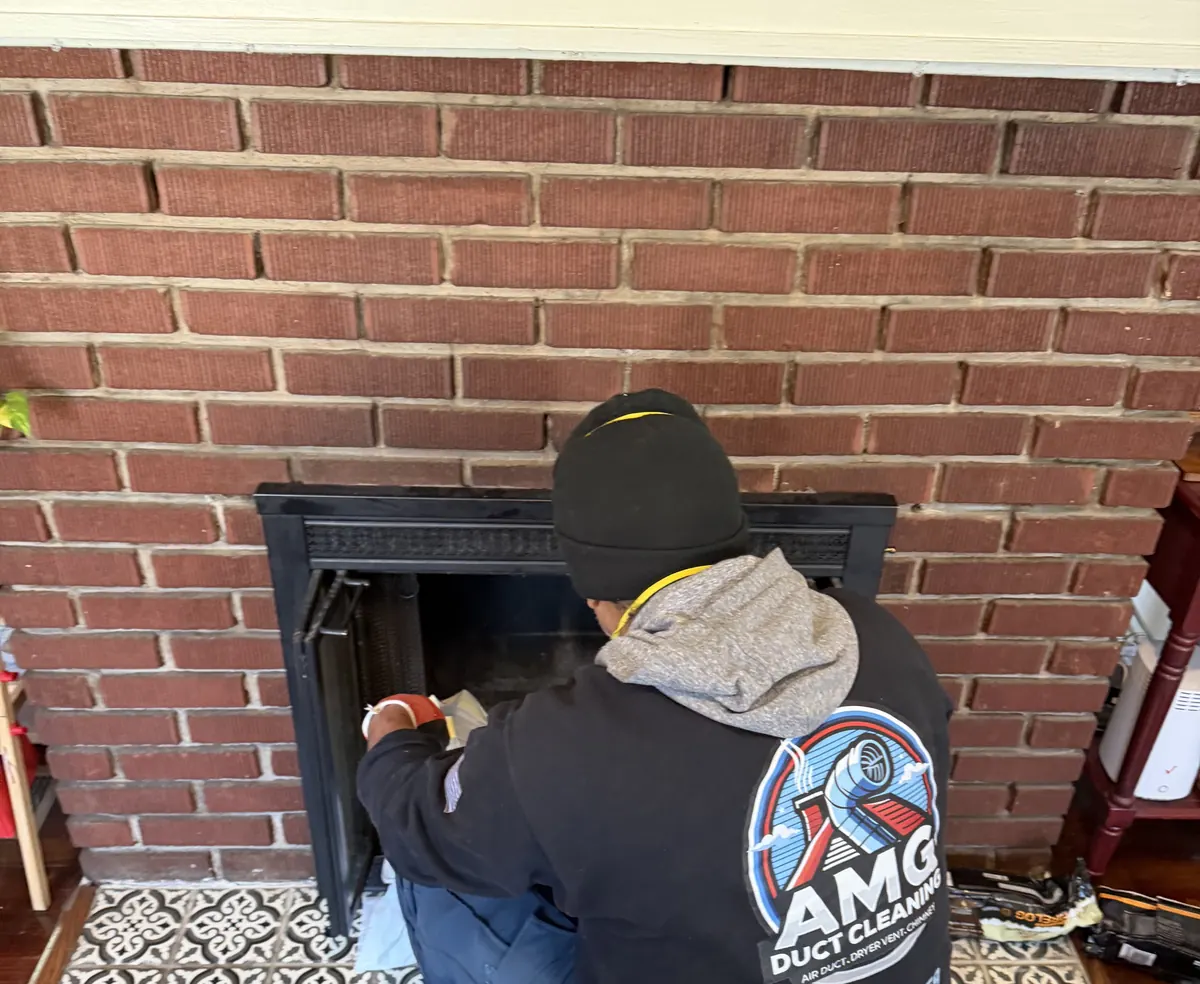
The room comes first. Covers go over the hearth and the rug or boards in front of it, and a vacuum set at the fireplace opening pulls the soot knocked loose in the flue into a filter instead of letting it drift across the living room. The flue is brushed its full height with a brush sized and shaped to its liner, square or rectangular for clay tile and round for a stainless liner, because a brush that does not fit the flue leaves the corners untouched. In a farmhouse stack with two or three flues, each one is swept and inspected on its own, and the idle one is often where the nests turn up.
Above the damper, the smoke chamber and the smoke shelf collect the heaviest loose creosote and whatever has fallen from above, and both are cleared by hand. The damper is worked open and closed to confirm it seals and moves freely, and the firebox is checked for cracked brick and open mortar joints. From the roof, where it can be walked safely, the crew checks the top of the stack, meaning the cap, the crown and the flue opening, for nests, leaves and damage. Everything that comes down the flue is bagged and carried out, and you get photographs of anything that calls for a closer look.
Wood stoves and fireplace inserts
A stove that heats the house works its flue harder than an open fireplace lit on holidays. Long, low burns overnight keep the flue cool, and cool flue walls are where smoke condenses into creosote, first as soft soot, then as flaky deposits, and finally as a hard, shiny glaze that is far harder to remove and burns hot if it ever ignites. A household in Lebanon Township or Tewksbury running a stove from November through March can build more creosote in one winter than a fireplace does in several.
The sweep covers the connector pipe between the stove and the chimney as well as the flue, since that short run of pipe cools fastest and its joints loosen with every heating and cooling cycle. With an insert, the liner running from the insert to the top of the chimney is brushed its full length. Dry, seasoned wood slows the next layer, and the crew will tell you what the deposits suggest about the wood and the way the stove is being run. A stove carrying the house through winter can call for a second sweep before spring. If a previous owner installed the stove, the crew also mentions anything visible that looks off, such as a connector pipe crowding a wall or a ceiling.
Flues that serve oil and propane equipment
Fuel oil still heats a large share of Hunterdon homes, and the flue behind an oil boiler or furnace deserves its own attention. Oil combustion leaves soot and flaky scale on the flue walls, and much of it drops to the base of the chimney, where it collects behind the cleanout door and can narrow the opening for the flue pipe. The sweep clears that base, brushes the flue and checks the liner, and it looks at where the flue pipe enters the chimney, since a pipe pushed in too far can block the flue it is meant to feed. The burner itself belongs to your heating company, whose annual service is the other half of the EPA's before-the-season advice.
Gas and propane appliances leave far less soot, but their flues still collect nests, leaves and mortar fallen from the crown. A change of equipment can create a new problem: when a furnace is replaced by a high-efficiency unit vented through the side wall, the water heater can end up as the only thing venting into a flue that was built for a boiler's exhaust. A flue that oversized runs cool and damp inside, which the sweep checks for. A liner sized to the remaining appliance is the usual answer, and it falls under chimney repair.
When to book, and the signs not to ignore
Late summer and early fall are the easiest time, before the first cold nights, since January in Flemington hovers around freezing and the heating season runs long. Booking early also leaves room for any repair the sweep turns up before the stove is needed. Between sweeps, watch for a campfire smell in the room on days nobody lit a fire, smoke rolling into the room, a fire that struggles to draw, flakes of creosote falling into the firebox, or scratching near the top of the chimney.
Any of those justifies a visit before the next fire, whatever the month. So does a chimney fire, even a brief one that roared and died out on its own: stop using the flue until it has been looked at, because that kind of heat can crack tiles and open joints in the liner. Sweeps from the Readington location run 8 AM to 8 PM, 7 days a week, priced free before the brush goes in, and a dryer vent cleaning in the same visit saves a second trip. AMG, the company behind it, is veteran owned and licensed and insured under state contractor registration 13VH13654300.
What is included
- Drop cloths and vacuum containment at the hearth
- Flue brushed with a brush sized to its liner
- Smoke chamber, smoke shelf and damper cleared
- Stove connector pipe cleaned and its joints checked
- Oil and gas flues swept and their base cleared
- Cap, crown and top of the flue checked for nests
- Photographs of anything that calls for repair
- Debris bagged and hauled away, hearth left clean
Questions and answers
How often should a wood stove chimney be swept?
At least once a year, and more than once if the stove heats the house all winter. Long, low overnight burns cool the flue and build creosote fastest. The sweep tells you how thick the buildup was, which sets the next interval.
Do you clean the chimney flue for an oil boiler?
Yes. An oil flue collects soot and scale, much of it at the base behind the cleanout door, and the sweep clears it and checks the liner. The burner itself is serviced by your heating company.
What is creosote?
Creosote is the tar-like residue wood smoke leaves as it cools in the flue. It is flammable, and in its hard, glazed form it is the most difficult to remove, so the aim is to sweep it while it is still soot and flakes.
When should I book a chimney sweep in Hunterdon County?
Late summer or early fall, before the first cold nights. The EPA recommends having fuel-burning stoves, fireplaces and furnaces serviced before each heating season, and an early booking leaves time for any repair the sweep finds.
Is a chimney sweep messy?
No. The hearth is covered, a vacuum keeps the soot contained while the flue is brushed, and what comes down the flue is bagged at the hearth and carried out. The crew wipes down the hearth before leaving.
More questions and answers about our work
Chimney Cleaning across Hunterdon County
We provide chimney cleaning in Hunterdon County. Choose your town for local details.
Ready for cleaner air?
Tell us about your home and get a free estimate.