Chimney Flue Repair and Relining in Readington and Hunterdon County
Chimney flue repair and relining restores the inner shell that keeps smoke and exhaust off the masonry, either by fixing the tile that is there or by running a new liner down the flue. In Hunterdon County the fuel usually drives the decision: oil scale, a wood stove's heat, or a move to propane.
Heat here comes from more than one place. Fuel oil warms more than half the homes in Lebanon Township and Delaware Township, about a third in Tewksbury and High Bridge, and the largest share in East Amwell. Propane is the next common fuel on the back roads, wood is still the main heat in some homes, and utility gas, common in Flemington and Raritan Township, reaches only a few homes in Lebanon Township. Each of those fuels treats a flue differently, and many chimneys have served more than one of them over the years. A High Bridge house may have gone from a stove to coal to oil to gas, with each change leaving its mark.
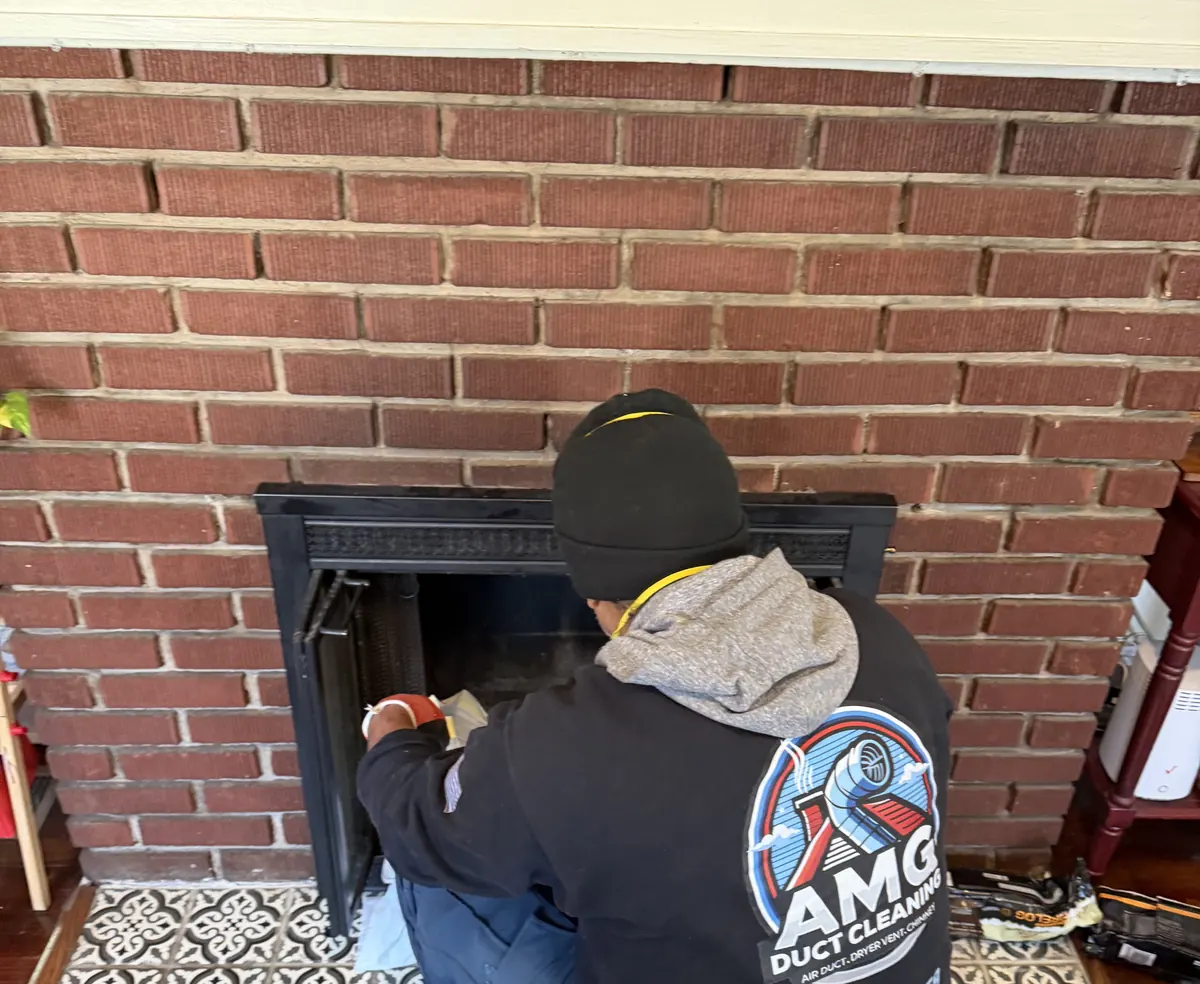
Some of the oldest stacks in the county were built with no liner at all. Others have clay tile that has cracked with age, flaked under oil exhaust or broken in a chimney fire, and the magnitude 4.8 earthquake near Oldwick gave stacks in Tewksbury and Readington another reason to be looked at from the inside. A chimney can look fine from the lawn with all of this going on, so flue work starts with a sweep, because a clean wall is the only one that can be read.
What does oil heat do to a chimney flue?
Oil heat leaves soot and acidic scale on the flue walls, and over the years that residue eats into tile and mortar. Exhaust from an oil burner condenses on cool masonry, especially on an outside wall or an uninsulated stack, and the surface starts to flake. The flakes fall and pile up at the base of the chimney behind the cleanout door, where they can narrow the opening for the smoke pipe. Heavy scale at the bottom is the first thing a sweep looks for, and a pile of tile fragments mixed in with it says the wall above is losing material.
Scale can be cleaned out, and light surface wear on sound tile may call for nothing more than a yearly sweep. When tile has lost its face, when joints have opened or when pieces of the flue are missing, the wall no longer holds exhaust off the brick. An oil-burning flue that gets that far is usually relined in stainless steel, sized to the boiler or furnace, because a thin aluminum liner made for gas will not survive oil exhaust. The burner and its smoke pipe stay with your oil company, and it helps to book the sweep and the service in the same few weeks.
What happens to the flue when a house switches from oil to propane?
It depends on the new appliance, because a condensing unit leaves the flue empty and a non-condensing one goes back into it. A high-efficiency propane furnace or boiler vents through plastic pipe out a side wall. The old flue may then serve only a water heater, which is too small a load for a big masonry shaft, or it may serve nothing and need only a cap. A non-condensing boiler returns to the chimney, and gas exhaust is wetter than oil exhaust, so an old tile flue can soften and crumble under it unless it is lined to suit.
Have the flue swept and looked at before the installer arrives. Oil soot and scale should come out before a gas appliance uses the flue, and New Jersey's fuel gas rules ask for an accessible cleanout where a chimney that carried liquid or solid fuel goes over to gas. The liner has to match the input of what is connected, so the appliance choice comes first.
What kind of liner does a wood stove need?
A wood stove needs a liner rated for solid fuel, usually stainless steel sized to the stove's outlet and run the full height of the flue. The stove's manual and listing decide what it can connect to. An oversized farmhouse flue lets smoke spread and cool, so it builds creosote in the sticky glazed form that is hardest to remove and most likely to catch. A liner close to the size of the stove's outlet keeps exhaust warm and moving, and in a stack on an outside wall of the house, an insulated liner helps hold that heat.
Clay tile that is sound can serve a stove too, if the size suits it. Many Lebanon Township and Tewksbury households run a stove from November into March, so the flue gets more hours than an occasional fireplace in a town house does, and a damaged wall is a bigger concern. The insert or stove gets disconnected while the liner goes in, and sweeping afterward moves to the top of the chimney, so roof access and a removable cap are part of the plan.
Does an old farmhouse chimney with no liner have to be lined?
A working flue should have one. New Jersey's residential code says masonry chimneys shall be lined with material appropriate for the appliance connected, and an unlined flue leaves heat and exhaust against old brick or stone, with only the mortar joints between them and the framing. That setup may have been ordinary when the house was built, in Ringoes or Stanton or along the Old York Road, but a modern boiler or stove behaves differently from a hearth fire. An idle flue is another matter, and it can stay unlined so long as nothing is connected to it and the top is capped.
Many old flues are wide, offset or built of rough stone, and that limits the choices. A flexible stainless liner can follow gentle bends, and it has to be sized to the appliance and not to the flue. The options are not all the same on every chimney, so expect a look from both ends before anyone talks about materials. The town building department can tell you if relining calls for a permit.
Should a flue be checked after a chimney fire or an earthquake?
Yes, both can crack flue tile without leaving a mark outside, so the flue gets checked before it is used again. A chimney fire heats tile fast, and cracks open from top to bottom in the worst cases. Shaking can break a tile or open a joint inside the stack, so stacks around Oldwick deserve that look. In either case, stop burning until the flue is swept and seen. Fire damage in particular can hide under soot.
Spot repairs work where a few joints have opened in otherwise sound tile. A relined flue is the usual answer where cracks run through several tiles. AMG Duct Cleaning Readington NJ gives a free estimate with photographs after the sweep, and it works in Readington, Flemington, Clinton Township and across Hunterdon County. Licensed and insured under NJ HIC 13VH13654300 and veteran owned, the company takes on the crown, cap and flashing of the same stack under chimney repair if water has played a part.
What is included
- Flue swept and its base cleared before anything is judged
- Tile and joints looked at for scale, cracks and gaps
- Each flue matched to the appliance using it
- Spot repairs on sound tile
- Stainless liners for oil and wood flues
- Liner sized to the appliance's outlet and input
- Removable cap and access planned for future sweeping
- Photographs and a plain report of what was found
Questions and answers
How do I know if my oil chimney needs a new liner?
Open the cleanout door. Soot is normal, but flakes of tile or chunks of mortar mean the flue wall is failing. A sweep and a look inside confirm it, and the crew will tell you if the tile can stay or a stainless liner is the better answer.
Can a wood stove and an oil boiler share one flue?
Not as a rule. Each appliance's manual and New Jersey's code decide what can connect to a flue, and sharing one can cause draft trouble and let fumes travel between appliances. Where a stack has two flues, each appliance usually gets its own.
Is a stainless liner better than clay tile?
Neither is better in every chimney. Sound clay tile works well when it suits the appliance. A stainless liner is the usual way to reline a failed flue because it can be run through the existing chimney, and it handles oil, wood and propane.
Do propane appliances need a chimney liner?
It depends on how they vent. A condensing appliance uses plastic pipe out the wall and leaves the chimney out. A non-condensing one venting into old masonry wants a liner sized to it, and aluminum liners are limited to gas appliances.
How long does relining a chimney take?
A straight flue with good roof access is a short job, and bends, height or a stone stack add time. Heat is off while the appliance is disconnected, so plan the date with your oil or propane company before the coldest weeks.
More questions and answers about our work
Chimney Flue Repair and Relining across Hunterdon County
We provide chimney flue repair and relining in Hunterdon County. Choose your town for local details.
Ready for cleaner air?
Tell us about your home and get a free estimate.