Yes, if the chimney is masonry and nobody has looked at it since the shaking on April 5, 2024. That morning a magnitude 4.8 earthquake centered in Tewksbury, about a mile north of Oldwick, moved the ground hard enough across Hunterdon County that the upper part of Taylor's Mill in Readington came down. A masonry chimney can ride through that kind of shaking and still look plumb and solid from the yard while a flue tile has slipped out of alignment, a mortar joint has opened, or the crown at the top has cracked in a spot no one climbs a ladder to check. None of that shows from below, and none of it closes back up on its own.
What moved on april 5, 2024
The quake that morning was centered in Tewksbury, close enough to Oldwick that the shaking there was about as strong as it got anywhere in the state. Readington felt it too, hard enough that the upper section of Taylor's Mill gave way. Masonry does not need a building to come down to take damage. A chimney is a stack of individual units, brick or stone, held together by mortar that was never built to flex, and a jolt that never so much as loosens a shingle can still open a joint two courses below the cap or crack a flue tile that a sweep would only find by climbing up and looking down the flue with a light.
Why nothing shows from the ground
A flue tile that cracked in the shaking sits inside the chimney, wrapped in brick or stone, and nothing about the outside changes. The crown, the concrete or mortar cap that sheds water off the top, sits well above eye level and is a part most homeowners have never stood next to. A mortar joint on the side of the chimney facing away from the house, the side nobody walks past, can open a gap that only a look from a ladder or the roof will catch. Flashing where the chimney meets the roof can lift at one corner without a drop of water showing inside yet. An earthquake does not announce which of these it touched, so a walk around the yard tells you almost nothing about whether one of them moved.
What an inspection checks, top and bottom
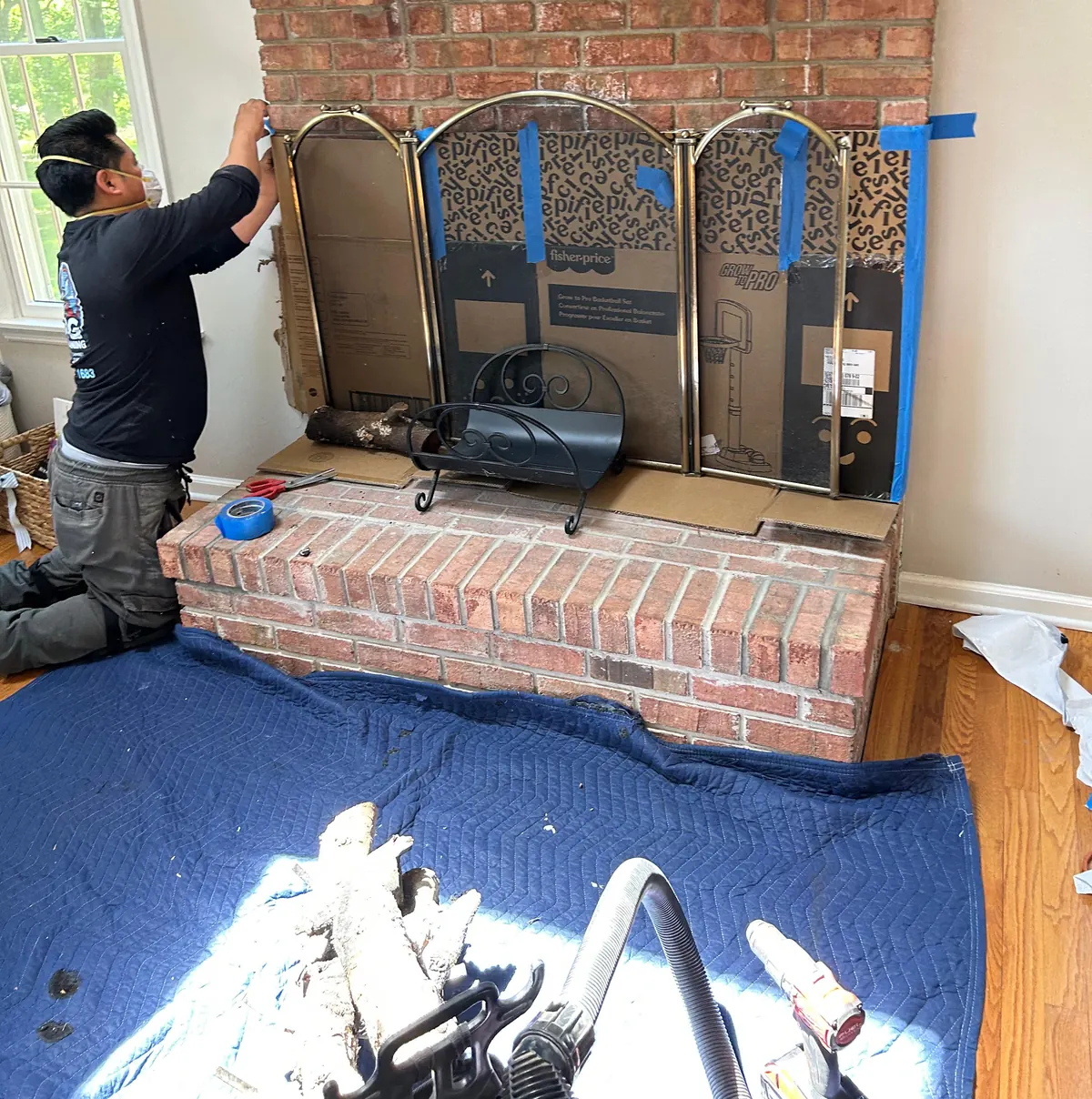
Chimney Cleaning starts this process, since the flue has to be swept before its walls can be seen at all. From inside, the firebox, the damper, the smoke shelf and as much of the smoke chamber as reachable get checked for soot sitting in an odd pattern, mortar that has crumbled loose, or a flue tile that has shifted enough to show a lip. From the roof, the crown gets checked for new cracks or a hollow-sounding spot, the cap and any spark arrestor mesh for a bent or lifted fit, the flashing for a gap that lets water track under the shingles, and the stack itself for a lean that was not there before. Where any of that turns up, Chimney Repair covers the fix, from repointing an open joint to relining a flue that a shifted tile has closed off.
Cosmetic cracks versus a flue that should not be used
Not every crack found after an earthquake calls for the same fix. A hairline crack across the crown, too fine to catch a fingernail in, is a sealing job so water does not work it wider before winter. A flue tile that cracked through, slipped out of line or opened toward the surrounding masonry is a different problem, because that gap lets heat and combustion gas reach framing and insulation that were never built to sit against either one. The CPSC lists a blocked or damaged chimney among the ways carbon monoxide can build up indoors instead of venting outside, and a flue that shifted in an earthquake fits that description until someone confirms the tiles still line up top to bottom. That chimney stays out of use for anything burned in it until a repair closes the gap.
Planning the repair before the next storm
A cracked crown or an open mortar joint left through a winter of freeze and thaw rarely stays the size it started at. Water gets into the crack, freezes, expands the gap a little further, and the same hairline that sealed with a small patch in October can need the crown rebuilt by spring. The NFPA's general advice, that chimneys be inspected every year regardless of what prompted the look, applies here directly. The earthquake is a reason to move that inspection up rather than wait for the usual fall service call, since a joint or a tile that opened in April has had months to take on water before anyone would otherwise have looked. Chimney Repair covers repointing open joints, rebuilding or resurfacing a cracked crown, and relining a flue where a tile has failed, work best scheduled before the ground freezes rather than after a leak has already reached the framing.
Chimneys around readington and tewksbury
Readington and Tewksbury sit closest to where the ground moved hardest that morning, and both townships carry a good number of older stone and brick chimneys built long before anyone designed masonry for seismic shaking. A chimney on a farmhouse or an older village house in either township is a reasonable one to have looked at even if nothing about the house seems different since April 2024, since a stack that has stood a century through wind and freeze had never before had to answer for a jolt like that one. The inspection itself does not take long, a sweep paired with a look from the firebox and the roof, checked against a written estimate for anything the visit turns up.