A chimney cleanout door sits at the base of the flue, usually behind a small cast iron or sheet metal panel in the basement, a crawlspace, or at the foundation where the flue meets the footing. It is the one place soot, scale, and fallen mortar can be taken out without opening the flue from the top. When that door is missing, rusted shut, or sealed behind a wall built over it at some point, the flue keeps doing its job the same way it always has, and debris keeps falling to the bottom with every fire. What changes is that the one way out is gone.
Why a flue needs an exit at the bottom
Soot and ash drift down during a fire, and heavier debris, broken mortar, flaking tile, a chunk of a bird's nest that fell loose, settles at the base of the flue rather than riding the draft back up and out. A masonry chimney built with that in mind has a small chamber below the lowest flue opening, called a smoke shelf in some fireplace designs or a base pocket in a straight flue, and the cleanout door opens into that chamber from outside the flue wall. Without it, the only way to reach that debris is from above, down through the top of the flue, or by disconnecting the appliance connector and reaching up from below.
What the code calls for
New Jersey's residential code sets specific terms for this. A cleanout belongs within six inches of the base of each masonry flue, its top edge at least six inches below the lowest flue inlet so debris cannot spill out into a connector opening, and the cover itself has to be built of noncombustible material with a tight, close fit. The fuel gas rules add a separate requirement for any flue that used to serve an oil burner or a wood stove and is being switched over to a gas appliance: an accessible, tight-fitting cleanout has to be part of that conversion, not an afterthought. A flue without one, or with one that was bricked over during a past renovation, is out of step with both sets of rules.
What builds up at the base of an oil-fired flue
An oil burner leaves more at the bottom of a flue than a clean-burning gas appliance does. Soot mixes with a faint oily residue that was never fully burned, and over years that residue hardens into a scale that flakes off the tile liner in small plates. Add in mortar that has started to crumble from decades of heat cycling, and the base of an older oil-vented flue can hold a surprising amount of material by the time anyone looks. A cleanout door that gets opened on a normal schedule keeps that load from building past what the flue was designed to hold. Chimney Cleaning is the point where that debris comes out, and a working cleanout door is what makes the job quick instead of a half-day project.
When the door is missing or bricked over
A cleanout bricked over at some point, often during a basement finish or a foundation repair that never accounted for it, does not stop debris from falling. It just removes the easy way to get it back out. The two remaining options are both worse. Debris can be drawn out through the appliance connector opening, which means disconnecting the burner or stove pipe and working through an opening that was never meant for cleanout access, with a real chance of scattering soot into the basement in the process. Or it can be reached from the chimney top, lowering a brush and shop vacuum down a flue that may run thirty feet or more, which takes longer and still leaves a layer that a bottom access would have caught cleanly. Neither is a substitute for having the door back.
A rusted door and a weakened draft
A cleanout door that is present but no longer fits well causes its own problem. Cast iron doors rust over decades, and a door that has pitted or warped stops sealing tight against its frame. That gap lets basement air leak into the base of the flue, air that is cooler and often damper than the flue gas above it. Pulled in at the bottom, that air mixes with the rising column and can weaken the draft enough to show up as a sluggish fire or smoke that backs up at the firebox opening on a cold start. A door that seals correctly is not just a cleanout convenience, it is part of what keeps the draft doing its job from the first match.
The fireplace exception
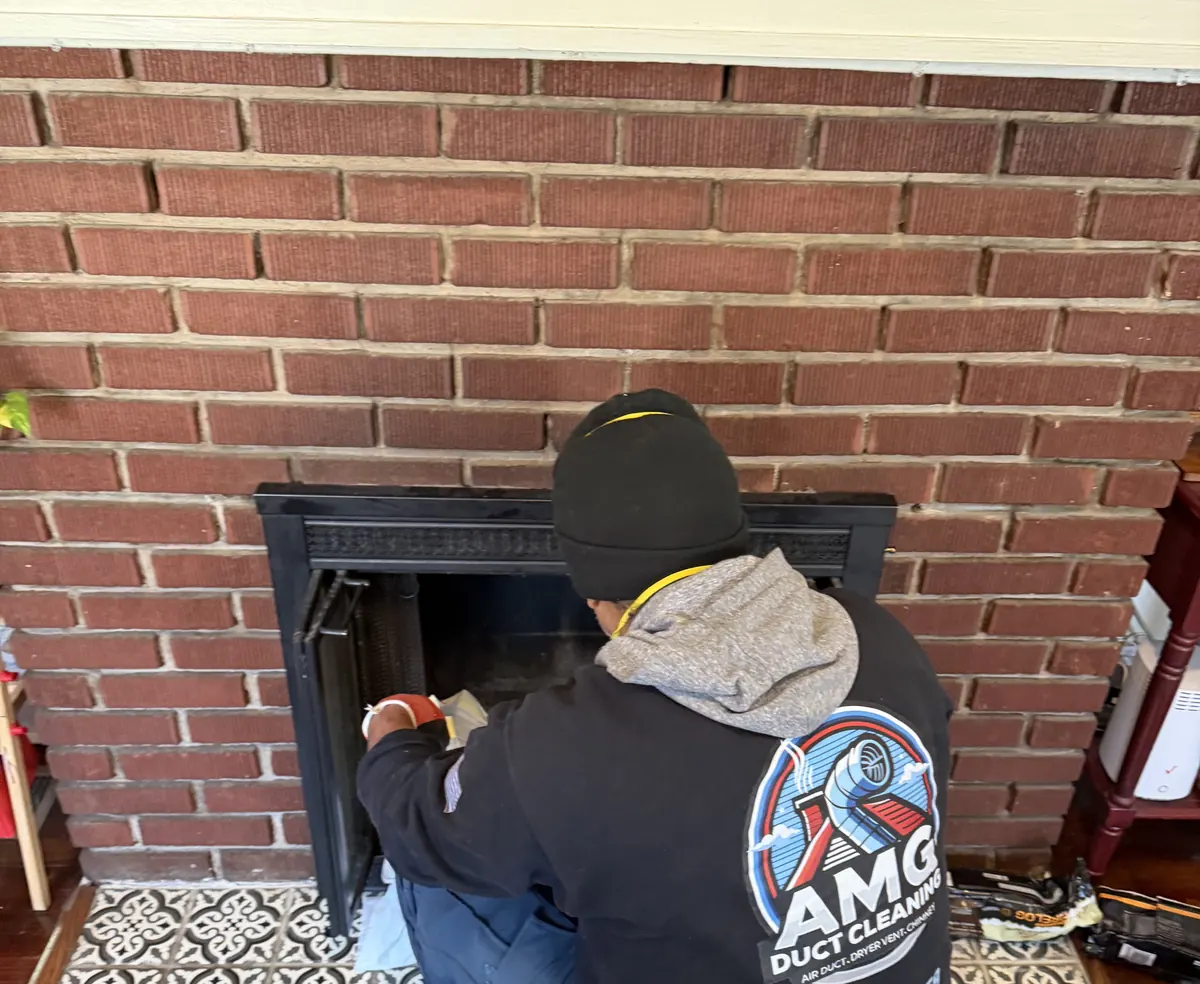
A factory-built or masonry fireplace flue usually does not need a separate cleanout door, since the firebox opening itself serves that purpose. Ash and soot that collect on the smoke shelf behind the damper can be reached and cleared through the fireplace opening during a normal sweep, which is why a dedicated door at the base is typically built only into flues serving a furnace, boiler, or stove with no comparable access point. A fireplace with a bricked-over base door from an old change in use is less often a problem for this reason, though the flue itself still needs the same inspection any other chimney gets.
Opening the base and fitting a new door
Chimney Repair covers putting a cleanout door back where one was bricked over or never installed to begin with. That means cutting through the brick at the correct point along the flue base, usually matched to the appliance connector height so the new door's top edge sits below that opening, fitting a cast iron or steel frame built for the opening, and sealing the surrounding masonry so the fit stays tight. Where an existing door has rusted past a reasonable repair, replacing the door and frame together, rather than patching around a door that no longer closes flush, is usually the more lasting approach. Either job pairs naturally with Chimney Cleaning, since the debris sitting behind a bricked-over door has to come out once the opening exists again.
Older chimneys in High Bridge and Clinton
High Bridge carries a real share of older housing stock, with census estimates putting roughly three homes in ten built before 1940, and fuel oil still heating something near a third of homes in the borough. Clinton's older streets show a similar pattern, brick chimneys built for coal or oil decades ago, many later converted or paired with a newer furnace while the original masonry flue stayed in service. A flue that old has had plenty of time for a cleanout door to rust through, get bricked over during a basement remodel, or go unnoticed behind a stack of storage boxes, and checking for one is worth doing before the next heating season rather than during it.