Yes, a chimney that vents an oil boiler or an oil furnace calls for regular attention, even though no one ever sees a fire in it. Oil combustion leaves soot and acidic deposits in the flue, and the NFPA advises having heating equipment and chimneys cleaned and inspected every year, which on an oil flue means chimney cleaning each season and chimney repair when the tiles or the crown start to fail. In Hunterdon County this is an everyday question: census estimates put fuel oil in nearly a third of the county's homes, and in more than half of all homes in Lebanon Township and Delaware Township.
What an oil burner leaves behind in the flue
An oil flame burns clean when the burner is tuned, but the exhaust still carries fine soot and water vapor, along with compounds that turn acidic when they condense on a cool surface. A masonry chimney, especially one on an outside wall, is cool for much of its height. Over the seasons that condensate works on the clay flue tiles and the mortar between them, and the surface starts to flake. The flakes fall to the bottom of the chimney, where they pile up behind the cleanout door along with loose soot.
Between the boiler and the chimney runs a short metal smoke pipe, often with a barometric damper, the small swinging plate that keeps draft steady. Soot collects in that pipe too, and a heavy layer at the damper is an early sign that the burner or the draft deserves a look. The pipe enters the chimney through a thimble in the masonry, and that joint is one of the places where a partial disconnection or corrosion shows up first.
How often should an oil flue be swept?
Plan on a cleaning and an inspection every year, ideally before the heating season, which is the NFPA's advice for heating equipment and chimneys. The inspection then shows whether anything more is due: how much soot came out, how much scale sat at the base, and what shape the tiles are in. A boiler that also makes domestic hot water runs through the summer, so its flue never gets a season off.
Some events move the schedule up. After a puffback, when a misfiring burner blows soot back out of the boiler and through the house, the flue, the smoke pipe and any ductwork the soot reached should be checked before the system runs again. The same goes for a chimney that has had a crown or tile problem since its last inspection.
Signs the chimney wants attention between visits
Open the cleanout door at the base of the chimney once in a while. A handful of soot is normal; a pile of tile flakes, chunks of mortar or a wet sludge is not. Look at the smoke pipe for rust holes or a joint that has slipped, and at the barometric damper for a thick soot coat. Outside, watch for white staining on the brick near the top, a crown with cracks across it, or a cap that has rusted through, since each one lets water into masonry that is already working hard.
Carbon monoxide is the reason this matters. The CPSC advises an annual inspection that checks chimneys and flues for blockages, corrosion and loose or partial disconnections, and recommends carbon monoxide alarms on every level of the home and outside sleeping areas. If an alarm sounds, its advice is to move outside to fresh air and call 911 or the fire department.
What changes when a house switches away from oil
When a Hunterdon house moves from oil to propane, to natural gas where the mains reach, or to a heat pump, the chimney ends up in a different position each time. A condensing furnace or boiler vents through plastic pipe out a side wall, so the old flue may be left empty. If a water heater still uses it, the water heater now has the flue to itself, though the flue was sized for a bigger load, and it can draft poorly and wet the tiles with condensation.
A non-condensing propane or gas boiler may go back into the old chimney, but the flue should be sized and lined for it, since gas exhaust is wetter than oil exhaust and an unlined tile flue can crumble under it. If the house moves to a heat pump and the chimney is retired, the crown, the flashing and a cap still matter, because a chimney nobody uses can still let rain into the house. Book the sweep and the inspection ahead of the conversion date, and the liner question gets settled while there is still time to plan it.
Oil heat and the rest of the house
An oil boiler heating through baseboard or radiators usually leaves the ductwork to the central air alone, with an air handler up in the attic or tucked in a closet. Those ducts still collect dust and deserve their own schedule, separate from the flue. An oil furnace moves its heat through the ducts, so a puffback in a furnace house can send soot into the supply runs, and Air Duct Cleaning becomes part of the recovery. The boiler or furnace itself, the nozzle, the filter and the burner adjustment belong to your oil service company.
Where this comes up most in Hunterdon County
Oil heat and old masonry go together in the older villages and the rural townships. Sergeantsville and the farm roads of Delaware Township, the high ground of Lebanon Township where wood stoves share the load, Ringoes and Wertsville in East Amwell, Oldwick in Tewksbury and the older streets of High Bridge all hold houses whose chimneys may have served wood or coal, then oil, and sometimes gas. Unless a flue has been relined, the first sweep in years tells you a lot about what the tiles have left.
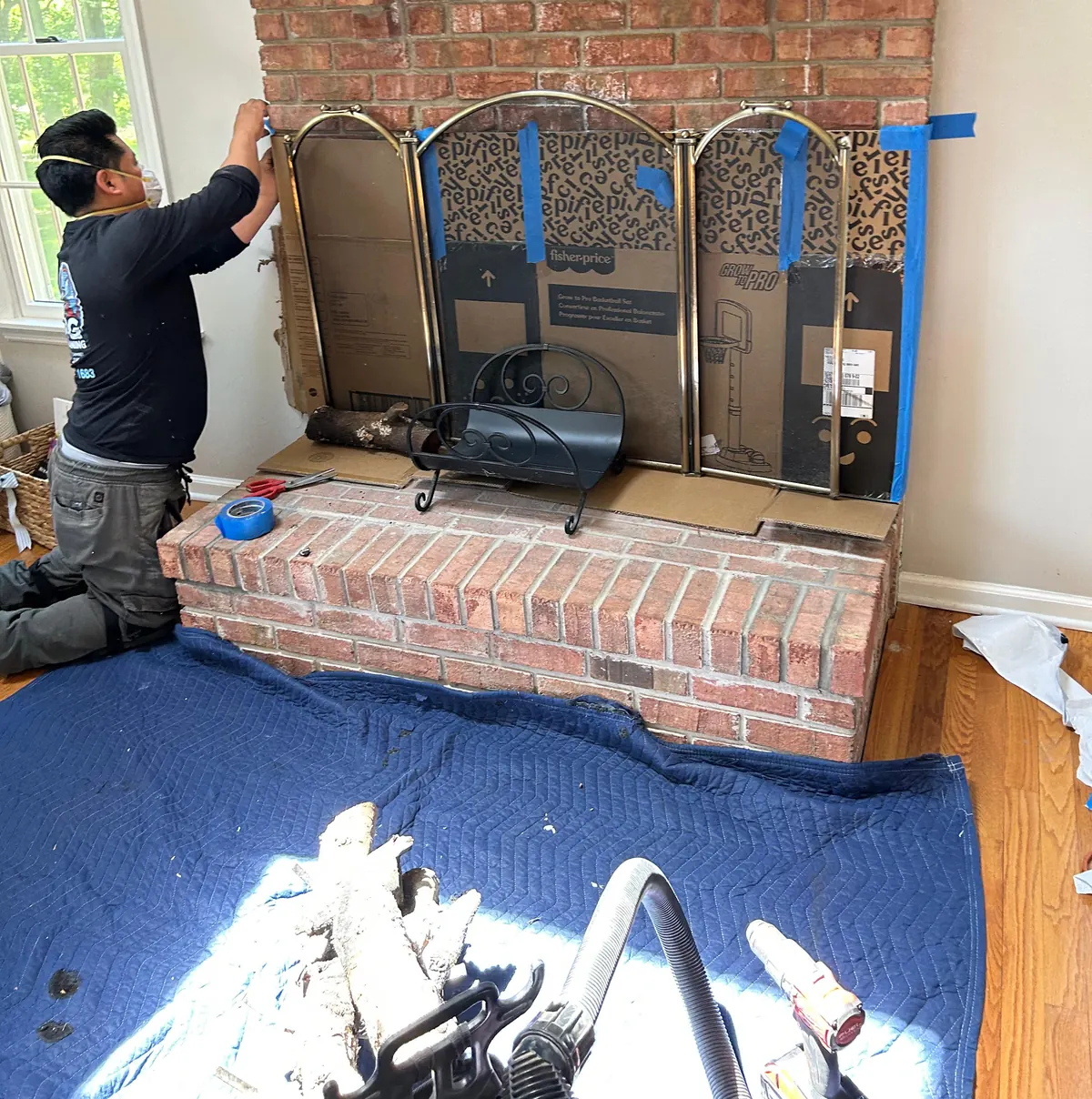
The work splits in two. Chimney Cleaning covers the sweep of the flue, the smoke pipe connection and the cleanout, and ends with a look at the tiles and the crown. Chimney Repair covers what the inspection turns up: a liner sized for the appliance that now uses the flue, a new cap, crown repair and flashing. Book the inspection before the first cold week, and the repair, if one is needed, can be done before the boiler starts working hard.