Air Duct Repair in Readington and Hunterdon County
Air duct repair finds the joints, seams and runs that leak conditioned air where nobody lives, in the attic, the crawl space or along the basement ceiling, then seals, reconnects or replaces them. In Hunterdon houses the usual causes are aging tape, sagging attic flex and runs that mice have found.
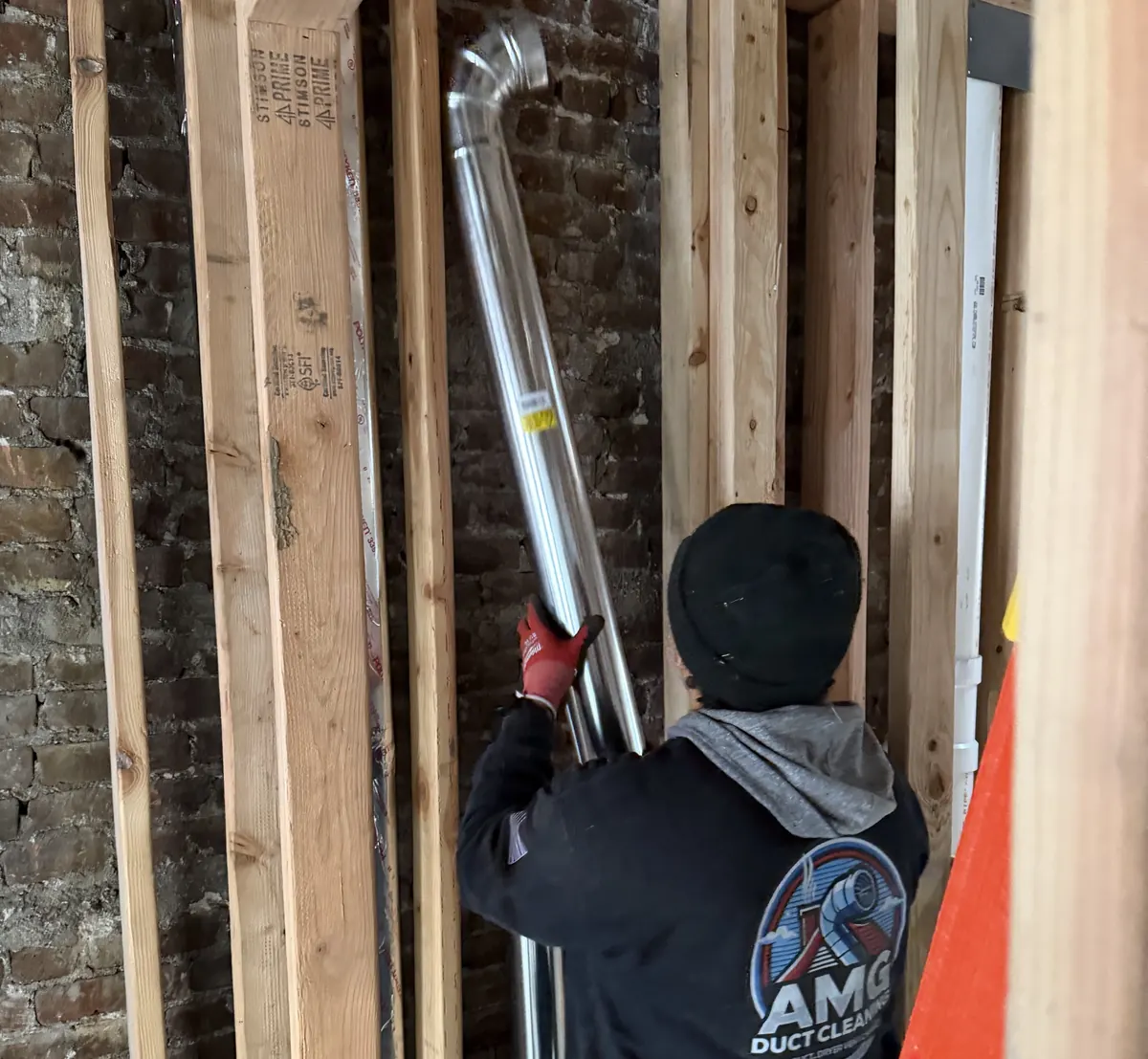
A leak in the ductwork rarely announces itself. The upstairs bedroom stays warm in July, the system cycles longer than it once did, and the service company finds nothing wrong with the equipment. In a Hunterdon colonial from the 1980s, the decade that produced more of the county's houses than any other, the cloth tape on the original joints has had four decades to dry out and let go. In a farmhouse where central air came later, the attic flex may have slipped off a boot or sagged off its straps.
Water and animals account for most of the rest. Hunterdon was one of the counties in the federal disaster declaration for the remnants of Ida in September 2021, and insulated duct that sat in water that week could not be cleaned back to sound. Mice and squirrels chew flex duct in crawl spaces and attics. What follows is how AMG Duct Cleaning Readington NJ finds the damage, how it is fixed, which problems are particular to older and rural houses, and where repair stops making sense.
Finding the leak before fixing it
The crew starts at the registers, comparing the airflow at each one with the rest of the house, because a weak register is the end of a thread that leads back to the damage. From there the run is traced through whatever part of the house it crosses: the attic above a second floor, the crawl space under an addition, the basement ceiling. Dark streaks on insulation around a joint usually give the leak away, since air escaping through a gap leaves its dust on whatever it passes through.
Basements hide a different leak. Many houses built through the 1970s and 1980s use panned returns, where a sheet of metal nailed across the bottom of a joist bay turns the space between two joists into a duct. The edges of that panning were seldom sealed, so the return pulls basement air in along its whole length. In a damp Hunterdon basement that means musty air, dust and moisture drawn straight into the system and sent upstairs, which is why a panned return gets sealed along every edge and not at a single corner. The same goes for the gap where the return drop meets the furnace cabinet, a joint that often sits open behind the filter door.
Sealing, reconnecting and supporting the runs
Joints and seams are sealed with duct mastic brushed over the gap, or with foil tape made for ductwork where mastic cannot reach. Old cloth tape comes off first, because it has usually dried to paper and anything put over it fails with it. A flex run that has pulled away from its boot or collar is reattached at the inner liner with a clamp, sealed, and then the insulation jacket is drawn back over the joint and closed so the connection does not sweat.
Sagging runs are rehung on new straps at close enough intervals that the duct stays straight, since a belly in a flex run slows the air and gives condensation a low point to collect in. Dented metal is reshaped where it can be and replaced where it cannot, and a section of flex that was crushed flat or chewed through is cut out and replaced, not patched. Cooling ducts in a hot attic get their insulation restored end to end. When that jacket is torn, humid attic air condenses on the cold duct and drips, and the first sign in the house is a brown ring on the ceiling under a register.
Damage that belongs to older and rural houses
Farmhouse additions bring their own problems. A family room or a kitchen bump-out built over a crawl space often has its ducts lying on the dirt or hung a few inches above it, where ground moisture works on the metal and animals move through freely. Those runs are lifted onto straps, anything rusted through or torn is replaced, and the connections are sealed where the addition's ducts meet the original house. A fieldstone basement can do similar work on a return that draws from it, which is why the repair often includes closing the return side off from the basement air.
Flooding is the other one. The EPA's guidance holds that duct insulation which has been soaked or has grown mold is past cleaning and has to come out, and that is how we handle it: soaked flex and duct board are replaced, and bare sheet metal is cleaned and resealed once the basement has dried. If the water left growth on the coil or inside a trunk, that part of the job goes to mold treatment and removal before the new sections are connected, so clean duct is not fastened to a contaminated system.
Repair or new ductwork, and how the visit ends
Repair is the right call when the damage is local: a handful of joints, one crushed run, a stretch of attic flex off its hangers. When the problems run through most of the system, or when the layout itself starves a room however tightly it is sealed, patching costs more over time than it saves, and we say so and explain what air duct installation would involve. Both options come in the same free estimate, so the decision rests on what the crew found in your attic and basement.
Before the crew packs up, it checks the airflow at each register that was weak, so you can feel the difference in the room rather than take it on faith. A leak that pulled insulation fibers or basement dust into the system for years leaves that material lying in the runs downstream, and a duct cleaning once the repair is done takes it out. Anything out of reach, such as a run buried behind a finished ceiling, is named in the walk-through with what opening it would take. Behind the Readington crew is AMG itself, veteran owned, licensed and insured, New Jersey Home Improvement Contractor 13VH13654300, with repair visits booked 8 AM to 8 PM, 7 days a week.
What is included
- Airflow compared register by register to find weak runs
- Joints and boots inspected in attic, crawl space and basement
- Old cloth tape replaced with mastic or foil duct tape
- Separated flex reattached at collars and boots
- Sagging runs rehung on new straps
- Crushed, chewed or flood-soaked sections replaced
- Insulation put back on attic and crawl space runs
- Airflow checked at each repaired register before we leave
Questions and answers
Why do the ceilings under my attic ducts stain in summer?
Usually because cold supply ducts in a hot attic are sweating. Where the insulation jacket is torn, missing or pulled back at a joint, humid air condenses on the duct and drips onto the drywall. Sealing the joint and restoring the insulation stops it.
Do ducts that were soaked in a flood have to be replaced?
Insulated duct does. The EPA advises that duct insulation soaked by water or grown over with mold should come out and be replaced, because it cannot be cleaned well enough. Uninsulated metal runs are usually cleaned and resealed once the basement has dried out.
Can you repair flex duct that mice chewed through?
Yes. The chewed section is cut out and replaced with new duct, clamped and sealed at both ends, and you are shown where the animals are getting in. Nesting debris upstream of the damage is a reason to clean that run as well.
What are the signs of a leaking duct system?
Rooms that never reach the thermostat setting, longer run times than the system used to need, dark streaks on insulation at duct joints, and heavy dust around certain registers. An inspection of the attic, crawl space and basement runs confirms it.
When is new ductwork a better idea than repair?
When damage runs through most of the system, or when the layout starves rooms however well it is sealed. The crew says which case applies after inspecting the runs, and the estimate covers both paths.
More questions and answers about our work
Air Duct Repair across Hunterdon County
We provide air duct repair in Hunterdon County. Choose your town for local details.
Ready for cleaner air?
Tell us about your home and get a free estimate.