
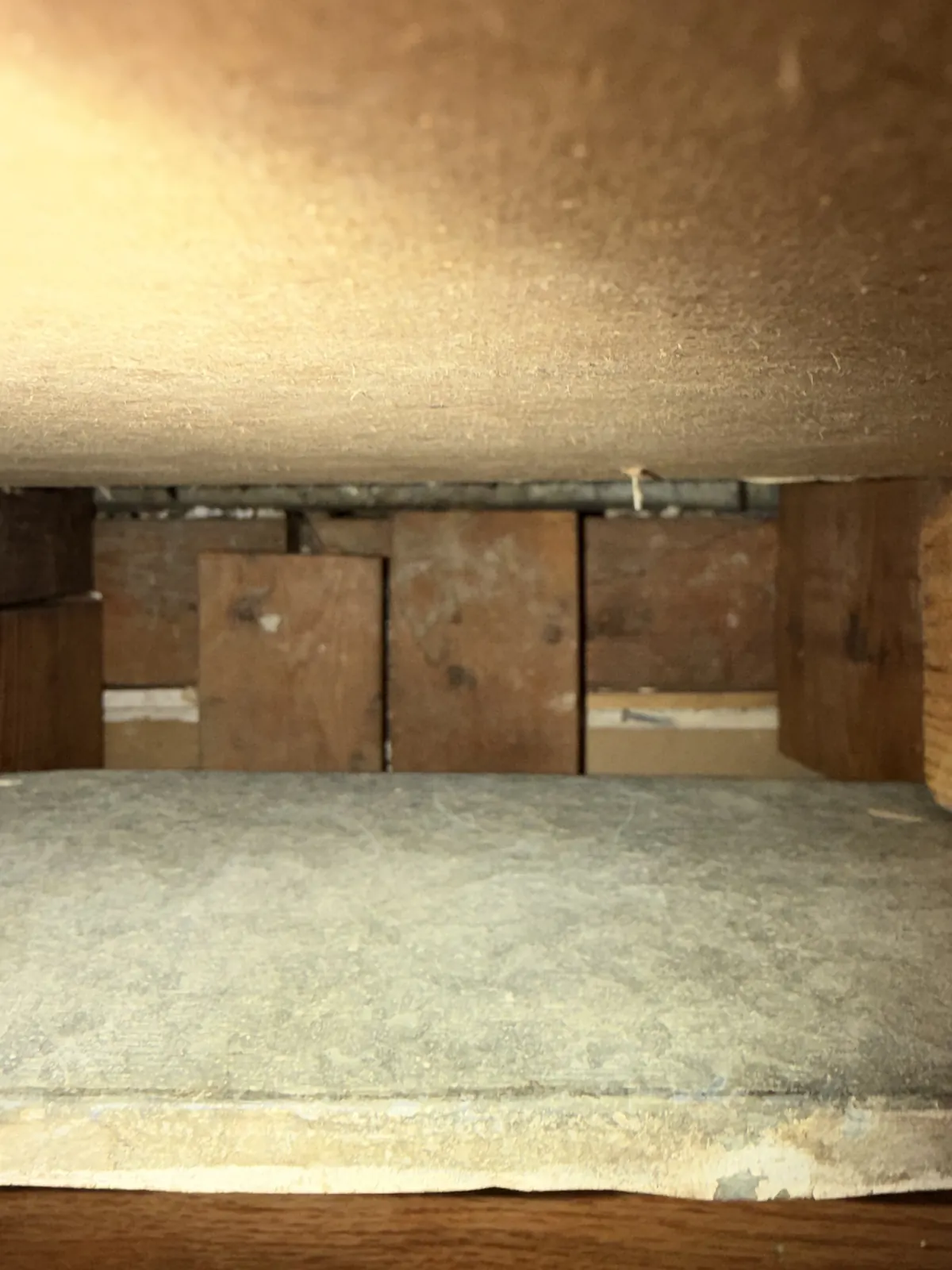
An air handler tucked into an attic is common in houses built across the 1970s through the 1990s boom, and getting a cleaning crew up to it is less about willingness and more about whether the attic was ever built to let someone work there. The blower wheel, the coil face and the condensate pan all open at the unit itself, not through a duct run, so a hatch, a path or a service space that falls short of what the code calls for limits what a crew can safely reach and work on. This area's building stock runs through plenty of split-level and center-hall colonials from that era with a furnace or an air handler set on a platform in the attic, and the opening cut into the ceiling below often predates any inspection that measured it against today's numbers.
What the opening into the attic has to measure
New Jersey's residential code sets a floor under attic equipment access, starting with the opening a person climbs through. The code calls for an opening of at least 20 by 30 inches, sized to let a person and a tool bag pass without turning sideways or pulling off trim first. A pull-down stair or a scuttle hatch cut to the minimum on paper still has to open to that clear size once trim, insulation baffles or a stair frame are accounted for, and a hatch framed tight to save ceiling space below sometimes measures short once those extras sit in place. A hatch original to the house is worth measuring before a visit is scheduled rather than assumed to meet the number.
The passage from the hatch to the unit
Getting through the hatch is only the first part. From there, the code wants a passage at least 30 inches high and 22 inches wide running to the unit, with solid flooring at least 24 inches wide laid the whole way and the trip itself no longer than 20 feet. A plank or two of plywood thrown over the joists when the unit first went in sometimes falls short of that width, and insulation blown in later has a way of creeping over the edges of an older walkway until a once-clear 24 inches narrows to something closer to a single foot. A path that narrows partway along is often harder to work with than one that is tight from end to end, since a crew finds the squeeze only after committing to the trip with equipment in hand.
The service space at the unit
At the unit itself, the code calls for a level service space at least 30 by 30 inches, open enough for a technician to kneel, pull a blower access panel, and work the coil and pan without bracing against ductwork or loose insulation. Attics that got a later insulation upgrade sometimes lose that space first, since loose fill or batting pushed in around the platform is the easiest place to add depth without disturbing anything visible from below. A unit that was simple to service when the house was new can end up boxed in by insulation added a decade or two later, with nobody tracking along the way whether the service space still measured out to the full 30 by 30.
Light and power at the unit
The code also wants a switched light fixture at the unit and a receptacle nearby, both meant to be there before anyone climbs up to work, not run in later with an extension cord and a flashlight. A missing light or outlet does not stop Air Duct Cleaning outright, but it slows the job down and raises the chance of missing debris in a corner of the pan or the blower housing that a headlamp alone does not light well. A platform wired at installation usually keeps both close by, but a unit swapped in later without an electrician on site sometimes skips that part.
When insulation or a floored-over attic blocks the path
A fair share of attics get a project done to them after the air handler went in, including a floor laid for storage, a radiant barrier stapled across the rafters, or loose insulation topped up well past where it started, and any of those can cover or narrow the path the code originally called for. When that happens, the choice is between working around a tight space and opening it back up first. Air Duct Repair covers cutting back insulation at the service space, relaying solid flooring along the walkway, or widening a hatch framed too tight, and getting that done before a cleaning rather than during one keeps the visit from turning into guesswork around what a panel or a coil looks like underneath.
What a crew checks before scheduling
A quick look at the hatch size, the walkway and the space around the unit, sometimes from a photo sent ahead of a visit, tells a crew whether the appointment covers cleaning the system directly or starts with clearing a path first. Measuring the opening, stepping off the walkway width and checking for a light at the platform takes a few minutes and saves a wasted trip where the equipment reaches the attic but cannot reach the unit itself. A free estimate visit is the usual point where that gets sorted out, since seeing the attic in person settles questions a phone call alone cannot.
Two-system houses in Readington and Raritan Township
Readington and Raritan Township both carry a good number of houses from the building years when two-system setups, one unit in a basement or utility closet and a second tucked into the attic for an upper floor, were common enough to become the default rather than the exception. The attic unit in that pairing is the one most likely to have marginal access, since it went in after the framing was finished and the hatch or platform was built to the builder's own preference rather than to any attic equipment standard. Checking the hatch, the walkway and the space around the unit before scheduling a cleaning is the way to know ahead of time whether the visit covers the work directly or starts with opening the path first.
Units set in a crawl space fall under a similar sized passage and service space rule, so a furnace tucked under a low ranch house faces the same kind of check as one in an attic, just measured against crawl space height instead of attic headroom.