Dust carried in from a barn, a hayfield or a horse does not collect evenly through a duct system. It settles first at the return grille, where the strongest pull of air draws fine debris in, then at the filter, where most of it is supposed to stop, and then on the evaporator coil, where anything that gets past the filter tends to build on a damp surface. Those three spots are worth checking before deciding on any change to a schedule, since what has collected there, and how fast, says more about a particular house than a general rule about farms or horses ever could.
Where farm dust collects first
A return grille near a mudroom or a barn-facing window often shows a gray coat of fine debris faster than a return on the far side of the house. The filter behind it tells the next part of the story. Hay chaff shows up as light tan fibers caught across the surface rather than the even gray film that ordinary household dust leaves, and a filter loaded with that fiber well ahead of its usual change date is a sign worth acting on. Past the filter, the coil is the last stop, and dust that reaches it sits on fins that are often damp from condensation, which makes it stick rather than blow through. A coil that needs more frequent cleaning than it used to is usually the clearest sign that farm dust has started moving past the filter stage.
Mudroom doors, barn clothes and the nearest return
A return grille placed near a mudroom or back door pulls in whatever the air around it is carrying, and coveralls or boots just in from a barn carry a fair amount. Shaking out boots and coveralls outside the door, and keeping barn clothes in a closet away from the nearest return rather than hung on a hook beside it, keeps a good share of that dust from ever reaching the duct system in the first place. It is a small habit change, but it is one of the few steps that works before the air handler even gets involved.
Hay chaff, pets and the grille
Hay chaff is lighter than most household dust, which lets it drift and settle on surfaces a heavier particle would not reach, including the top edge of a return grille or the gap around a loose filter frame. A dog or cat that spends time in and out of a barn adds its own share, shedding loose hair and coat dust near doors and on furniture close to a return. Brushing a pet before it comes back inside, and keeping a towel by the door for a quick wipe-down, cuts down on what ends up pulled toward the nearest grille.
Windows open during haying season
A window left open near a hayfield during active cutting or baling lets field dust and loose chaff drift straight into the room, and some of it settles near supply registers and return grilles facing that side of the house before it ever has a chance to leave again. Closing windows for the few days a field is being worked, and running the air conditioner or a window fan instead, keeps that load out of the house rather than letting it settle into the system and need removing later.
Filter choice and a tight fit
A pleated filter with more surface area holds more debris before it loads up than a thin flat filter does, and a deeper media filter, where the equipment has a slot built for one, goes longer between changes than a standard one-inch filter in a house with regular barn or field dust. Fit matters as much as the filter itself. A filter that sits loose in its frame leaves a gap around the edges, and air finds that gap before it finds the filter media, carrying dust straight past it toward the coil. Air Duct Repair covers resealing a filter slot or a return boot that has warped or pulled loose enough to leave that kind of gap.
What a cleaning changes
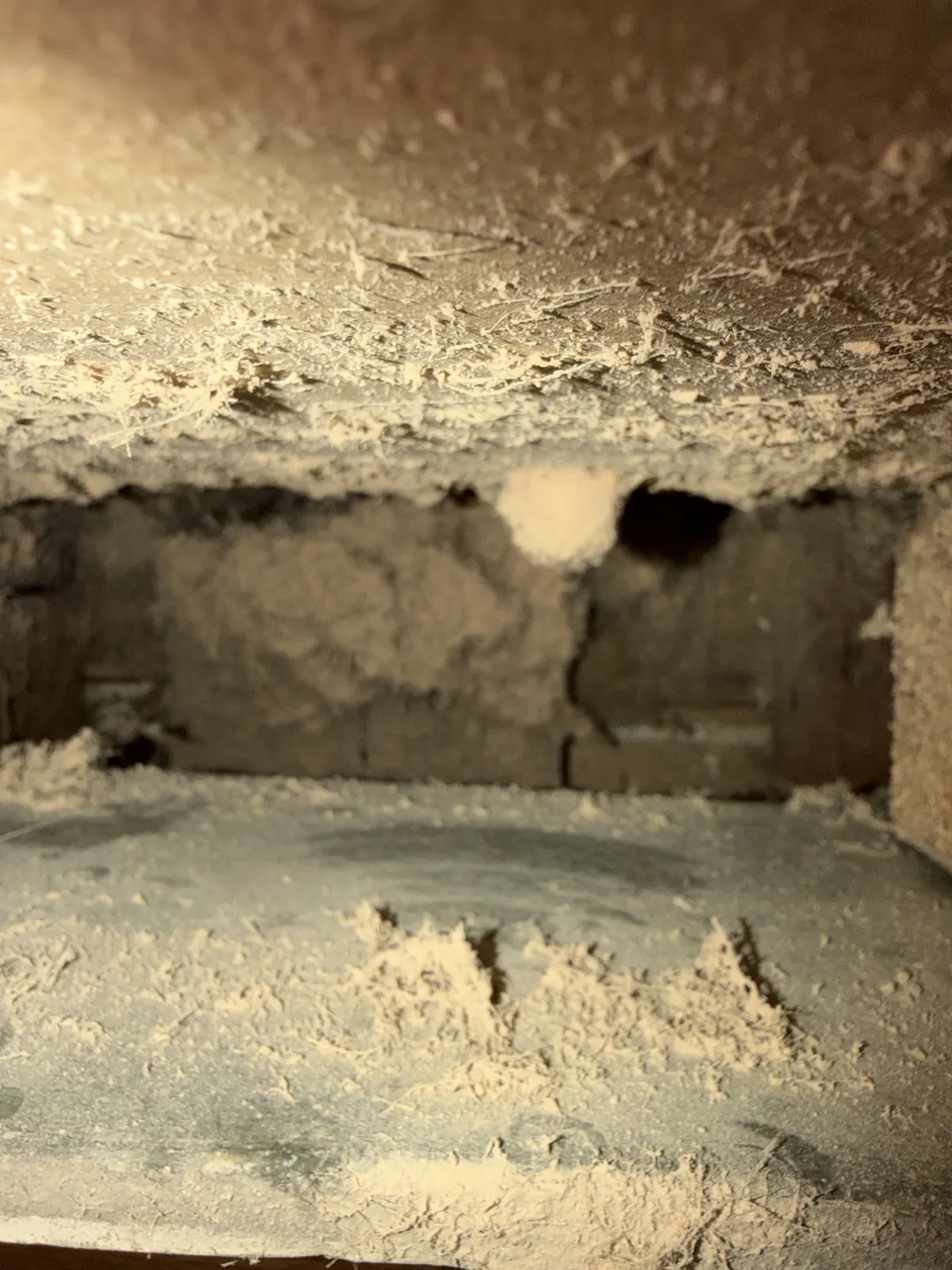
Air Duct Cleaning works the trunk lines, the boots and the blower compartment, not just the filter and the coil, and that matters on a farm property because not all of the dust a barn or a hayfield generates stays airborne long enough to reach the filter. Some of it settles directly into an open duct seam or a boot low to the floor, especially near a mudroom return, and sits there until the system is opened up and cleaned out. A cleaning after a heavy haying season clears that kind of buildup, the dust and chaff that collected in the ducts themselves rather than on the filter that was supposed to catch it.
Horse country in Hunterdon County
Hunterdon County carries a strong farm and horse-boarding presence, and a house near a barn or a hayfield in Tewksbury or elsewhere in the county sees dust move through its ducts differently than a house set back in a denser development. A fixed schedule based on the calendar is less useful here than checking the return, the filter and the coil after an active season and letting what they show set the next step. One heavy haying season near an open barn can load a system faster than several ordinary years in a house further from active fields, and the inspection is what tells the difference rather than a guess.