Smoke Chamber Repair in Readington and Hunterdon County
Smoke chamber repair seals and smooths the masonry between the fireplace damper and the flue, the place where heavy wood burning does its quiet damage. In Hunterdon County, where fireplaces in old farmhouses still get real use and many have taken a stove or an insert, this is often the part of the chimney that has had the hardest life.
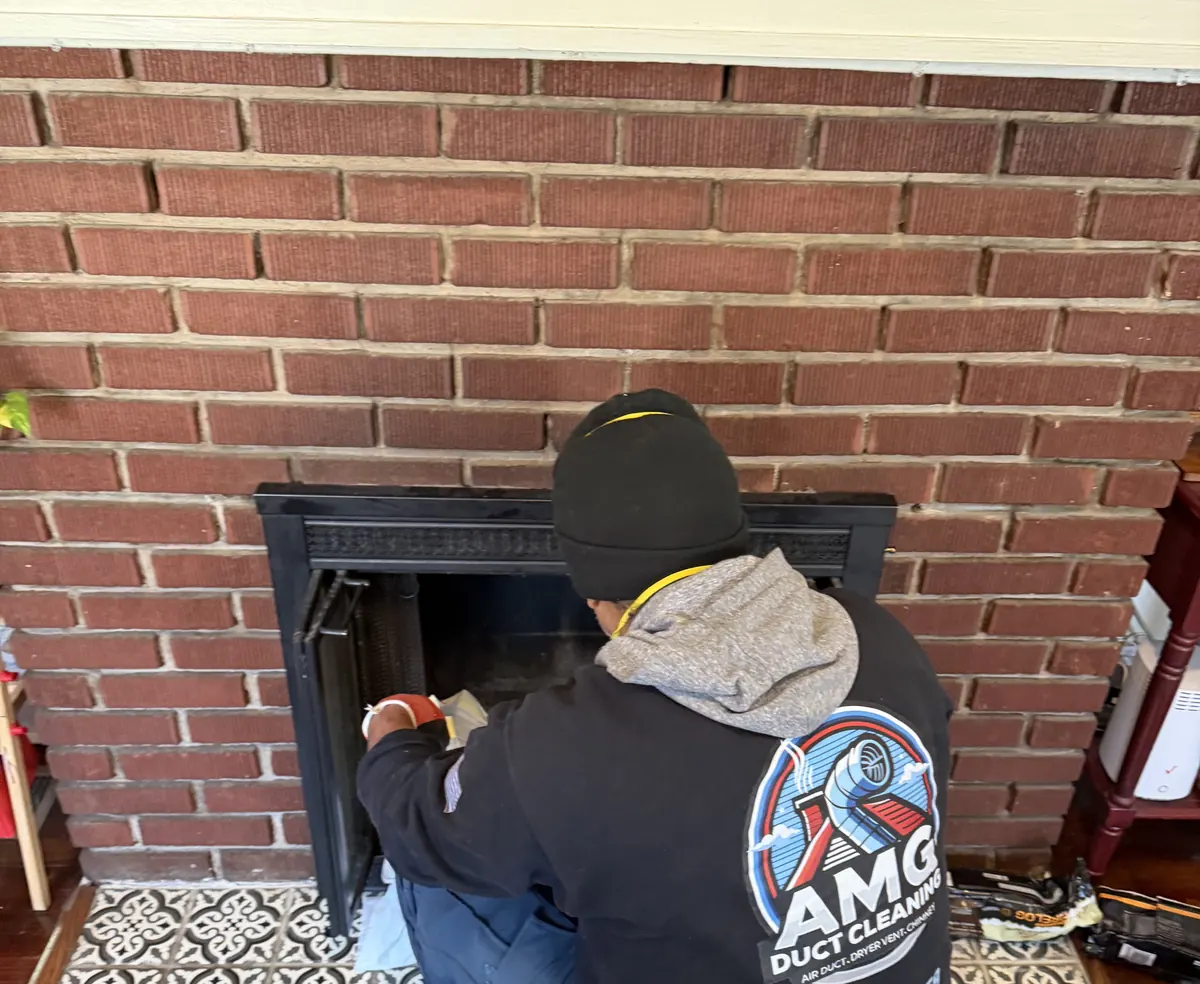
Some Hunterdon homes still count wood as their main heat, and others run a stove or a fireplace alongside oil or propane. Long burns send smoke through the smoke chamber hour after hour, and that part of the chimney is wide, rough and easy for creosote to grip. On a house in Delaware Township, East Amwell or Lebanon Township that also has a fireplace from another century, the chamber may never have been parged at all, or the parging may have flaked away long ago, leaving bare stone or brick.
The chamber is hidden from the room, which is why most homeowners first hear about it from a sweep. Chimney cleaning covers it each time, since it collects the heaviest loose creosote in the system. Readington's farmhouses and the older houses along River Road in Raritan Township have big masonry stacks with fireplaces still in use, and those chimneys tend to show their history here first. A repair on this page is usually modest in scope, and it closes off a place where heat and creosote have no business being.
When does a fireplace smoke chamber need repair?
A smoke chamber needs repair when its walls have gaps, loose masonry or heavy creosote fixed in rough ledges and joints. Failed parging that hangs in sheets or lies in pieces on the smoke shelf is a common finding. So are open joints that show dark lines of creosote, stones that shift when touched, and bare steps of brick left by the original mason. In New Jersey's residential code, the inside surface of a smoke chamber is supposed to be parged smooth with refractory mortar, and older fireplaces built before that rule often were not.
Symptoms in the room can overlap with other problems. Smoke spilling into the house, a strong creosote smell on damp days and flakes of glaze falling into the firebox can come from the chamber, from the flue or from a poor air supply in a tight house. That is why a look past the damper with a light comes first, with the flue above it checked at the same visit. If the crew can take a photograph, you will see what they saw. Where a repair is called for, the months before the wood stove season are the easiest time to handle it.
Does a wood stove insert change what happens in the smoke chamber?
Yes, an insert changes the chamber's role, because the exhaust passes straight through it in a liner and the old space above the damper goes quiet. Before an insert goes in, the chamber is swept and checked for loose brick, crumbled parging and gaps around the spot where the liner will pass. It becomes much harder to reach afterward, since the insert sits in the firebox and a block-off plate closes the space above, so any repair is best made while the fireplace is still open.
A stove connected to an old fireplace without a full liner is a different case. Smoke then dumps into a wide, cool chamber and spreads, and creosote can build quickly on those walls. That setup is hard to sweep and a real concern in a house burning wood through the winter. If an older stove in your house vents this way, ask about it at the next sweep. The stove's manual and listing decide how it has to connect, and a liner run the full height of the flue is the usual answer, handled under chimney repair.
Can a chimney fire damage a smoke chamber?
Yes, a chimney fire can crack the parging, open joints and loosen masonry, and the first few feet above the firebox take the worst of it. Heavy deposits there can ignite along with the flue, and that heat reaches masonry and nearby framing. After a fire of any size, the fireplace or stove stays out of use until the flue and the chamber have been looked at, even if the fire seemed to die on its own. A roar, a rumbling stove pipe or chunks of burned creosote in the firebox are reasons to call.
Damage from a fire can be hard to see because soot covers it. The system is swept first, then the chamber, the throat and the flue are checked with a light. Burned creosote has to come off before any mortar goes on, and any structural gaps get closed with masonry rather than coated over. Reparging the surface comes last. If the stove or fireplace sits on an outside wall of an old farmhouse, the framing next to the chimney gets a close look too, from wherever it can be reached.
How is a stone or old brick smoke chamber parged?
It is parged by hand with refractory mortar, after the old surface has been cleaned of creosote and loose material. Stones or bricks that have moved are reset, and the deep gaps are filled first. The mortar then goes on in a smooth coat from the damper to the base of the flue, filling the steps left by corbeling. New Jersey's code limits how far a corbeled wall can lean from vertical and sets a thickness for chamber walls, so a badly shaped or thin chamber may raise questions a coat of mortar cannot settle.
Old farmhouse fireplaces bring their own conditions. A big cooking hearth may narrow into a wide chamber with no modern damper, a chimney in Ringoes or Sergeantsville may have been altered more than once, and a stone chamber has an uneven face that takes more material. Access through the throat can be tight, so some chambers need the damper out of the way. The surface will be smooth enough to sweep well, but it is hand work in a tight space, and the crew will tell you what is and is not reachable before anything begins.
How often should the smoke chamber be checked?
The chamber should be checked at every sweep, and a stove or fireplace carrying real winter load gets swept at least once a year. The NFPA advises having heating equipment and chimneys cleaned and inspected every year, and the chamber is part of that. Regular sweeping keeps deposits in the soft stage, and a fresh parge makes that job easier and leaves nothing for creosote to grip.
Burning dry, seasoned wood and keeping fires hot enough to draw well slow the next layer. Smoke chamber work across Readington, Tewksbury, Lebanon Township and the rest of Hunterdon County begins with a free estimate from AMG Duct Cleaning Readington NJ. Licensed and insured and veteran owned, it lays out any further work on the damper, the liner or the crown with photographs before anything is scheduled.
What is included
- Smoke chamber and shelf swept before anything else
- Walls looked at with a light through the damper
- Loose stone and brick reset
- Deep gaps and failed joints filled
- Inside walls parged smooth with refractory mortar
- Chamber readied before an insert or liner goes in
- Fire damage cleaned out and checked after a chimney fire
- Photographs of what was found, where they can be taken
Questions and answers
Is a sweep enough, or does the smoke chamber have to be repaired?
It depends on the chamber, because a sweep keeps deposits down but cannot close gaps or smooth rough masonry. If the chamber is sound, sweeping is all it calls for. If it has open joints or loose stone, those need repair before the wood season, and the crew will show you which case you have.
Does a stove that vents through a liner need smoke chamber repair?
Usually not once the liner is in, since the exhaust stays inside it. Any repair belongs before the liner and block-off plate are fitted. If the chamber was left in poor shape, tell the sweep, because creosote left behind there remains a concern.
Why does my fireplace smell of creosote in summer?
Humid air and a chimney that draws backward on warm days carry the smell of deposits into the room. A rough smoke chamber holds more of them. A sweep helps, and a parge, a tight damper or a cap can help further, depending on what the crew finds.
Is refractory mortar different from regular mortar?
Yes. Refractory mortar is made to take the heat of a fireplace, and New Jersey's code names it for the inside of a smoke chamber. Standard masonry mortar breaks down with that heat, so it does not belong on these walls.
Can an old farmhouse fireplace with no damper still have a smoke chamber repaired?
Often, yes. The walls above the firebox can be reached, cleaned and parged, and a damper can be added at the top of the flue if the fireplace is used. How far the work can go depends on the shape of the opening, which the first look will show.
More questions and answers about our work
Smoke Chamber Repair across Hunterdon County
We provide smoke chamber repair in Hunterdon County. Choose your town for local details.
Ready for cleaner air?
Tell us about your home and get a free estimate.