
Chimney Damper Repair in Readington and Hunterdon County
Chimney damper repair gets a fireplace flue opening and closing again, or replaces a plate that no longer seals. In Hunterdon County it often means an old farmhouse fireplace whose damper rusted open years ago, a drafty flue on the north wall, or an insert going in over a plate that has to stay out of the way.
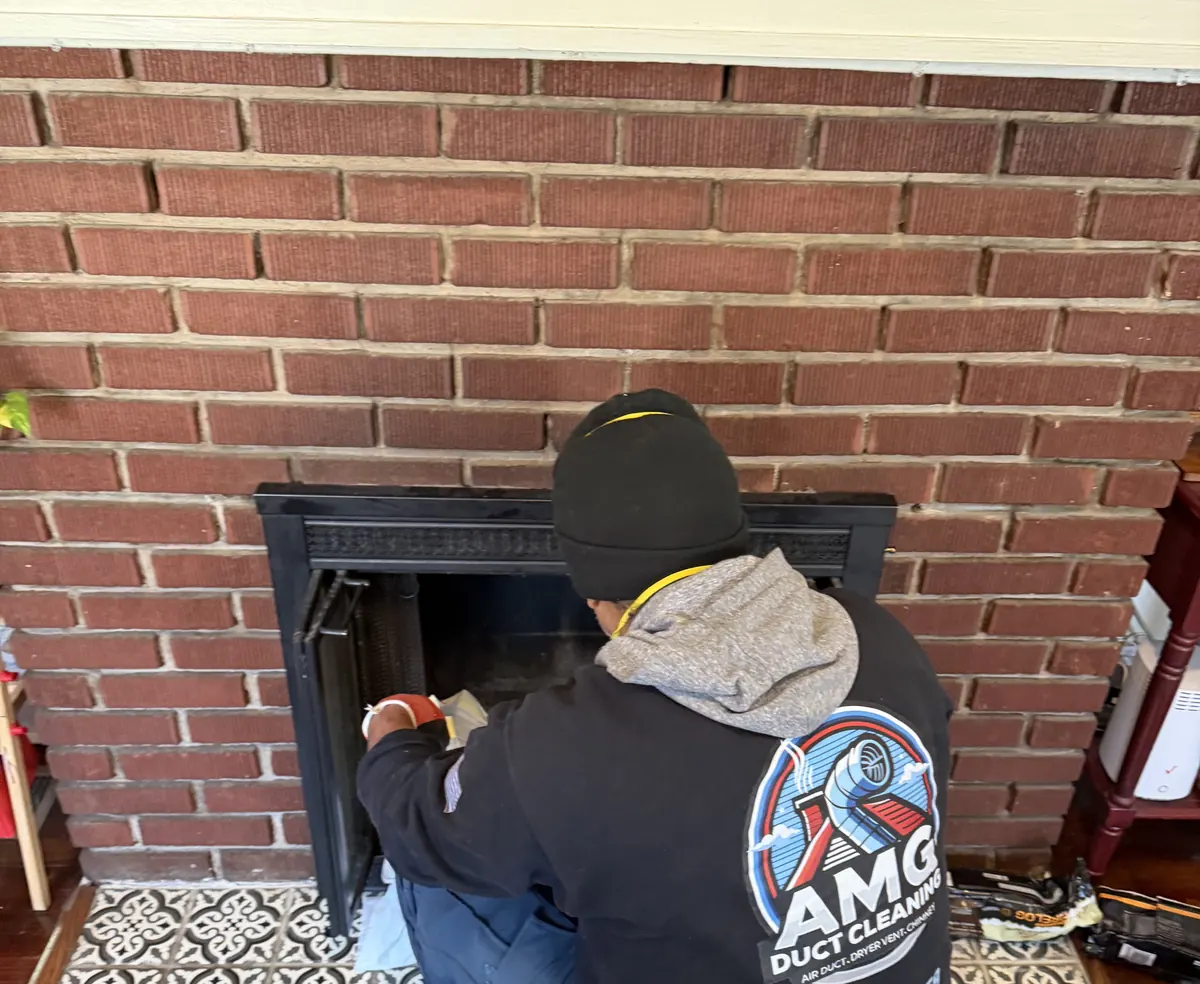
A farmhouse fireplace in Stanton or Sergeantsville can leak a surprising amount of warm air on a January night. If the damper has rusted in the open position, the chimney becomes a tall vent pulling heat out of the house through the winter, with oil, propane or wood paying for it. If it has rusted shut, the fireplace cannot be used at all, and a fire lit below it fills the room with smoke. Water is the usual culprit, coming down an uncapped flue and landing on the plate for years. A long idle stretch finishes the job, and on an old flue nobody may remember which way the handle turns.
Some of the oldest fireplaces in the county never had a damper. They were built to burn all day, and the idea of closing the flue came later. Others have a cast iron plate from a later alteration, a poker with a broken notch or a rotary handle that has stopped turning. And in houses that heat with a wood stove or an insert, the damper may no longer play any part. So the first question on a Hunterdon chimney is what the damper is doing now, and what the fireplace is meant to do next.
What can be done about a damper rusted open?
A damper rusted open can often be freed, and if the plate has failed it can be replaced or a top-sealing damper can go on at the other end of the flue. The throat is swept first, because soot and rust scale hide the pivot. Penetrating oil and patience free many seized plates, and a broken handle or poker is a small repair. A plate that has rusted thin or warped from years of hot fires no longer meets its frame, so even a free-moving one will leak.
An old cast iron frame is often built into the masonry, and removing it means cutting into the fireplace, so most owners do better leaving it in place. The frame also gets a look for cracks while the crew is there. Find out why the rust happened too. A flue with no cap will drop water on a new damper the same way it did on the old one, so the cap goes on the list at the same time. In a chimney with an idle fireplace flue beside a working boiler flue, both can share the blame for a wet smoke shelf.
Is a top-sealing damper worth it on a drafty farmhouse?
Yes, a top-sealing damper is often the best fix for a drafty old flue, since it closes the chimney at the top with a gasket rather than at the throat with loose metal. A cable runs down the flue to a handle in the firebox. When the lid is closed, the whole column of cold air above the fireplace is gone, and rain and animals stay out too. On a stack exposed to the wind on the high ground of Lebanon Township or Tewksbury, that makes a noticeable difference in the rooms around the hearth, and it does not touch the old masonry at the throat.
A few limits apply. The top of the flue has to be square and sound enough to seat the frame, and a stone stack with a rough or uneven flue opening may need work first. The oldest fireplaces with no tile at the top are not always good candidates. The damper is used only on a fireplace flue, because a flue serving a boiler, a furnace or a water heater has to stay open at all times. A cap on the same flue is usually replaced by the top damper itself, so plan the two together, and in a historic district ask whether the new hardware needs a word with the borough.
Does a wood stove or insert still use the fireplace damper?
No, a stove or insert vents through its own connector or liner, so the old damper stops doing anything and only has to stay out of the way. With an insert, the plate is usually removed or held open so it cannot swing shut on the liner passing through it, and a block-off plate closes the throat around that liner. A stove connected through a hole in the chimney wall leaves the fireplace below it unused, and its damper should stay closed and sealed so the two do not interfere.
Draft in the stove itself comes from the stove's air control and, on some pipes, from a key damper in the connector. Those are parts of the stove, separate from the fireplace damper, and the stove's manual decides how they are used. Long low burns with the air shut down are a main cause of creosote in Hunterdon stoves, so a stove pipe damper is not a tool for keeping a fire going overnight. Chimney cleaning covers the connector and the flue, and the crew will mention anything that looks wrong with the way the stove is set up.
Can a damper be put on an oil boiler flue?
No fireplace-style damper belongs on an oil boiler flue, which has to stay open any time the burner might fire. The small swinging plate on the smoke pipe of an oil boiler is a barometric damper, which keeps the draft steady, and it belongs to your oil service company along with the burner. Soot built up on that plate is a sign worth mentioning to them, since it can point to a burner or draft issue.
Mixed chimneys cause confusion here. A big Delaware Township or East Amwell stack may hold a boiler flue and a fireplace flue side by side, each with its own opening at the top. Only the fireplace flue takes a damper. Before any work, the crew works out which flue goes where, because a top damper fitted to the wrong one would block an exhaust path. If a house has moved from oil to a heat pump and the boiler flue is retired, that flue gets a cap instead.
What does New Jersey's code say about fireplace dampers?
New Jersey's residential code says a masonry fireplace is to have a ferrous metal damper at least 8 inches above the top of the opening, in the fireplace or in the chimney venting it, and operable from the room. That wording allows a throat damper or a top-mounted one, as long as the handle is inside the room with the fire. Many older fireplaces were built before those rules, so the town building department is the place to ask if new damper work calls for a permit.
For gas logs in an old fireplace, the set's manual is the rule to follow, and those manuals generally call for the damper to be removed, locked open or held at a set minimum gap so exhaust can never be trapped in the room. AMG, veteran owned and licensed and insured under NJ HIC 13VH13654300, handles damper work under chimney repair across Readington, Clinton Township, Raritan Township and Hunterdon County. Each visit starts with a free estimate and photographs of what the damper looks like now.
What is included
- Throat swept so the plate and pivot can be seen
- Damper worked to see how it moves and seals
- Seized pivots freed and broken handles replaced
- Warped or thin plates replaced where the frame allows
- Top-sealing dampers fitted to suitable fireplace flues
- Every flue in the stack matched to what it serves
- Cap checked so water stops reaching the damper
- Photographs and options explained before work is booked
Questions and answers
Why is my fireplace so cold in winter even with the damper closed?
The old plate probably does not seal, and a chimney on an outside wall stays cold from top to bottom. Air leaks past the metal and into the room. A gasketed top-sealing damper closes the flue at the top and keeps that cold column out.
Can a damper be added to an old fireplace that never had one?
Often, yes, usually as a top-sealing damper, since it does not need a frame built into the throat. The top of the flue has to be sound enough to take it. A look from the roof tells you whether yours can.
Should the damper be closed when the fireplace is not in use?
Yes, on a wood fireplace, once the embers are fully out. Closing it too soon can send smoke and carbon monoxide into the room. Gas logs are different, since their manual calls for a fixed opening at all times.
What happens if I light a fire with the damper closed?
Smoke fills the room within a minute or two. Put the fire out if you can do that safely, open windows and do not try to force a stuck handle above a burning fire. Have the damper looked at before the next fire.
Does a stuck damper cost a lot to fix?
It depends on what is stuck and why. Freeing a pivot is a small job, while a new plate or a top-sealing damper is a larger one, and a tall or steep roof adds time. The estimate is free and comes after a look at the fireplace.
More questions and answers about our work
Chimney Damper Repair across Hunterdon County
We provide chimney damper repair in Hunterdon County. Choose your town for local details.
Ready for cleaner air?
Tell us about your home and get a free estimate.