Yes. Saddle pads, horse blankets, polo wraps and barn clothes carry more hair, hay chaff and fine dust into a wash load than an ordinary load of cotton clothes does, and that extra material does not stay behind in the washer. Some of it rides into the dryer and catches on the lint screen, and some of it gets past the screen into the vent line itself. That is reason enough to clear the screen before or after every load, including the lint that collects around the rim of the drum opening and not just what sits flat across the screen mesh, and reason enough for the vent run itself to get a cleaning at least once a year, sooner if a load that used to dry in one cycle starts taking two.
Where barn laundry loads up the lint screen
A saddle pad or a fleece cooler holds onto horse hair the way a sweater holds onto pet hair, and washing does not pull all of it loose. What survives the wash cycle finishes the job in the dryer, where the tumbling and the heat work the rest of the hair free. Add hay chaff carried in on a blanket from a stall or a hitching rail, and arena dust worked into saddle pads during a ride, and a single load of barn laundry can leave more behind on the lint screen than two or three loads of regular clothes combined. That is not a reason to wash barn items less often. It is a reason to check the screen after that particular load instead of assuming it looks the way it always does.
Where hair and chaff settle inside the vent run
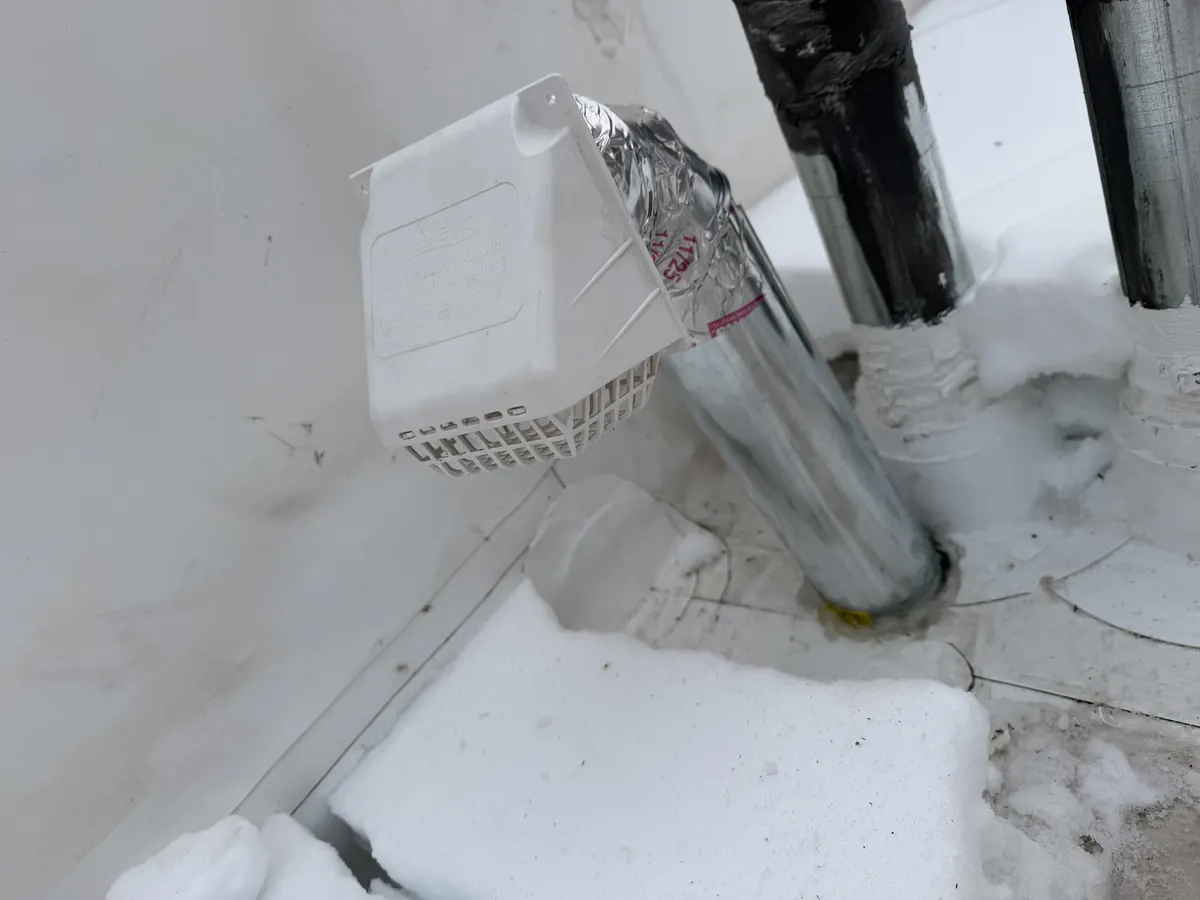
Lint does not travel evenly once it passes the screen. It tends to drop out of the airflow at an elbow, where the duct turns and the air slows for a moment, and at the hood flap outside, where hair and chaff can catch on the hinge and keep the flap from sitting all the way open or all the way closed. A flap that no longer closes fully lets outside air and small pests work back into the line, and a flap that cannot open fully chokes the airflow a dryer depends on to vent moist air outside. Both problems start small and build with every load, and barn laundry adds to that buildup faster than a household without barn animals usually sees.
Long vent runs from a mudroom laundry
A fair number of older farmhouses in this area added a laundry room off the back porch or mudroom well after the house itself was built, and that location often puts the dryer well away from an outside wall. The vent run has to travel farther to get outside, with more elbows along the way than a laundry room built closer to the exterior would need. Every one of those elbows is another spot for hair and chaff to catch, and a longer run with more turns takes longer to clear during a cleaning and loads up faster between them. Where a run like that is part of the problem, Dryer Vent Installation can reroute it to a shorter path with fewer turns, which cuts down on how often the line needs attention afterward.
Barn chemicals and the dryer, what NFPA says
Saddle soap, hoof dressing, fly spray and the diesel or gasoline smell that clings to clothes after fixing a tractor or a mower do not belong going straight into a washer and dryer run back to back. NFPA guidance on clothes dryer safety is direct about this: clothing stained with a flammable liquid such as gasoline, a solvent or a cleaning agent should be laid outside to air dry before it goes anywhere near a washer or a dryer. The heat of a dryer can bring out vapor from a trace of fuel or solvent that a wash cycle did not fully remove, and that vapor has nowhere safe to go inside a closed drum. Airing those clothes outside first, then washing and drying them on their own rather than mixed in with a full barn laundry load, keeps that risk away from the rest of the wash.
Signs it is time for Dryer Vent Cleaning
A load that used to dry in one cycle and now takes two, a dryer that runs hotter to the touch than it used to, lint showing up on the ground near the outside hood, or a hood flap that will not open all the way are all signs the vent line has more built up inside it than the screen alone is catching. On a property running regular barn laundry alongside everyday household wash, checking for those signs every few months catches a building problem before a longer dry cycle turns into a dryer that will not vent properly at all. Dryer Vent Cleaning clears the line from the drum connection out to the hood, including the elbows and the flap itself, and is worth scheduling on its own once a year even before any of those warning signs show up.
Barn country in Hunterdon County and East Amwell
Hunterdon County carries more farmland acreage than any other county in New Jersey, and the county's agriculture development board counts it among the state's top counties for horses, so barn laundry is a normal part of wash day for plenty of households here rather than an occasional load. East Amwell has long been part of that picture, home to the county's 4-H and agricultural fair since the event moved to South County Park in 2003. A house running saddle pads, coolers and barn clothes through its laundry on a regular basis is putting more into its dryer vent than a house doing only everyday clothes, and the vent line deserves a cleaning schedule built around that fact rather than the one written for a typical household.