
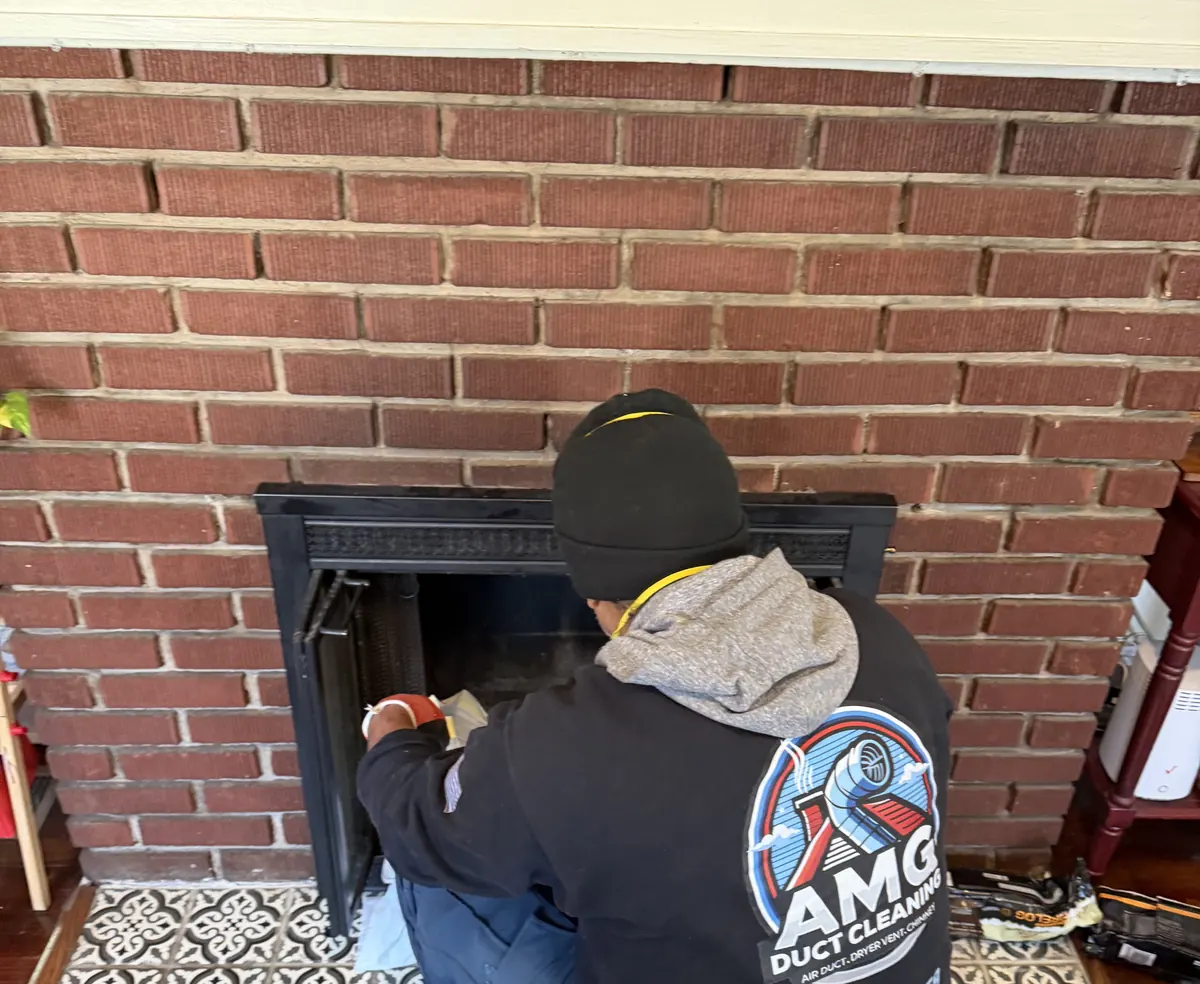
A wood mantel sitting too close to a fireplace opening shows up often during a chimney inspection in older Hunterdon County houses, especially where a mantel was added, lowered, or swapped out after the fireplace itself was built. New Jersey's residential code sets a flat minimum on this: any combustible material, a wood mantel shelf, wood trim, or paneling, has to sit at least 6 inches away from the fireplace opening, measured from the opening itself rather than from the firebox further back or the hearth below it. A second part of the rule covers the band between 6 and 12 inches out. Anything combustible sitting in that zone can project toward the room by no more than 1/8 inch for every inch of distance from the opening. A mantel shelf set 8 inches out, for example, is allowed to project 1 inch, not the 3 or 4 inches a typical shelf profile runs.
How the clearance gets measured
The starting point for every measurement is the face of the fireplace opening, the vertical plane where the firebox meets the room, not the brick or stone facing that may extend further out, and not the interior of the firebox itself. A tape held straight out from the opening's edge, level and perpendicular to the wall, gives the horizontal distance. Side trim gets measured the same way, straight out from the side edge of the opening rather than along an angled stone surround. A mantel shelf that looks like it clears 6 inches when eyeballed from across the room often measures closer once a tape is held to the opening, especially where a thick surround or a stone ledge sits between the firebox and the mantel itself.
Why a lowered mantel or a thicker trim piece breaks the rule
A fireplace that cleared code when it was built can fall out of clearance years later without the opening itself ever changing. A mantel lowered during a renovation to sit closer to eye level, a thin original shelf swapped for a heavier timber beam, or crown trim added along the surround all add bulk or shave distance from the opening without anyone running the numbers again. The firebox opening stays exactly where it was. What changed is the wood sitting above or beside it, and that is the piece the clearance rule is written around.
Hearth and firebox clearances, in short
The hearth extension in front of the opening and the framing clearances behind and beside the firebox follow their own distances, also measured from the opening, and a chimney inspection checks those alongside the mantel since the same tape and the same reference point cover all of them. A mantel can measure correctly while the hearth extension falls short, or the other way around, which is why a full check looks at the opening from every side rather than just the shelf overhead.
Signs the wood has already taken heat
Darkening or yellowing of the wood grain near the opening, scorch marks on the underside of a shelf, and fine checking or crazing cracks running along the grain are signs a mantel has already been sitting closer than it should. Warping or a slight pulling away from the wall at a joint can show up too, especially on a mantel built from a single thick timber. None of these signs need to be present for a mantel to be out of clearance, though. A mantel can measure too close and show no visible heat damage at all, because it has not yet been tested by a long, hot fire.
Correcting a mantel that sits too close
Chimney Repair covers the masonry side of a correction: resetting a surround that crowds the opening, adjusting a hearth extension that falls short, or rebuilding a firebox face where the opening itself was altered at some point. The mantel piece is usually a finish carpentry job once the clearance is known. That can mean raising the mantel, reducing how far the shelf projects, swapping a thick profile for a slimmer one, or in some cases moving the whole piece to a wall where it is purely decorative rather than mounted above the firebox. A written measurement from the opening out is what tells a carpenter how much has to change before the piece goes back up.
Older mantels in Stanton and Whitehouse
Readington's Stanton section carries one of the township's older building stocks, a historic rural district recognized for dozens of contributing structures, and fireplaces original to these houses often have mantels that were replaced or re-set more than once over the years without anyone checking the opening clearance against the piece going back up. Whitehouse, built up along the old turnpike route, has its share of the same pattern, older homes with a fireplace that predates the current mantel by decades. A fireplace opening that has not moved can still end up with a mantel that no longer clears it, which is part of why a mantel measurement is worth a few minutes during any chimney inspection in a house this age, not just where a renovation is already underway.